
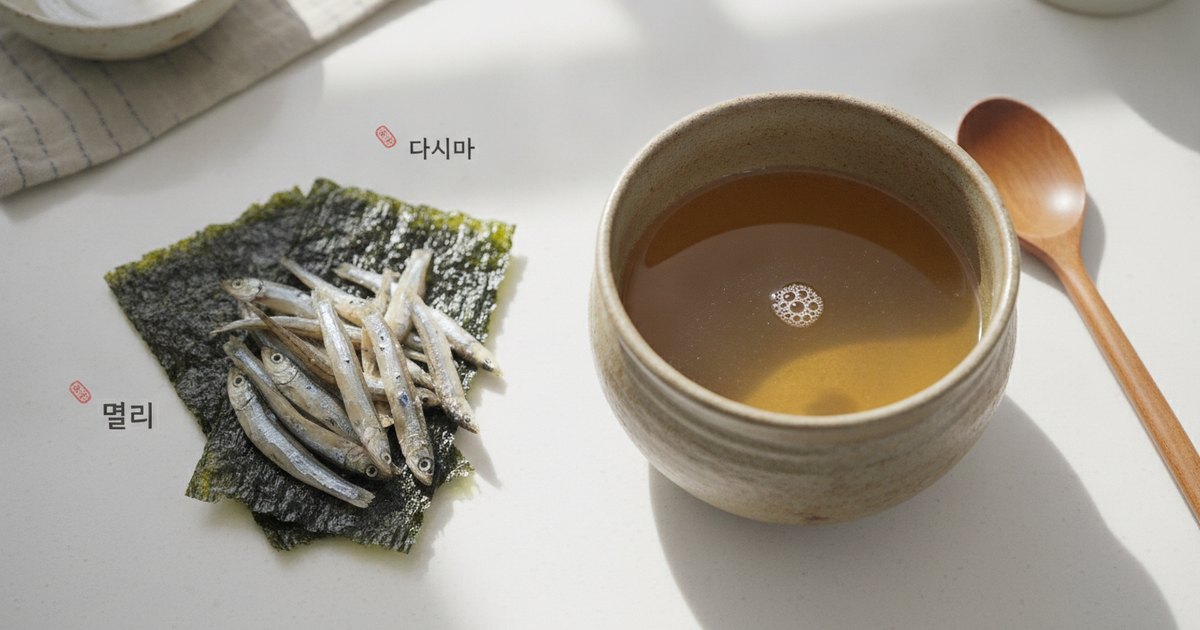
Walk into any Korean home kitchen and open the freezer. Tucked between containers of kimchi and sealed bags of dried chili, you'll almost certainly find a small mesh bag of brittle, silvery fish — slightly dusty-looking to the uninitiated, and very easy to overlook. These are myeolchi (멸치), dried anchovies, and they are the quiet, indispensable engine behind some of Korean cooking's most deeply satisfying dishes.
The savory backbone of tteokbokki sauce? Myeolchi yuksu. The soul of a properly made doenjang-jjigae? Myeolchi yuksu. The light, savory broth floating beneath janchi-guksu celebration noodles? Same thing. Even the braising liquid in countless everyday side dishes owes its depth to this foundational stock. Among all Korean soup stocks — beef bone broth, chicken stock, plain dashima broth — dried anchovy-kelp stock is the one Korean home cooks reach for most often.
This is your complete guide to understanding it, making it correctly, and using it well — from what the fish actually are, to where a Western home cook can find them, to every mistake worth avoiding.
What Is Myeolchi Yuksu (멸치육수)?
The name breaks down simply: myeolchi (멸치) means anchovy, yuksu (육수) means broth or stock. Together, myeolchi yuksu is anchovy stock — but that translation seriously undersells it.
You'll often see the closely related term myeolchi-dasima-yuksu (멸치다시마육수), specifying a stock made with both dried anchovies and dried kelp (dasima, 다시마). This two-ingredient combination is what most Korean cooks mean when they say "anchovy stock." Throughout this guide, we'll be making this enhanced version, because the kelp addition produces something genuinely greater than the sum of its parts.
What makes myeolchi yuksu a workhorse rather than a specialty stock is its practicality. It takes 15–20 minutes from start to finish, costs almost nothing per batch, freezes perfectly, and delivers a round, savory depth that's hard to replicate with anything else. No hours of simmering, no roasting bones. Just clean, efficient umami.
The Fish: Korean Dried Anchovies Are Not What You Think
If your only reference for anchovies is those intensely salty, oil-packed fillets on a Caesar salad, set that mental image aside entirely. Korean dried anchovies are a genuinely different product at every level — species, processing, and flavor profile.
Species and Processing
The fish in question is Engraulis japonicus — the Japanese or Pacific anchovy — which schools in vast numbers off Korea's southern coastline. These are not the Mediterranean anchovy (Engraulis encrasicolus) used in Western tinned anchovies. More importantly, the processing is completely different: Korean myeolchi are steamed and then sun-dried, not salt-cured in oil. The result is a cleaner, more mineral flavor — intensely savory, with an oceanic quality, but without the aggressive saltiness or funky fermented notes of Western canned anchovies.
Korea's southern coast is the heart of myeolchi production. Approximately 70% of Korea's anchovy catch passes through the auction markets of Tongyeong (통영), a city in South Gyeongsang Province that functions as the anchovy capital of the country. The Jijok Strait — between Changseon Island and Namhae Island — is particularly prized, producing so-called "jukbang" anchovies using traditional bamboo cage fishing methods. These regional premium anchovies are treated much like single-origin olive oils: worth seeking out, and genuinely different in flavor from commodity product.
The Size Chart: Which Anchovy for What
Korean dried anchovies are sold by size, and the size dictates the use. This distinction matters enormously:
| Korean Name | Size | Best Use |
|---|---|---|
| 대멸 (daemyeol) | Large: 7–16 cm (2.75–6.3 in) | Stocks and broths |
| 중멸 (jungmyeol) | Medium: 4.5–7.7 cm (1.75–3 in) | Stir-fried banchan |
| 소멸 (somyeol) | Small: 3–4.5 cm (1.2–1.75 in) | Stir-fried snacks, bibimbap toppings |
| 세멸 (semyeol) | Tiny: under 3 cm (1.2 in) | Eaten whole, salad toppings |
For stock, you need large anchovies (대멸, daemyeol). They have more flesh, more fat, and more collagen — all of which translate into a richer, more complex broth. Using small anchovies for stock is one of the most common beginner mistakes; the yield is thin, one-dimensional, and lacks body.
The Other Star: Dasima (Dried Kelp)
Dasima (다시마) is dried Saccharina japonica kelp — thick, dark grey-green sheets with a slightly powdery, chalky surface. That white coating isn't mold; it's mannitol, a naturally occurring sugar alcohol that contributes the kelp's gentle sweetness. Do not rinse it off.
The science behind why dried anchovies and kelp work so well together is worth understanding. Dasima is rich in glutamic acid, the amino acid responsible for one type of umami. Dried anchovies are high in inosinic acid (IMP), a nucleotide that creates a different savory response. When glutamates and inosinates combine in the same liquid, they produce a synergistic umami effect far greater than either ingredient could deliver alone. This is the same principle behind Japanese dashi (kombu + katsuobushi) — Korean myeolchi-dasima-yuksu works by identical logic. It's flavor chemistry, not coincidence.
How to Make Korean Anchovy-Kelp Stock
This is a genuinely forgiving process once you understand its key rules. The following makes approximately 1 liter (about 4¼ cups) of finished stock — scale freely.
Ingredients
- 15–20 large dried anchovies (대멸) — approximately 25–35 g / 0.9–1.2 oz
- 1 piece dried kelp (dasima) — roughly 10 cm × 10 cm (4 in × 4 in), about 10 g / 0.35 oz
- 1.2 liters cold water (5 cups) — slightly more than your target yield, accounting for evaporation
Optional aromatics commonly added by Korean cooks:
- 3–4 dried shiitake mushrooms (earthier, deeper flavor)
- 2–3 small dried Korean chili peppers (mareun gochu, 마른고추) — adds mild sweetness, not significant heat
- 4–5 thin slices of daikon radish — lightens and brightens the broth
Step 1: Prepare the Anchovies
Hold each anchovy and split it open along the belly. Remove and discard the dark, threadlike intestines — that small black gut pack running through the belly is the primary source of bitterness in the finished stock. The head is optional; some cooks remove it, others leave it in. The flesh should look pale silver-grey and smell strongly oceanic and mineral — like clean sea air, not like something going off.
Next, dry-toast the cleaned anchovies in a dry skillet over medium heat for 2–3 minutes, moving them constantly. You'll notice the sharp raw-fish aroma diminish and shift toward something nuttier and more rounded. This brief toasting step is not optional for best results — it makes a measurable difference in broth quality.
Step 2: Cold-Start the Kelp
Add the 1.2 liters (5 cups) of cold water to a medium saucepan and add the dasima piece directly to the cold water. Let them soak together for 10–20 minutes — or even overnight in the refrigerator for a more deeply flavored cold-extraction. This gentle soak pulls the kelp's glutamates efficiently without any heat-induced bitterness.
Step 3: Heat to Near-Boil, Then Remove the Kelp
Set the saucepan over medium heat. Watch carefully. As soon as you see the first wisps of steam and tiny bubbles beginning to form at the base of the pan — just before a full rolling boil, around 60–65°C (140–150°F) — remove and discard the kelp piece. At this point it has given all it has to offer. If it boils, it releases unpleasant slimy compounds and bitter off-notes that will muddy the finished stock.
Step 4: Add Anchovies and Simmer Gently
Add the toasted anchovies to the now kelp-free liquid. Bring to a gentle simmer — small, steady bubbles breaking the surface around the edges, not a hard rolling boil. Simmer for 15–20 minutes. As it cooks, the liquid will shift from clear to a pale golden-amber, and the aroma will develop from sharp and marine into something rounder: savory, slightly sweet from the kelp residue in the water, distinctly oceanic.
Skim any grey foam that rises in the first several minutes — this is coagulated protein. It won't harm you, but removing it keeps the stock clear and clean-tasting.
Step 5: Strain and Store
Pour the stock through a fine-mesh strainer. Press gently on the solids. The finished broth should be a clear pale gold — not murky or brown. Taste it: you should notice a gentle but distinct savory depth, a slight mineral sweetness, and a clean oceanic finish. At this stage, leave it unseasoned — you'll season each dish individually when you use it.
Storage: Refrigerate in an airtight container for up to 5 days. Freeze in 240 ml (1-cup) portions for up to 3 months — zip-lock bags laid flat, or ice cube trays for smaller portions, both work well.
Where Myeolchi Yuksu Shows Up in Korean Cooking
Once you have a batch ready, you'll find yourself reaching for it constantly:
- Tteokbokki — the spicy rice cake sauce uses anchovy stock as its base, providing the savory foundation beneath the gochujang heat and sweetness
- Doenjang-jjigae — fermented soybean paste stew genuinely doesn't taste the same without it; water produces a flat, one-note result
- Miyeok-guk (seaweed soup) — using anchovy stock instead of plain water is the traditional approach for birthday soup
- Kongnamul-guk (soybean sprout soup) — a 15-minute weeknight staple when the stock is already made
- Braised banchan side dishes — the braising liquid for gamja-jorim (potatoes), dubu-jorim (tofu), and similar dishes gains enormous depth from a ladle of anchovy stock
- Rice porridge (juk) — cooked in anchovy stock instead of water, the transformation is remarkable
Sourcing Korean Dried Anchovies in the West
Where to Find Them
H Mart and similar Korean grocery chains (Zion Market, Super H Mart, any Korean-operated Asian market) are the easiest option. Look for bags labeled "멸치" or "dried anchovies for soup/broth" — they're typically in the dried goods aisle near seaweed and mushrooms. Packaging often specifies size with Korean characters (대, 중, 소) or uses the word "soup" to indicate large anchovies suitable for stock.
Online retailers including Gochujar, Weee!, and Amazon carry Korean dried anchovies with US-wide shipping. Look for products specifying "south sea" or "Tongyeong" origin — this indicates premium-quality product from Korea's most respected anchovy-producing region.
Whole Foods and conventional supermarkets rarely stock Korean dried anchovies. If you're truly stuck, Japanese niboshi (dried baby sardines, widely available at Japanese grocery stores and online) make a reasonable substitute — the flavor is slightly earthier but functionally similar. Western oil-packed canned anchovies are not a viable substitute; the salt-curing process produces an entirely different compound set.
What Good Dried Anchovies Look Like
Quality dried anchovies should be:
- Silvery and bright, not yellowed or brownish (yellowing indicates fat oxidation — rancidity)
- Oceanic and mineral-smelling in the bag — not sour, ammonia-forward, or musty
- Firm and dry to the touch, never soft or faintly damp (moisture signals spoilage risk)
Store opened bags in the freezer — Korean cooks maintain a permanent frozen supply and use them directly from frozen without thawing. Frozen anchovies keep for 6–12 months; at room temperature once opened, rancidity sets in within weeks.
Common Mistakes to Avoid
1. Skipping Gut Removal
This is the single most impactful mistake, and it's extremely common with first-timers. The dark, threadlike innards running through each anchovy's belly are intensely bitter. Left in during simmering, they bleed that bitterness into the entire batch. The diagnostic sign: your finished stock has a sharp, lingering bitterness that seasoning can't fix, and that persists even after dilution. The fix is 30 seconds per anchovy — split the belly, pull the gut pack out, move on.
2. Boiling Too Hard or Too Long
Anchovy stock is not beef bone broth. A hard rolling boil does not build depth — it destroys the stock's delicacy. Aggressive heat releases harsh sulfurous compounds from anchovy fat and proteins, turning the stock cloudy, muddy-looking, and aggressively "fishy" in the worst sense of that word. The target is a gentle simmer with small, lazy bubbles for no more than 20 minutes. If your finished stock smells like canned tuna in a bad way, boiling too hard is almost always the cause.
3. Boiling the Kelp
Dasima must come out before the water reaches a full rolling boil — ideally right around the point where you see consistent small bubbles beginning to break the surface. Left in through a boil, the kelp releases alginic acid compounds that make the stock slightly slimy and produce a bitter, tannic-tasting edge. The texture giveaway: a properly made stock feels clean and light on the tongue; over-boiled kelp stock has an almost slippery quality. Watch the pot and remove the dasima at the right moment — it's one of the most critical steps in the whole process.
4. Using the Wrong Anchovy Size
Small or medium anchovies produce a thin, weak stock without much body. For broth, you need large anchovies (대멸). If your finished stock looks barely tinted after 20 minutes of simmering and tastes faintly of fish water rather than rich savory broth, check your anchovy size and quantity — and use more next time. A properly made stock should be a definite golden-amber, not nearly clear.
5. Pre-Seasoning the Stock
Raw, finished myeolchi yuksu should be stored completely unseasoned. Tteokbokki sauce, doenjang-jjigae, and braised banchan all need dramatically different salt levels — and the doenjang paste, soy sauce, or gochujang in each dish carries its own sodium load. Salting the stock in advance creates a one-way door that limits your flexibility and risks over-seasoning finished dishes. Season the dish, not the stock.
6. Skipping the Dry-Toast Step
Toasting the cleaned anchovies in a dry pan before adding them to water removes raw, slightly muddy fish notes and develops a nuttier, more rounded aromatic profile in the finished broth. Without this step, the stock tastes acceptable — but it lacks the extra savory dimension that separates a good Korean broth from a genuinely great one. The sensory cue for when the toast is done: the sharp, raw oceanic smell softens and shifts toward something nuttier and more complex, with no hint of anything harsh or ammonia-like.
Frequently Asked Questions
Q: Can I use something else if I can't find large Korean dried anchovies?
The closest substitute is Japanese niboshi (dried baby sardines), available at Japanese grocery stores and widely online. They produce a slightly earthier, more rustic broth but are functionally similar. A good piece of kombu (Japanese dried kelp) alone makes a decent vegetarian option, though it naturally lacks the protein-driven umami of anchovies. Western oil-packed canned anchovies are not a substitute — the salt-curing process creates a completely different flavor compound set that doesn't translate to stock.
Q: Does myeolchi yuksu smell very fishy once it's made?
The raw dried anchovies smell intensely oceanic and marine — noticeable, but not unpleasant in a fresh, properly dried batch. The correctly finished stock smells savory, gently sweet, and pleasantly mineral — like a clean, deeply flavored broth rather than anything aggressively "fishy." If your finished stock smells harsh or sulfurous, something went wrong during cooking: most likely boiling too hard, simmering too long, or skipping gut removal.
Q: Is Korean anchovy stock essentially the same as Japanese dashi?
They share the same scientific principle — marine inosinate (from anchovies or katsuobushi) combined with kelp glutamate for synergistic umami — but the flavor results are distinct. Standard katsuobushi dashi is lighter, more delicate, and deliberately transparent in flavor. Korean myeolchi yuksu is bolder, more assertive, and built to stand up to fermented pastes, gochugaru, and strong seasonings without disappearing. Niboshi dashi (the Japanese version made with dried sardines rather than bonito) is considerably closer to myeolchi yuksu in character.
Q: How long does homemade Korean anchovy stock keep?
Refrigerate in an airtight container for up to 5 days. For longer storage, freeze in convenient portions — 240 ml (1-cup) increments in zip-lock bags or silicone ice cube trays. Frozen myeolchi yuksu maintains quality for up to 3 months. Thaw overnight in the refrigerator or gently over low heat directly in the pot.
Q: Can I use myeolchi yuksu outside of Korean cooking?
Absolutely. Korean anchovy stock works beautifully as a base for any East Asian-style noodle soup, a deglazing liquid for savory pan sauces, or even stirred into risotto in place of chicken stock for a subtle oceanic depth. The umami it provides is clean and supportive rather than dominating — which makes it a surprisingly versatile tool in any kitchen repertoire, not just a Korean-cooking-only ingredient.
Myeolchi yuksu is one of those foundational techniques that, once mastered, quietly improves your entire Korean cooking practice without requiring any additional effort. It takes under 30 minutes, costs almost nothing per batch, and freezes so well there's no reason not to always have some on hand. Build the stock, and every dish that follows — from a fast weeknight soup to a long-simmered stew — gets better almost automatically.
Start with a single batch this week. By the first taste of the finished broth — that pale golden liquid with its clean, round, mineral savory depth — you'll understand immediately why every Korean home cook keeps a bag of those brittle silver fish in the back of the freezer, always. ```