
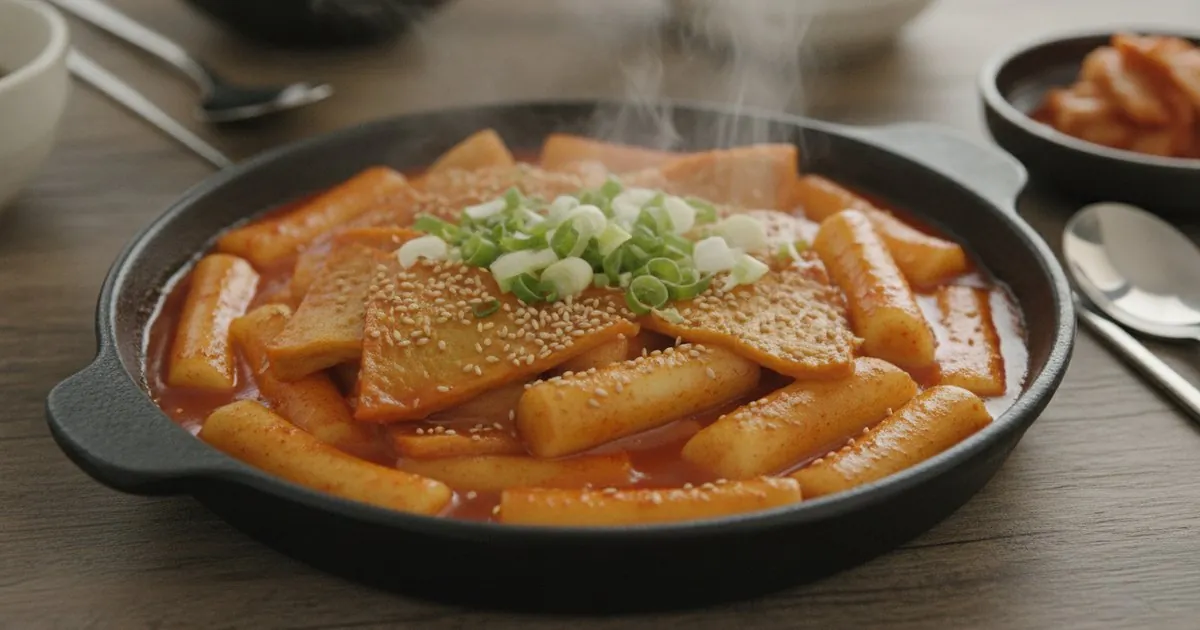
Few dishes capture the soul of Korean street food quite like tteokbokki (떡볶이). Walk through any market in Seoul — Gwangjang, Namdaemun, or the back alleys of Myeongdong — and you’ll see clouds of steam rising from wide, shallow pans of these fiery red rice cakes. The smell alone — sweet, savory, pungent with fermented pepper — is enough to stop you in your tracks and reach for your wallet before your brain catches up.
Tteokbokki is, at its core, a simple dish: chewy rice cakes coated in a deeply flavored gochujang sauce. But simplicity is not the same as ease. Getting the texture right, building a sauce with real depth, knowing when to pull the pan off the heat — these are the details that separate a transcendent bowl from a mediocre one. This guide covers everything you need to know, from shopping for ingredients in your area to scaling the recipe for a crowd.
What Is Tteokbokki?
Tteokbokki literally means “stir-fried rice cake” — tteok (떡) is the Korean word for rice cake, and bokki (볶이) comes from the verb bokkida, meaning to stir-fry or sauté. In practice, the dish is closer to a braise: the rice cakes are simmered in a sauce until they absorb flavor and the liquid reduces to a thick glaze.
The star of the show is garaetteok (가래떡) — long, cylindrical tubes of rice cake made from pounded glutinous or non-glutinous rice flour. They’re cut into finger-length pieces and have a uniquely satisfying chew: firm enough to push back against your teeth, soft enough to yield in a single bite. This texture — 쫄깃한, jjolgithan, which Koreans use as a term of highest culinary praise — is impossible to replicate with any substitute.
The sauce is built on gochujang, a thick, deeply savory fermented paste made from red chili peppers, glutinous rice, fermented soybeans, and salt. It provides heat, sweetness, umami, and body all at once. A hit of gochugaru (dried red pepper flakes) adds a second layer of spice with a slightly smokier, more direct heat.
A Brief History: From Royal Court to Street Cart
The tteokbokki we know today is a relatively modern invention, but its roots go back centuries. The original version, documented in Joseon Dynasty royal court recipes, was an elegant, non-spicy dish: sliced rice cakes sautéed with soy sauce, sesame oil, pine nuts, and sliced beef. You can still make that version today — it’s called gungjung tteokbokki, and it’s a revelation if you’ve only ever tried the spicy street-food kind.
The modern, fiery iteration was born in the 1950s. The most commonly told origin story credits a woman named Ma Bok-rim, who ran a food stall in Seoul’s Sindang-dong neighborhood. According to legend, she accidentally dropped some rice cakes into a pot of spicy sauce and discovered that the combination was extraordinary. She refined the recipe over years, and the neighborhood became so famous for the dish that it’s still known as Sindang-dong Tteokbokki Town — a block-long stretch of restaurants where families have been serving virtually identical recipes for three generations.
By the 1980s and 1990s, tteokbokki had spread to every school district in the country, sold from pojangmacha (street food carts) to kids craving a cheap, filling, intensely satisfying snack after school. Today it’s an almost mandatory component of Korean street food culture, available in supermarkets as a packaged kit, at convenience stores as a microwaveable cup, at specialty restaurants with 30-ingredient variations, and of course, made at home.
Sourcing Ingredients in the West
Korean rice cakes (garaetteok): Your best bet is a Korean grocery store — H Mart, Zion Market, Galleria Market, or any local Korean supermarket. Look for them in the refrigerated section (usually near the tofu and kimchi) or the freezer aisle. They typically come in vacuum-sealed 1 lb (450g) packages. Online options include Hmart.com and Korean grocery delivery services. In a pinch, some Japanese grocery stores carry mochi-related products, but they’re not the same.
Gochujang: Now widely available at mainstream grocery stores (Whole Foods, Trader Joe’s, and many regular supermarkets carry it). Look for brands like CJ Haechandle, Sempio, or Chung Jung One. It comes in mild, medium, and hot versions — medium is the right starting point for this recipe.
Gochugaru: Sold at Korean and Asian grocery stores in 1 lb bags. It’s worth buying if you cook Korean food regularly; it keeps well in a cool, dark place. If you can’t find it, crushed red pepper flakes are a weak substitute — they’ll provide heat but not the same flavor profile.
Fish cake (eomuk): Found in the freezer section of Korean grocery stores, usually in flat sheets that you cut to shape. If unavailable, you can omit it or substitute with sliced fish balls.
Technique Tips for the Best Tteokbokki
Soak refrigerated rice cakes. Even a brief 10–15 minute soak in warm water rehydrates the outer surface and prevents sticking. Skip this with truly fresh rice cakes, which are soft right out of the bag.
Make real stock. The difference between tteokbokki made with anchovy-kelp stock and tteokbokki made with water is significant. The stock adds a round, savory backbone that water simply can’t provide. It takes 12 minutes and requires only two shelf-stable ingredients.
Low and slow wins. Medium heat is your friend. Rushing the process over high heat will give you rice cakes that are soft on the outside and cold in the center, and a sauce that scorches before it has time to develop.
Stir regularly but not constantly. Rice cakes want to stick to the bottom of the pan, especially as the sauce thickens. Give the pan a stir every minute or two, but let the rice cakes sit between stirs — that contact with the hot pan adds a little toasted flavor.
Know when it’s done. Pierce a rice cake with a chopstick or fork. If it slides through without resistance, it’s done. The sauce should coat the back of a spoon and leave a clean line when you drag your finger through it.
Spice adjustment. Korean gochujang brands vary significantly in heat level. Always taste the sauce before adding the rice cakes and adjust accordingly. If you’re cooking for mixed heat tolerances, go lighter on the gochugaru — you can always add chili oil at the table.
The Anchovy-Kelp Stock: A Closer Look
Korean anchovy stock (myeolchi yuksu) is the foundation of dozens of Korean dishes. To make it: remove the heads and black innards from 4–5 medium dried anchovies (the innards turn bitter when boiled). Combine them in a pot with a 4-inch square of dried kelp and 3 cups of cold water. Bring to a gentle simmer over medium heat, then simmer for 10 minutes. Discard the solids and use the stock immediately or refrigerate for up to 3 days.
The anchovies provide savory depth; the kelp contributes a clean oceanic flavor and natural glutamate that enhances everything around it. If you’re making this dish frequently, consider making a larger batch of stock and freezing it in ice cube trays — then you’ll always have it ready.
Variations Worth Exploring
Once you have the base recipe down, tteokbokki opens up into a vast universe of variations:
- Cheese tteokbokki: Transfer the finished tteokbokki to an oven-safe dish, blanket it with shredded mozzarella, and broil for 2–3 minutes until the cheese is melted and bubbling. The dairy tempers the spice and adds irresistible pull.
- Rose tteokbokki: Add 3–4 tablespoons of heavy cream to the sauce in the final minutes of cooking. The sauce turns pink and the heat mellows into something more approachable — this version has taken Korean social media by storm.
- Rabokki: Add one block of instant ramen noodles to the pot when the rice cakes are halfway done. The noodles absorb the sauce and add a completely different texture. This is the version sold at Korean convenience stores and is enormously popular.
- Gungjung tteokbokki: The original royal court version — soy sauce, sesame oil, beef, mushrooms, and vegetables. Elegant, savory, and completely different in character from the street-food version.
- Jjajang tteokbokki: Use Korean black bean paste (chunjang) instead of gochujang for a rich, non-spicy, umami-heavy variation.
For more on the key sauce ingredient that makes all these variations possible, see our deep-dive gochujang guide.
Storage and Reheating
Tteokbokki is best eaten the moment it comes off the stove. Like pasta, the rice cakes continue cooking in their residual heat and will firm up significantly as they cool. That said, leftovers are not a tragedy:
- Refrigerate: Store in an airtight container for up to 2 days. The sauce will thicken to a paste as it cools — this is normal.
- Reheat: Add 2–3 tablespoons of water or stock to a pan over low-medium heat, then add the leftover tteokbokki. Stir gently until warmed through and the sauce has loosened. Do not microwave — the uneven heat makes the rice cakes tough.
- Do not freeze: Cooked rice cakes turn grainy and crumbly when frozen. Freeze uncooked rice cakes instead, then cook fresh.
Serving Suggestions
Tteokbokki is traditionally served as a snack or street food, but it can absolutely anchor a meal:
- Fried foods: Fried mandu (dumplings), fried squid, or odeng (fish cake skewers) are classic tteokbokki companions. The grease from the fried items complements the spice.
- Rice: A bowl of plain steamed rice on the side gives you a canvas for mopping up the sauce and balancing the heat.
- Kimchi: Cold, fermented kimchi provides acid and crunch that cuts through the richness of the sauce.
- Drinks: Koreans pair tteokbokki with everything from Chilsung Cider (like Korean Sprite) to banana milk to soju. Dairy-based drinks genuinely help with the spice.
Common Mistakes to Avoid
Skipping the soak on refrigerated rice cakes. Garaetteok pulled straight from the refrigerator has a firm, almost leathery exterior that resists absorbing the sauce. Without a 10–15 minute soak in warm water, the outside softens while the dense core stays cold and chalky — two different textures in one bite, and not in a good way. Drain them well before they go into the pan; excess water dilutes the sauce.
Cooking over high heat. This is the single most common reason tteokbokki fails at home. Gochujang is sugar-heavy, and sugar scorches fast. Pushed over high heat, the sauce darkens and turns bitter on the bottom while the rice cakes on top are barely warm. Medium heat — a gentle but steady simmer — lets the sauce reduce evenly and gives the garaetteok time to soften all the way through. If you notice the bottom catching, add a small splash of stock or water and drop the heat immediately.
Using water instead of anchovy-kelp stock. Water produces a sauce that tastes flat and one-dimensional — sweet and spicy, but nothing underneath. Anchovy-kelp stock (dasima-myeolchi yuksu) contributes glutamates that round out the gochujang and give the sauce its characteristic savory depth. If you’re pressed for time, even a 10-minute steep of dried anchovies and a piece of kelp in hot water is dramatically better than nothing.
Not accounting for gochujang variation. Different brands of gochujang differ wildly in saltiness, sweetness, and heat. CJ Haechandle runs saltier; some artisan brands are much milder. Always taste the sauce at the midpoint — about 5 minutes into simmering — and adjust with a pinch of salt, a drizzle of soy sauce, or an extra teaspoon of sugar. Never trust the recipe amounts blindly when working with a new jar.
Letting the sauce over-reduce. Tteokbokki is done when the sauce coats the rice cakes in a glossy, clingy glaze. Keep reducing past that point and the sugars seize up: the sauce turns candy-thick, gluey, and difficult to eat. If this happens, stir in a few tablespoons of stock or warm water off the heat and toss gently — it will loosen back to the right consistency.
Pulling it off the heat too early. The flip side of over-reducing: underdone tteokbokki has rice cakes that are soft on the outside but still firm in the center, and a sauce that’s thin and watery rather than glazed. The chopstick test is definitive — it should slide through with almost no resistance. If there’s any pushback in the center, give it two more minutes and test again.
Frequently Asked Questions
Can I make tteokbokki without fish cake? Yes, and it’s still delicious. Fish cake (eomuk) adds a savory, slightly oceanic flavor and a contrasting texture, but it’s not essential. For a vegan version, omit the fish cake and use vegetable stock instead of anchovy stock. Add extra mushrooms (shiitake or oyster) for umami depth.
Why are my rice cakes still hard after cooking? This usually means they weren’t soaked long enough, or the heat was too low and they didn’t have time to cook through. Try soaking them for 20 minutes in warm water before cooking, and make sure your sauce is at a steady simmer (not just barely warm). Older rice cakes that have been refrigerated for more than a few days can take longer to soften.
How do I make tteokbokki less spicy? Reduce the gochujang to 1½ tablespoons and omit the gochugaru entirely. You can also add 2–3 tablespoons of heavy cream at the end of cooking to mellow the heat (this gives you the “rose” variation). Adding more sugar also tempers perceived spice without changing the heat chemistry.
Can I use rice flour to make my own tteok? Yes, though it’s labor-intensive. Mix 2 cups of non-glutinous rice flour (not sweet rice flour) with ½ teaspoon salt and about ¾ cup boiling water. Knead until smooth, shape into logs, and steam for 20 minutes. The texture won’t be quite as elastic as commercial tteok, but it works in a pinch.
What’s the difference between the flat sliced tteok used in tteokguk and the cylindrical tteok used in tteokbokki? Tteokguk (rice cake soup eaten on New Year’s) uses thin, oval-sliced tteok that cooks quickly and has a more delicate texture. Tteokbokki uses thick, cylindrical garaetteok that hold up to prolonged simmering in sauce without falling apart. They’re made from the same base ingredients but cut and used differently — don’t substitute one for the other.
Is tteokbokki gluten-free? The rice cakes themselves are gluten-free (made from rice flour). However, gochujang typically contains wheat, and soy sauce definitely does. For a gluten-free version, look for certified gluten-free gochujang (some brands make it) and substitute tamari for soy sauce. Always check individual product labels.