
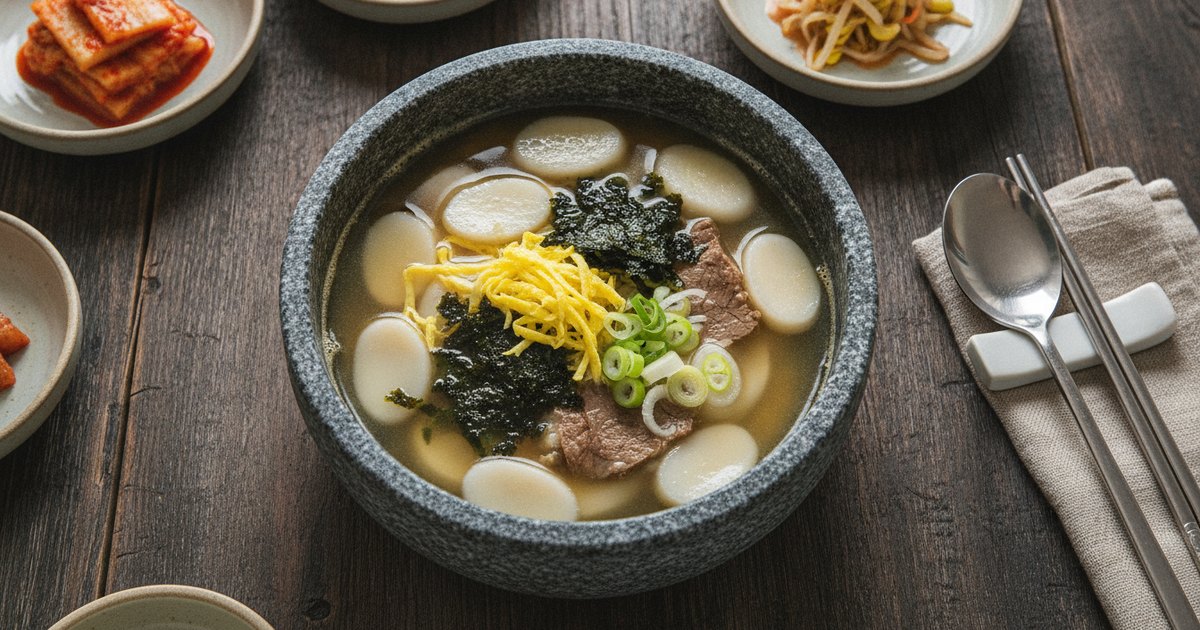
Every Korean New Year (설날, Seollal), a bowl of tteokguk is non-negotiable. This elegant soup — pale oval rice cakes floating in a golden, glass-clear beef broth, crowned with slivers of yellow and white egg and dark ribbons of roasted seaweed — is simultaneously the most comforting and the most culturally loaded dish in the Korean culinary calendar. Eating tteokguk on New Year's Day is how you officially become one year older. The coin-shaped rice cakes symbolize prosperity. The clear broth represents a clean start.
But here's what the kfoodlab team wants you to know: tteokguk doesn't need to wait for Seollal. It's an outstanding soup year-round — rich yet clean-tasting, deeply nourishing, and more achievable at home than it looks in a restaurant bowl. This guide covers everything, from coaxing a crystal-clear broth out of budget-friendly beef brisket to getting the rice cake texture exactly right.
What Is Tteokguk? The Soup That Ages You a Year
Tteokguk translates literally to "rice cake soup." Its history is documented back to the Joseon Dynasty (1392–1897), where the court almanac Dongguksesigi recorded it as an essential Seollal food. The rice cakes used — elongated white cylinders called garaetteok, sliced on a bias into thin oval "coins" — carry deliberate symbolism: their round shape echoes coins from the Joseon-era currency system, linking the dish to financial fortune for the year ahead.
The cultural weight is real. Koreans playfully ask, "Tteokguk meogeotseo?" ("Did you eat your tteokguk?") as a shorthand for "Did you age another year?" A bowl consumed on New Year's morning marks the passage of time. This is why tteokguk, for all its deceptive simplicity, is one of the most emotionally resonant dishes in Korean food culture.
For Western cooks, there's also a practical hook: the flavor profile sits comfortably alongside beloved European broths. Anyone who has made a French pot-au-feu or an Italian brodo has already done most of the same foundational work — long-simmered beef, aromatics, clarity of flavor.
The Ingredients: What You're Working With
The Broth Base: Beef Brisket (Yangji)
Traditional tteokguk broth is built by slow-simmering a whole piece of beef brisket until its collagen breaks down and floods the liquid with body and flavor. The goal is a broth that reads clean and pure — not murky, not greasy, not aggressively spiced. The supporting aromatics (onion, garlic, green onion, black pepper, and optionally dried kelp and Korean radish) add gentle background complexity without competing with the beef.
The most important technique separating Korean broth-making from many Western approaches is the preliminary blanch: the brisket goes into cold water, gets brought to a full boil for 3–5 minutes, then gets drained and rinsed before the real simmer begins. This single step removes coagulated proteins and blood that would otherwise cloud your broth and add a subtle metallic undertone. The difference in a side-by-side comparison is striking.
Dried kelp (dashima in Korean, the same as Japanese kombu) is optional but genuinely worthwhile. Two or three small pieces added at the start contribute glutamates — the savory, almost electrical depth we associate with great broth — without any fishy flavor. Remove the kelp after about 20–25 minutes; left in longer, it can leach a slightly slimy texture.
The Rice Cakes: Texture Is Everything
Tteokguk tteok (떡국떡) are the pre-sliced oval rice cakes made specifically for this soup. They're produced from non-glutinous rice flour (maepssal), giving them a firm, satisfyingly chewy bite rather than the stretchy elasticity of glutinous rice cakes. This distinction matters — the word "rice cake" covers a huge range of textures in Korean cuisine, and tteokguk tteok are specifically designed to hold their shape in hot broth while absorbing its flavor.
The signs of perfectly cooked tteok are specific: they float to the surface of the broth, their edges turn very slightly translucent, and when you bite into one, you meet a tender exterior that gives way to a just-barely-chewy center. That textural moment — yielding but not soft, substantial but not dense — is the whole point. It cannot be recovered once lost to overcooking.
The Garnishes: Where the Dish Becomes Beautiful
Korean cooking uses the term 고명 (gomyeong) for the decorative toppings that finish a dish. Tteokguk's classic gomyeong ensemble has four components:
- Jidan (지단): Egg yolks and whites cooked separately into paper-thin omelets, then sliced into thin strips or small diamonds. The contrast of yellow and white against the pale broth is visually elegant — and the silky texture adds genuine richness to each spoonful.
- Seasoned brisket: The cooked brisket from the broth, shredded and tossed with sesame oil, guk ganjang, garlic, and pepper. This is what makes the soup a meal.
- Gim (김): Strips of roasted seaweed. They deliver a flash of umami, a crackle of texture, and that coastal Korean flavor note. Act fast — they soften within 90 seconds of contact with hot liquid.
- Green onion: Thinly sliced for freshness and mild heat.
Finding These Ingredients in Western Kitchens
At an H Mart or any Korean grocery, you'll find everything in a single visit. Tteokguk tteok is sold refrigerated or frozen in plastic bags — look for "sliced rice cake" or the label 떡국떡. Guk ganjang (국간장, Korean soup soy sauce) is lighter in color and saltier per tablespoon than regular soy sauce; it's the key to a pale, clean-looking broth. It may be labeled "soup soy sauce" or "joseon ganjang" on the packaging.
No Korean grocery nearby? Here's how to adapt:
- Tteokguk tteok: Order online through Hanahreum, Wooltari, or Amazon. Frozen ships perfectly and keeps for months.
- Guk ganjang substitute: Regular soy sauce works, but use about 60–70% of the quantity called for (it's darker and will visibly tint your broth). Add a small splash of fish sauce separately to approximate the complex umami guk ganjang provides.
- Dashima/kombu: Widely available in the Japanese foods section at Whole Foods, Trader Joe's, or any natural foods store — the ingredient is identical to Korean dashima.
- Beef brisket: Universal in American grocery stores. The flat cut is standard for broth; the point cut has more fat marbling and works equally well.
Building the Broth: The Foundation of Great Tteokguk
Set aside 1½ hours for the broth, and treat that time as investment rather than inconvenience. Once the pot is simmering, it needs almost no attention.
After your blanching step, combine the rinsed brisket with 10–12 cups (2.4–2.8L) fresh cold water, the onion, garlic, green onion stalks, peppercorns, and kelp. Bring to a boil, then dial the heat down immediately to a gentle simmer — small bubbles rising lazily at the edges of the pot. This is critical: a vigorous rolling boil emulsifies the fat into the broth, turning it milky and slightly greasy. A gentle simmer preserves the clarity and lets the collagen extract slowly for better body. Skim anything that rises in the first 10 minutes, then largely leave it alone.
After about an hour, prod the brisket with a fork. It should feel tender all the way through and pull apart easily. Remove it, strain the broth through a fine-mesh sieve, and what you should have is a clear, deep golden-amber liquid that smells profoundly savory with a gentle, clean sweetness from the onion. If it looks that way, you've nailed the broth.
Regional Variations Worth Exploring
Tteokguk is not monolithic across Korea. Regional traditions offer genuinely distinct experiences:
- Mandu-tteokguk (만두떡국): Sliced rice cakes and Korean dumplings (mandu) share the same bowl. It's the most popular variation outside Korea — richer, heartier, and especially beloved in Seoul. If you're already making dishes like gimbap at home, mandu is a natural next project.
- Gaeseong-style: Uses tiny clam-shaped rice cakes (jogaetteok) and a richer, more complex meat-forward broth from the former Korean capital of Gaeseong. Visually distinctive and worth seeking out.
- Seafood tteokguk: Common in coastal regions, built on an anchovy-kelp broth (myeolchi yuksu) instead of beef. Lighter, deeply savory in a different register, and fully compatible with pescatarian diets.
- Soy milk tteokguk (duyu tteokguk): A modern vegan-friendly variation with a creamy, pale broth. Unexpected but genuinely delicious.
For weeknight shortcuts, a good-quality store-bought beef or chicken stock enriched with a piece of kelp and seasoned with guk ganjang produces a serviceable broth. You won't get the same depth as a from-scratch brisket broth, but the soup will still satisfy. If you love soul-warming Korean soups and stews, doenjang jjigae is the logical next recipe to explore — a completely different flavor profile, built on fermented soybean paste, but equally nourishing.
Common Mistakes to Avoid
1. Skipping the Blanching Step
If your finished broth is grey-brown rather than golden-clear, or has a faint metallic or gamey undertone, the missed blanch is almost certainly the cause. Coagulated proteins and blood released during the initial boil are what cloud and muddy the flavor. Once you've gone past this step without blanching, you can try straining through cheesecloth to clarify the appearance, but the flavor impact remains. Do the blanch every time, no exceptions.
2. Simmering at Too High a Heat
A vigorous boil actively works against you here. It breaks fat droplets into tiny particles that stay suspended in the broth rather than rising to the surface to be skimmed. The result is an opaque, slightly greasy soup that looks more like pho broth gone wrong than tteokguk. The target is the gentlest possible simmer — surface barely trembling. If you hear a real bubbling sound, the heat is too high.
3. Overcooking the Rice Cakes (The Most Common, Least Recoverable Error)
Tteokguk tteok go from perfect to ruined in under two minutes of extra cooking time — and they keep cooking from residual heat even after the pot leaves the stove. The diagnosis for overcooked tteok: they've collapsed into a gluey, porridge-like mass and the broth has turned thick and starchy. There is no fix. Stop cooking the moment they float and pass the bite test. If you're making the soup in batches or expect leftovers, cook rice cakes fresh for each serving — do not store them in the broth overnight.
4. Using Regular Soy Sauce at Full Quantity
Standard soy sauce (Kikkoman or similar) is darker, less salty per tablespoon, and has a more assertive flavor profile. At the same quantity as guk ganjang, it will visibly darken your broth to an amber-brown color that looks more like ramen than tteokguk, and it shifts the flavor profile toward something richer and less clean. If substituting, use 60–70% of the quantity, add it gradually while tasting, and accept that the broth will be somewhat darker than the traditional pale gold.
5. Adding Hard, Un-soaked Rice Cakes Directly to the Pot
Cold, stiff rice cakes dropped straight from the freezer into boiling broth cook unevenly — the outside pastes up and turns gummy while the core stays chalky and hard. The soak in cold water (20–30 minutes minimum) softens them uniformly so they cook through evenly and absorb broth flavor along the way. This step is especially critical for any rice cakes that feel rigid or dry to the touch.
6. Garnishing Too Early, Especially the Gim
Roasted seaweed is magnificent for about 60–90 seconds after it hits the soup. After that, it wilts into soft, slightly slimy strips that sink to the bottom of the bowl. Arrange all garnishes directly before the bowl goes to the table — not while you're ladling the soup. For a large dinner party, serve the gim on the side in a small dish so guests add it themselves. The difference in texture between gim added immediately versus gim added two minutes early is not subtle.
Frequently Asked Questions
Can I make tteokguk ahead of time? The broth can be made up to 3 days ahead and refrigerated. In fact, this improves it — chilling solidifies the fat layer at the surface, which you can simply lift off for an even cleaner, leaner broth. Store broth and raw rice cakes completely separately, and always cook the rice cakes fresh when you're ready to eat. Never store rice cakes sitting in broth — they'll absorb most of the liquid and turn mushy within a few hours.
I can't find tteokguk tteok anywhere locally. What can I do? The oval sliced shape is specific to this soup, and the texture of non-glutinous rice cakes is genuinely hard to substitute closely. Your best option is to order online — tteokguk tteok ships frozen and keeps well for months in the freezer. If you can find cylindrical garaetteok, you can slice them yourself on a bias to approximate the shape. Japanese mochi cut into pieces produces a vaguely similar result but has a stickier, more glutinous texture.
Is there a vegetarian or vegan version? Yes — replace the beef broth with a kelp-and-shiitake mushroom broth for a fully vegan version, or use an anchovy-kelp broth (myeolchi yuksu) for a pescatarian variation. The rice cakes themselves are vegan. For garnish, sautéed mushrooms make a compelling substitute for the seasoned beef topping, and the jidan egg is optional rather than essential. Season the broth with guk ganjang as normal — it's vegetable-based.
What does tteokguk actually taste like if I've never had it? The broth reads clean, savory, and lightly salty — similar in spirit to a clear beef consommé but gentler, with a subtle sweetness from the onion and a barely detectable oceanic depth from the kelp. The rice cakes themselves are neutral in flavor; they function as a vehicle for the broth, absorbing it as you eat. The overall impression is restorative rather than rich — the kind of soup that feels genuinely nourishing without being heavy.
How do I reheat leftover tteokguk? Store broth and uncooked rice cakes separately and reheat the broth over medium-low heat, adding a splash of water or stock to restore volume. If you have leftover soup that already contains rice cakes, eat it within one day — the rice cakes will have swollen considerably overnight. Reheat gently on the stovetop rather than in a microwave, and add extra broth or hot water to loosen. Do not expect the rice cakes in day-old leftovers to have their original texture; they'll be softer and thicker in the broth. ```