
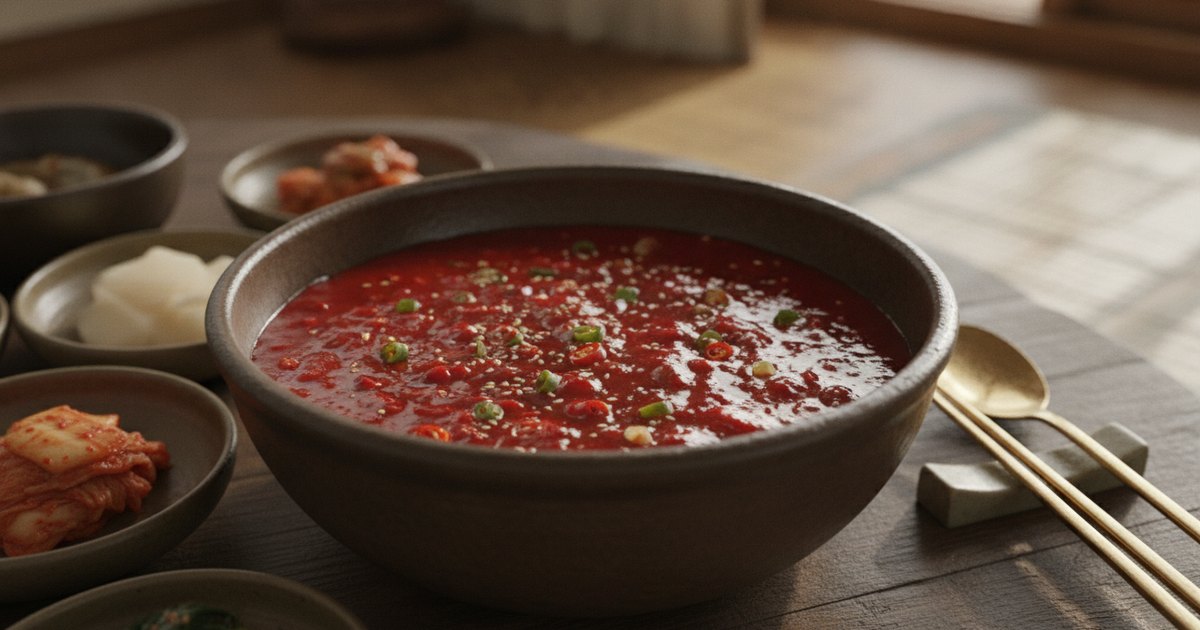
Korea's fried chicken scene is one of the most competitive food industries on the planet. With nearly 40,000 dedicated chicken restaurants across the country — roughly the same number as all McDonald's locations worldwide — the bar for what constitutes great fried chicken is extraordinarily high. And at the center of it all sits one sauce: yangnyeom (양념).
Sticky, scarlet, sweet-hot, and impossibly glossy, yangnyeom sauce transforms an already beautifully crispy piece of fried chicken into something that has its own cultural gravity. It's not just a condiment — it's a glaze with a documented history, a specific chemistry, and a surprisingly approachable recipe that you can execute in your own kitchen even if the nearest Korean grocery store is an hour's drive away.
Let's get into it.
A Sauce Born in Daegu: The Surprisingly Specific Origin Story
The story of yangnyeom chicken begins in 1978 in the Hyomok neighbourhood of Daegu, South Korea's fourth-largest city. A man named Yun Jong-gye (윤종계) opened a small fried chicken shop called Gyeseong Tongdak. Business was good — but he noticed a recurring problem. The ultra-crispy crust of his fried chicken was scratchy on the palate. A local grandmother offered a deceptively simple piece of advice: sweeten the coating.
What Yun devised around 1980 was a revelation. A sauce built on corn syrup and chili that was glossy enough to lacquer the crust without turning it soggy. The physics of it mattered. Sugars in the syrup caramelised against the surface of the hot crust, effectively sealing it. The chili element — initially gochugaru, the coarsely ground Korean red pepper flake — added heat without the acidity that would soften the coating.
But the invention didn't stop at the sauce. Yun also created chicken-mu — those small, cool cubes of pickled radish now served alongside every order of Korean fried chicken worldwide. Its crisp, vinegary sweetness is engineered to cut through the richness of the glaze and reset the palate between bites. The pairing is now utterly inseparable from the dish.
In a gesture that shaped an entire industry, Yun deliberately refused to patent his recipe, allowing any chicken restaurant in Korea to adopt it freely. An employee named Yang Heekwon eventually left and founded Pelicana Chicken in April 1982, which brought the sauce to national and eventually international audiences — particularly through a 1989 television campaign. The Korean Supreme Court ruled in 1997 that Yun had originated the recipe. Yun Jong-gye passed away on December 30, 2025, at age 73. His invention, however, is very much alive in every glossy, fiery order of yangnyeom chicken served anywhere in the world.
Worth noting: when KFC officially opened in Korea on April 25, 1984, yangnyeom chicken already existed and had been feeding Daegu for years. The Korean version of fried chicken would go on to become far more diverse and culturally embedded than anything the American chain ever offered there.
What Exactly Is Yangnyeom Sauce?
"Yangnyeom" (양념) is a broad Korean term for any seasoned sauce or marinade — it covers bulgogi marinades, bibimbap sauces, and seasoning pastes of all kinds. In the context of fried chicken, however, it specifically refers to this sweet-spicy-glossy red glaze.
At its core, yangnyeom sauce for chicken is a cooked reduction built around four structural pillars:
- Heat — from gochujang (fermented chili paste), gochugaru (chili flakes), or both
- Sweetness — from rice syrup, corn syrup, sugar, or honey
- Umami and salt — from soy sauce, plus the fermentation depth of the gochujang itself
- Acid and body — from ketchup, which contributes tomato acid, natural pectin (for clinginess), and additional sweetness
Garlic is non-negotiable. Sesame oil finishes it. That is the architecture. Everything else — additional vinegar, ginger, onion powder, a splash of mirin — is variation and personal preference.
The Core Ingredients, Decoded for Western Kitchens
Gochujang (고추장)
The non-negotiable foundation of the sauce. Gochujang is a fermented paste made from chili, glutinous rice, fermented soybean, and salt — it brings heat, sweetness, umami, and a faintly smoky complexity that no other single ingredient replicates. For a full breakdown of brands, heat levels, and what to look for on the label, our Gochujang Guide is the place to start.
Where to find it: Any H Mart or Korean grocery will carry multiple brands. In mainstream Western supermarkets, look in the international aisle — Whole Foods typically stocks Chung Jung One and Sempio; Trader Joe's has carried their own version seasonally. It's widely available on Amazon. Do not substitute sriracha — it's too thin, too acidic, and lacks the fermented depth that makes the sauce taste like the real thing.
Rice Syrup (mulyeot, 물엿)
Rice syrup is what gives yangnyeom sauce its signature high gloss and sticky consistency — it's thicker and less aggressively sweet than corn syrup, with a subtle malt note. Find it at H Mart labelled "rice malt syrup" or "oligodang." Best substitute: corn syrup works very well and is the closest in behaviour. Honey is acceptable but adds its own floral note — pleasant, but distinct. Avoid maple syrup; its flavour is too dominant.
If you're heading to an H Mart for the first time, our H Mart Shopping Guide is worth bookmarking before you go.
Ketchup
Not present in Yun's original formulation but nearly universal in modern recipes — and for good reason. The tomato purée provides natural pectin that helps the sauce cling to chicken, while the vinegar in commercial ketchup adds brightness that balances the heavy sweetness of the syrup. Standard Heinz or equivalent works perfectly; gourmet ketchups with strong herb or spice additions can clash with the gochujang.
Soy Sauce
Standard Korean or Japanese soy sauce. Tamari works for gluten-free. Sweet soy sauce (like Indonesian kecap manis) will tip the sweetness too far — avoid it here.
Garlic
Fresh, finely minced or microplane-grated. Garlic powder is a distant substitute — use it only if you have no alternative, and halve the quantity, since the raw punch of granulated garlic reads differently in this sauce.
The Soy Garlic Variation
Not everyone wants fire with their chicken. The soy garlic version (간장양념치킨) is yangnyeom's cooler, more nuanced sibling — equally sticky and lacquered, but deeply savoury without any chili heat. To adapt: omit the gochujang and gochugaru entirely. Increase the soy sauce to 3 tablespoons (45 ml), bump the garlic to 6 cloves, add 1 tablespoon of oyster sauce for fermented depth, and lean harder into the sugar-to-syrup ratio. The result is a caramel-brown glaze with a pungent garlic backbone that's addictive in a completely different way from the red version.
Many Korean chicken restaurants sell half-and-half orders — half yangnyeom (red), half soy garlic. It's a practical and generous way to serve guests with different spice tolerances.
Beyond Chicken: Other Uses for Yangnyeom Sauce
Once you've made a batch, the sauce is genuinely versatile:
- Tteokbokki: Stir a tablespoon into your spicy rice cake sauce for an extra layer of fermented depth. See our full Tteokbokki guide for the base recipe.
- Roasted cauliflower or tofu: Toss cubed tofu or cauliflower florets in the sauce before the final 10 minutes in a 220°C (425°F) oven — you get a lacquered, slightly charred plant-based alternative.
- Grilled wings: Brush onto wings during the last 3–4 minutes of grilling for a caramelised-charred effect.
- Dipping sauce: Thin with 1 teaspoon of rice vinegar and a splash of water for a looser condiment.
Store leftover sauce in a sealed glass jar in the fridge for up to 2 weeks. It will thicken as it cools — reheat gently in a small pan with a splash of water to restore the consistency.
Common Mistakes to Avoid
1. Burning the Garlic
This is the single most common failure mode, and it's irreversible. Garlic goes from golden-fragrant to acrid-bitter in under 30 seconds at high heat. The pan should be at medium-low — you should hear a gentle sizzle, not a sharp spatter. Keep the garlic moving constantly. When it's ready, it smells sweet and toasty, looks pale golden, and the oil around it will be fragrant. The moment you see the edges beginning to brown or you detect any nuttiness turning dark, pull the pan from the heat immediately. If it burns, discard and start over. There is no fixing bitter garlic in a sauce this concentrated.
2. Skipping the Acid (or Not Enough of It)
A sauce made only from gochujang and syrup, without the balancing acidity of ketchup or rice vinegar, tastes flat, heavy, and one-dimensional. If your finished sauce sits on the palate without any lift — if it feels coating rather than bright — it almost always needs more acid. Taste before you toss the chicken: a properly balanced yangnyeom sauce should register sweetness first, then a building heat, with a faint tang at the very end that keeps you reaching for the next piece.
3. Over-Reducing the Sauce
Two to three minutes of gentle simmering is all the sauce needs. If you push past that, it thickens beyond the point of usefulness — instead of coating the chicken in a flowing glaze, it seizes around it in a sticky, uneven shell. You'll know you've gone too far when the sauce starts pulling away from the edge of the pan in a sheet rather than flowing freely. Fix: add 1–2 tablespoons of warm water and stir vigorously off the heat. Next time, keep the heat at medium-low and set a timer.
4. Saucing Chicken That Has Rested Too Long
Yangnyeom sauce is sugar-heavy and oil-based. On cool chicken, it doesn't adhere — it slides off, pools in the bowl, and the chicken looks wet rather than glazed. The window for tossing is tight: within 2 minutes of the chicken leaving the oil. If you're frying in batches, keep finished pieces in a 100°C (212°F) oven — just warm enough to hold them without continuing to cook the crust — and sauce everything together at the very end.
5. Using Inconsistent Gochujang
Not all gochujang is the same heat level. Common mid-range brands (Chung Jung One "Sun" label, Haechandle) are a reliable baseline. Some premium or specialty hot varieties are significantly spicier; some milder imported versions are heavily sweet with almost no heat. If you're using an unfamiliar brand, start with 2 tablespoons (30 g) and add the third only after tasting the sauce off the heat. Adjust heat with gochugaru rather than more gochujang — the flakes add pure heat without further sweetness.
6. Adding Sesame Oil Too Early
Sesame oil is a finishing ingredient, full stop. Its aromatic compounds are volatile — they dissipate within seconds at cooking temperature. If you add it to the pan before or during the simmer, you lose the aroma entirely and are left with something that smells generically of cooked oil. Stir it in off the heat, after you've removed the pan from the burner. Done correctly, the sauce smells nutty, complex, and faintly roasted when you open the container. Done wrong, it's indistinguishable from any other savory sauce.
FAQ
Can I make yangnyeom sauce ahead of time?
Yes — and it actually benefits from sitting overnight as the flavours meld and the garlic mellows slightly. Store in a sealed glass jar in the refrigerator for up to 2 weeks. It will thicken considerably as it chills. To use: reheat gently in a small saucepan over low heat with a tablespoon of water, stirring until it returns to a flowing consistency.
Is yangnyeom sauce very spicy?
It lands in the mild-to-moderate range for most palates. The sweetness of the rice syrup and the body from the ketchup significantly temper the heat from the gochujang. Most people who are sensitive to spice find it manageable. To dial it back further, reduce the gochujang to 2 tablespoons and increase the ketchup by the same amount. To increase heat, add ½–1 tablespoon of gochugaru after tasting.
Can I make yangnyeom sauce without gochujang?
You can approximate it with a mixture of red miso paste (fermented depth) + sriracha (heat) + smoked paprika (colour), but the result will taste noticeably different — flatter and less complex. Gochujang is genuinely worth sourcing; it's increasingly stocked at mainstream supermarkets in the international aisle, and it keeps in the fridge for months once opened. The fermentation is the point — it's what makes the sauce taste layered rather than straightforwardly spicy.
What does "chimaek" mean, and what does it have to do with this sauce?
Chimaek (치맥) is a portmanteau of chicken (치킨) and maekju (맥주, beer) — the beloved Korean combination of fried chicken and cold beer. It became a mass cultural phenomenon during the 2002 FIFA World Cup when watching matches and eating yangnyeom chicken became a nationwide ritual. Oxford English Dictionary added the word in September 2021. The sweet-heat-sticky profile of yangnyeom sauce is specifically designed to make you reach for a cold drink — making chimaek a pairing that's engineered as much as it is cultural.
What should I serve alongside yangnyeom chicken?
Chicken-mu — the sweet pickled radish cubes that Yun Jong-gye invented alongside the sauce — is the essential accompaniment. Its sharp, cool crunch is specifically calibrated to contrast the sticky, spicy chicken and reset the palate. Beyond that: a cold beer, simple steamed rice to soak up any extra sauce, or raw vegetables like cucumber sticks and celery. Yangnyeom chicken is complete on its own; it doesn't need much supporting cast. ```