
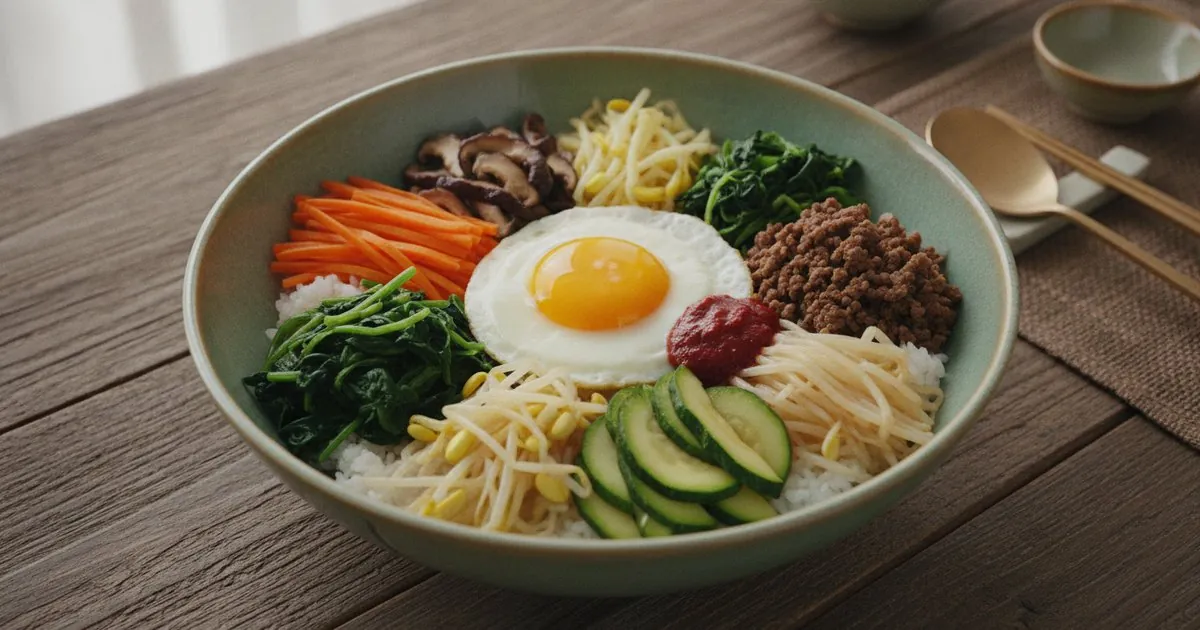
In 2023, bibimbap was Google’s fastest-rising recipe search globally — a remarkable milestone for a dish that has been at the center of Korean cuisine for centuries. The timing makes sense. As Korean food has moved from niche to mainstream, bibimbap has emerged as many people’s first real encounter with Korean home cooking: colorful, customizable, endlessly adaptable, and deeply satisfying in a way that transcends cultural boundaries.
Bibimbap (비빔밥) literally means “mixed rice” — bibim (mixing) + bap (rice) — and the name tells you everything about how to eat it. You get a bowl of warm rice topped with an array of beautifully prepared vegetables, some seasoned beef, and a bright-yolked fried egg. Then you add a spoonful of spicy-sweet gochujang sauce and mix it all together with a spoon until the bowl becomes a unified, saucy, extraordinarily flavorful whole. The mixing is not just practical — it’s the point.
What Is Bibimbap? A Brief History
Bibimbap has appeared in Korean texts since at least the late Joseon Dynasty (19th century), and culinary historians believe it’s far older. One origin theory holds that bibimbap emerged as a way to use up multiple side dishes (banchan) by combining them over rice at the end of a meal — a kind of organized deliciousness born from practicality.
Another origin story, more romantic, places bibimbap’s creation on New Year’s Eve, when Koreans needed to use up all remaining food before the new year began, as leftover food was considered bad luck. Whether or not this legend is historically precise, it captures something true about the dish: bibimbap is inherently about combining what you have into something greater than the sum of its parts.
The most famous regional version is Jeonju bibimbap, from the city of Jeonju in North Jeolla province — long considered Korea’s culinary capital. Jeonju bibimbap is more elaborate, with raw beef (yukhoe), more varieties of namul (seasoned vegetables), and sometimes a rich beef bone broth used to cook the rice. It’s magnificent, and if you’re ever in Korea, eating bibimbap in Jeonju is a pilgrimage worth making. Our home version is more streamlined, but no less delicious.
The Gochujang Sauce: Heart of the Bowl
Bibimbap sauce is the element that ties everything together. Our version uses gochujang as the base — that deep red fermented Korean chili paste that delivers heat, sweetness, and a funky depth unlike any other condiment. Mixed with sesame oil, rice vinegar, sugar, garlic, and a little water to loosen it, the sauce transforms into something you’ll want to put on everything.
The sauce should be intensely flavored because it gets dispersed across an entire bowl of rice and vegetables. Don’t be timid with it. And don’t skip the rice vinegar — the acidity is essential, cutting through the richness of the egg yolk and sesame oil to keep the bowl feeling bright rather than heavy.
For a comprehensive primer on buying, storing, and using gochujang, our gochujang guide has everything you need to know.
The Vegetables: The Soul of Bibimbap
What separates a great bibimbap from a mediocre one is almost always the namul — the individually seasoned, cooked vegetable preparations. In Korea, there’s a whole category of side dishes called namul: vegetables blanched, sautéed, or marinated and seasoned with sesame oil, garlic, salt, and sometimes soy sauce.
The key principle is that each vegetable gets prepared and seasoned on its own, so that each component has a distinct flavor. You don’t want the zucchini to taste like the spinach or the carrots — you want each bite you mix into your bowl to be a slightly different experience.
The vegetables I’ve chosen here are the classic bibimbap lineup, but the dish is genuinely flexible. Common variations include:
- Gosari (bracken fern shoots): earthy, slightly chewy, deeply traditional
- Doraji (bellflower root): slightly bitter and crisp, a Jeonju staple
- Hobak (Korean zucchini): milder and softer than Western zucchini
- Kongnamul (soybean sprouts, not mung bean): crunchier and more substantial than mung bean sprouts
If you want to try japchae-style glass noodles alongside these vegetables, our japchae recipe makes a wonderful companion dish or even a bibimbap topping.
The Beef: Bulgogi-Style
The beef in bibimbap is seasoned in a simplified bulgogi marinade — soy sauce, sesame oil, sugar, garlic — and cooked quickly over high heat. Thinly sliced sirloin or ribeye works best. If you find slicing raw beef difficult, freeze it for 20-30 minutes first: it firms up just enough to make thin, even slices much easier.
You can also make bibimbap completely vegetarian by skipping the beef and adding more varieties of namul. A vegetarian bibimbap with five or six different prepared vegetables is an utterly satisfying meal.
Dolsot Bibimbap: The Sizzling Stone Bowl Version
The version described here is the standard bowl version (geu릇 bibimbap). But there’s a more dramatic and arguably superior preparation called dolsot bibimbap — made in a sizzling stone bowl (dolsot) that’s been preheated over a flame until scorching hot.
When you press the rice into a dolsot and pour in a little sesame oil, the rice at the bottom forms a crispy, golden crust called nurungji — one of the greatest textures in Korean cuisine. The entire bowl comes to the table still sizzling violently, and you mix everything together while the crust continues to form. If you have a dolsot (available at Korean grocery stores or online), this is the version to aspire to.
For home cooking without a dolsot, you can approximate nurungji by pressing your rice into a well-oiled cast-iron skillet over high heat for a few minutes before assembling.
Tips for the Best Bibimbap at Home
Use warm rice. Cold rice doesn’t mix well and makes the whole bowl feel disconnected. If your rice has cooled, reheat it with a small splash of water in the microwave.
Don’t skip the visual arrangement. I know it sounds fussy, but arranging the vegetables and beef in distinct sections before serving genuinely matters — not for Instagram, but because it preserves each ingredient’s integrity until the moment of mixing. If you pile everything together before serving, the flavors blend prematurely and the components lose their individual character.
Season the namul properly. Each vegetable gets salt and sesame oil as a minimum. Don’t be stingy. Underseasoned vegetables make the whole bowl taste flat.
Cook in batches and wipe the pan between vegetables. This keeps flavors from muddying. The pan will build up a little flavor each time, which is fine — just a quick wipe with a paper towel between vegetables keeps things clean.
Variations
Hoedeopbap: A raw fish variation of mixed rice, similar in structure to bibimbap but with sliced raw fish and a soy-sesame sauce rather than gochujang. Popular in coastal Korean regions.
Yeongyang bibimbap: A “nutritional” version that emphasizes superfoods like black rice, pine nuts, and jujubes — popular in health-forward Korean restaurants.
Tofu bibimbap: Replace the beef with extra-firm tofu, sliced and pan-fried until golden. Marinate the tofu in the same soy-sesame-garlic mixture. Excellent vegetarian option.
Kimchi bibimbap: Add a small pile of well-fermented kimchi alongside your other vegetables. The sourness plays beautifully against the gochujang sauce.
Where to Buy Korean Ingredients
Most bibimbap ingredients are now available at mainstream grocery stores. For the full Korean pantry experience:
Short-grain rice: Koshihikari, Nishiki, or Kokuho Rose at Costco, Asian grocery stores, or online. Look for “sushi rice” labels at mainstream supermarkets.
Gochujang: Now widely available at Whole Foods, Target, and most mainstream grocery stores. Korean brands CJ Haechandle and Sempio are reliable.
Sesame oil: Any Asian grocery store. Kadoya (Japanese brand) is widely available and excellent. Korean brands like Ottogi are equally good.
Dried shiitake mushrooms, bean sprouts, and Korean vegetables: H Mart, Zion Market, 99 Ranch, or any local Korean/Asian grocery. Online, try Amazon or Weee! (Asian grocery delivery).
Storage and Meal Prep
Namul: The seasoned vegetables keep beautifully in the refrigerator for up to 4 days. This makes bibimbap an excellent meal-prep dish — cook all your namul on Sunday and assemble bowls throughout the week. Each vegetable should be stored separately in small containers.
Beef: Cook fresh to order or reheat briefly in a pan if made ahead.
Rice: Reheat with a small splash of water, covered, in the microwave.
Assemble to order: The completed bowl should be eaten immediately. Mix and eat.
Common Mistakes to Avoid
Not squeezing blanched greens thoroughly enough. Spinach and other leafy namul hold a surprising amount of water after blanching. If you skip a firm squeeze — or just a gentle press — that water drains into your bowl during assembly and dilutes the gochujang sauce into a thin, flat puddle by the time you start eating. After blanching, gather the greens in your hand and wring them out firmly, then season. The namul should feel almost dry to the touch before it goes into the bowl.
Seasoning each namul as if it were a standalone side dish. Because every vegetable component gets individually seasoned with salt, soy sauce, or sesame oil, there’s a natural instinct to make each one taste complete on its own. Resist it. Once you add the gochujang sauce and mix everything together, seasonings compound across the whole bowl. Season namul to about 70% of where you think they need to be — they’ll arrive at the right place after mixing.
Using gochujang sauce straight from the container without loosening it. Undiluted gochujang is thick and sticky, and it will clump in two or three spots in your bowl rather than coating every grain of rice and every vegetable evenly. The water in the sauce recipe is not optional — it drops the viscosity so the sauce disperses in thin ribbons as you mix. Start with one tablespoon of water, stir until smooth, and add more if the sauce still ribbons off a spoon in a stiff rope rather than flowing freely.
Cooking the bulgogi-style beef over medium or low heat. The thinly sliced beef needs fierce, high heat and an uncrowded pan. Crowd the pan or turn the heat down and the beef steams in its own moisture — you get gray, chewy slices with none of the caramelized, slightly charred edges that make it taste like beef bulgogi rather than boiled beef. Cook in two batches if needed, and wait until the pan is visibly hot before adding the meat.
Overcooking the egg yolk. A fully set yolk is a missed opportunity. The whole point of the egg in bibimbap is that the runny yolk breaks as you mix and becomes a rich, glossy second sauce that coats the rice alongside the gochujang. Fry the egg over low heat until the white is just set and the yolk is still completely liquid — cover the pan for the last 30 seconds if the white isn’t setting fast enough, rather than raising the heat.
Attempting dolsot nurungji in a bowl that isn’t genuinely scorching. The crispy rice crust forms only when the bowl reaches very high heat before the rice goes in. If you’re using a dolsot, preheat it over medium-high for at least five minutes — it should spit audibly when you add the sesame oil. A lukewarm dolsot produces soft, slightly oiled rice that sticks without crisping, which is the worst of both outcomes.
Frequently Asked Questions
Do I really need to cook each vegetable separately? For an authentic bibimbap, yes — it’s the practice that makes the dish. Each vegetable has different cooking times and should have its own distinct seasoning. That said, if you’re short on time, you can cook the vegetables consecutively in the same pan, just making sure to season each one before moving to the next.
Can I make bibimbap without beef? Absolutely. Vegetarian bibimbap is completely traditional and widely eaten in Korea. Add more varieties of namul, or substitute pan-fried tofu or a handful of fried mushrooms for the protein.
What do I do if my egg breaks while frying? A slightly broken egg is not a disaster — mix it in anyway. Some bibimbap versions use a raw egg yolk placed directly on top (raw, not fried), especially in dolsot bibimbap where the heat of the stone bowl cooks it. If food safety is a concern, stick with the fried egg.
My sauce is too spicy. How do I fix it? Add more sugar and sesame oil, which will both mellow the heat. A small amount of honey also works well. You can also dilute with more water or a tiny splash of rice vinegar (the acidity can balance excessive spice).
Is bibimbap gluten-free? It can be easily made gluten-free. The only ingredient containing gluten is the soy sauce used in the beef marinade — substitute tamari (gluten-free soy sauce) and you’re set. Korean gochujang traditionally contains wheat, but certified gluten-free gochujang is available (Mother-in-Law’s Kimchi brand makes one).
How is bibimbap different from donburi? Both are rice bowl dishes with toppings, but they’re quite different in character. Japanese donburi typically has a single main protein simmered in a dashi-based sauce (like oyakodon or gyudon). Bibimbap has multiple separately prepared toppings, a more complex sauce, and is defined by the act of mixing everything together before eating.