
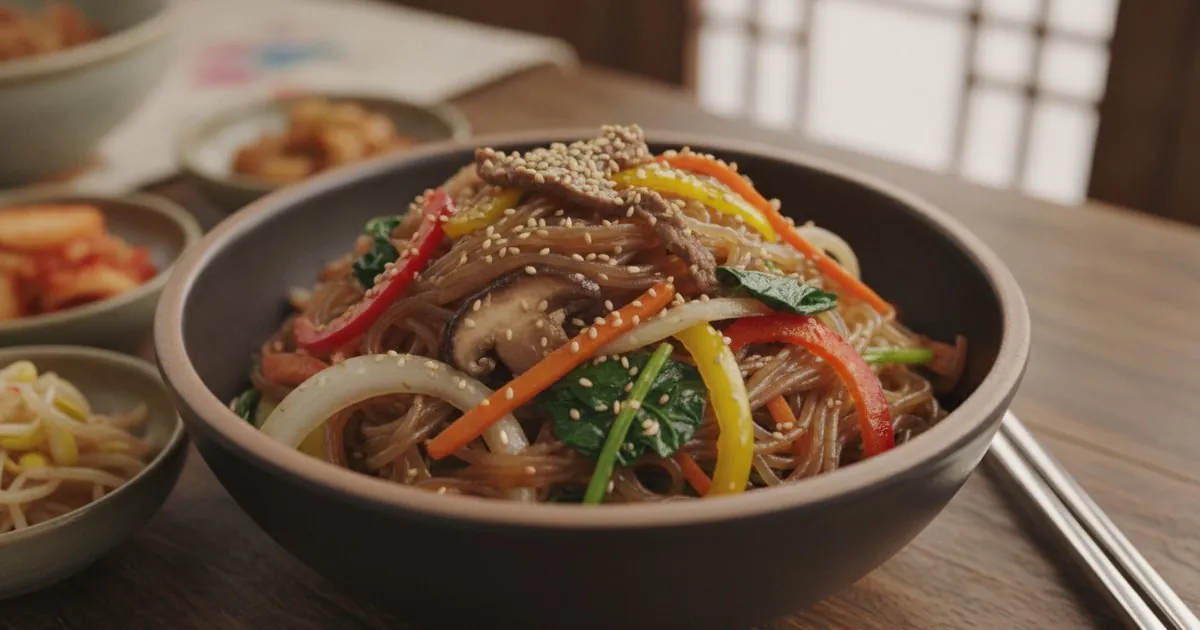
Every dish tells a story, but japchae (잡채) tells one of the most delightful stories in Korean culinary history. It begins in the 17th century, at the court of King Gwanghaegun, when a royal cook named Yi Chung presented the king with a new dish of stir-fried vegetables and mushrooms. The king was so enchanted with it that he promoted the cook on the spot. The word japchae itself means roughly “mixed vegetables” — jap (miscellaneous, assorted) + chae (vegetables) — and while the original dish contained no noodles at all, today’s glass noodle version has become one of Korea’s most beloved celebration foods.
Japchae appears at every significant occasion in Korean life: birthdays, Chuseok (the harvest moon festival), Seollal (Lunar New Year), weddings, and family gatherings. It’s the dish Korean grandmothers spend hours preparing, arranging the rainbow of vegetables with particular care, because japchae is meant to be looked at as much as eaten. And for good reason — a well-made japchae is genuinely beautiful, with glass noodles glistening in a soy-sesame sauce, woven through vibrant carrots, spinach, bell peppers, mushrooms, and tender beef.
BTS member V (Kim Taehyung) has named japchae as one of his favorite Korean dishes — a detail that has introduced countless fans worldwide to this classic for the first time. If you’ve arrived here via that route, welcome. This is absolutely a dish worth learning.
What Are Dangmyeon? The Glass Noodle Explained
The defining ingredient of japchae is dangmyeon (당면) — Korean sweet potato starch noodles. These are not the same as rice noodles, mung bean noodles, or any other variety of Asian glass noodle. Dangmyeon is made specifically from sweet potato starch, and this gives it properties that are unique: when cooked and dressed with sauce, dangmyeon becomes translucent, silky, and slightly chewy, with a capacity to absorb surrounding flavors while maintaining a distinct, satisfying texture.
Dangmyeon is available at virtually any Korean or Asian grocery store, and increasingly at mainstream supermarkets in the Asian aisle. Look for packages labeled “sweet potato starch noodles” or “glass noodles (당면).” The most common brand in the US is CJ Beksul, which comes in gray bundles. Online, they’re easy to find on Amazon or through Korean specialty retailers like Hmart.com.
Do not substitute other glass noodles if you can help it. Chinese cellophane noodles (mung bean starch) are too thin and cook differently. Rice vermicelli will give you a completely different texture. For authentic japchae, dangmyeon is genuinely worth seeking out.
The Vegetables: A Rainbow of Namul
The vegetable selection in japchae is both flexible and deliberate. Traditional versions feature at minimum: spinach, mushrooms, carrots, and onion. More elaborate versions add bellflower root (doraji), bamboo shoots, wood ear mushrooms, cucumber, and more.
The principle is the same as in bibimbap: each vegetable is cooked separately, briefly, and seasoned individually. This ensures that each component retains its own texture and color — that your carrots stay bright orange, your spinach stays vivid green, your bell pepper stays red. The visual payoff when you assemble the final dish is spectacular.
Spinach should be blanched briefly (30 seconds) rather than sautéed, then squeezed very dry. Wet spinach will release water into the noodles and dilute the sauce.
Mushrooms are perhaps the most important vegetable here. Dried shiitake mushrooms, rehydrated and sliced, provide a deep, concentrated umami that fresh mushrooms can’t fully match. If you use the soaking liquid (strained through a fine mesh sieve) to cook the noodles, you’ll add another layer of flavor to the dish.
Carrots should be julienned — cut into thin matchsticks — so they cook quickly and integrate smoothly with the noodles. Thicker cuts will be undercooked and crunchy where you want tender.
The Sauce: Savory, Sweet, Sesame
Japchae sauce is simpler than you might expect: soy sauce, sugar, sesame oil, and garlic. That’s essentially it. The magic is in the proportions. The sugar balances the salt and adds a slight gloss; the sesame oil adds a nutty richness that perfumes the entire dish; the garlic provides savory depth.
Don’t be tempted to add gochujang or make the sauce spicy. Traditional japchae is not a spicy dish. Its beauty is in the interplay of savory, sweet, and sesame — accessible to everyone at the table, from children to elderly grandparents.
If you want to explore more about foundational Korean pantry ingredients that make dishes like japchae possible, our Korean pantry essentials guide is the place to start.
Japchae as a Main vs. Side Dish
In Korea, japchae occupies a flexible role. At a regular family dinner, it’s typically served as a banchan (side dish) alongside rice and other dishes. At celebrations and holidays, it often graduates to a main dish or a starring element of the spread.
For Western home cooks, japchae works beautifully as a main course, serving 3-4 people as a hearty standalone meal. Add extra beef or tofu for more protein, or serve with steamed rice alongside if you want a more substantial spread.
The dish is also excellent at room temperature, which makes it ideal for potlucks, picnics, and large gatherings — you can make it hours in advance and it holds beautifully without refrigeration for 2-3 hours.
Tips for Perfect Japchae
Cook the noodles fully. The most common mistake in japchae is undercooked dangmyeon. Unlike Italian pasta, where al dente is the goal, dangmyeon should be fully tender with no chewiness or resistance to the bite. Under-cooked noodles will feel gluey and starchy when dressed. Cook them until they’re completely soft throughout, then rinse with cold water.
Cut the noodles with scissors. Dangmyeon comes in very long strands. After cooking, use kitchen scissors to cut them into 6-inch (15cm) lengths. This makes them manageable to eat and much easier to toss evenly with the sauce and vegetables.
Season in layers. Each vegetable gets a pinch of salt while cooking. The noodles get most of the sauce. The final assembled dish gets a second seasoning check. This layered approach is what makes the difference between japchae that’s flat and japchae that’s deeply flavorful.
Don’t skip the egg garnish. The jidan — the thin egg omelet cut into strips — is traditional in japchae and also adds a richness that contrasts beautifully with the savory noodles. Making it is easier than it sounds: just a thin layer of beaten egg cooked in a non-stick pan, rolled, sliced.
Use the largest pan you have. Japchae is a dish that expands as you add components. Start with a large wok or the biggest skillet in your kitchen for the final tossing step.
Variations
Vegetarian japchae (chaesik japchae): Replace the beef with extra mushrooms (a combination of shiitake, oyster, and king oyster mushrooms is excellent) and use a vegetarian-friendly soy sauce. The dish is just as satisfying.
Japchae with seafood: Substitute the beef with shrimp or squid for a lighter, ocean-forward version. Cook the seafood quickly (2-3 minutes) to avoid overcooking.
Spicy japchae: While non-traditional, adding a tablespoon of gochujang to the sauce gives you a modern, Korean-fusion variation that’s popular in some contemporary restaurants.
Japchae rice bowl: Serve japchae over steamed rice instead of as a standalone noodle dish — essentially a japchae dolsot bibimbap hybrid. Very satisfying.
Where to Buy Dangmyeon and Other Ingredients
Dangmyeon (sweet potato starch noodles): H Mart, Zion Market, 99 Ranch, or any Korean/Chinese grocery. Online at Amazon, Hmart.com, or Weee!. Common brand: CJ Beksul Glass Noodles.
Dried shiitake mushrooms: Widely available at Asian grocery stores, Whole Foods, and online. They keep for months in an airtight container.
Sesame oil: Look for Korean sesame oil specifically — it’s more intensely toasted and fragrant than Chinese or Japanese varieties. Ottogi and Kadoya are both good brands.
Soy sauce: Use Korean soy sauce (ganjang) if available — it has a slightly different flavor profile than Japanese shoyu. Kikkoman works fine as a substitute.
For a comprehensive overview of essential Korean pantry ingredients, see our Korean pantry essentials guide.
Storage and Reheating
Japchae keeps well in the refrigerator for up to 3 days, though the noodles will absorb sauce and thicken as they sit. When reheating, add a small splash of water and a drizzle of sesame oil to loosen the noodles, then warm gently in a pan over medium heat or in the microwave.
Japchae can also be served cold or at room temperature — especially in summer, cold japchae served with extra sesame seeds is refreshing and delicious.
Do not freeze japchae. The noodles turn mushy when frozen and thawed.
Common Mistakes to Avoid
Treating dangmyeon like al dente pasta. The single most common japchae failure is pulling the noodles too early. Sweet potato starch noodles need to cook until completely soft with zero resistance — no Italian-style undercooking here. Undercooked dangmyeon turns gluey and starchy once it absorbs the soy-sesame sauce, clumping into a dense, unpleasant mass. Boil until a strand pressed between your fingers yields with no hard or chalky center, then rinse immediately under cold water to stop cooking.
Skipping the immediate sesame oil toss on the noodles. After rinsing the cooked dangmyeon, the strands will begin sticking to each other within minutes. Before you do anything else, toss the drained noodles with a small drizzle of sesame oil. This creates a light coating that keeps each strand separate and glossy all the way through assembly and serving. If you forget this step, you’ll spend the final toss fighting a compressed noodle block that tears and bunches instead of weaving through the vegetables smoothly.
Not squeezing the blanched spinach dry enough. The article mentions this briefly, but it deserves real emphasis: residual water in the spinach actively dilutes the sauce and makes the finished dish watery. After blanching for 30 seconds and rinsing in cold water, squeeze the spinach in your fists repeatedly — much harder than feels necessary — until almost no liquid comes out. The spinach should feel compact and dense, not just damp.
Cooking vegetables together to save time. The rainbow effect of japchae — vibrant orange carrots, deep green spinach, rich brown mushrooms — disappears entirely if you toss everything into one pan at once. Colors bleed, moisture pools, and every component steams into the same soft texture. Cook each vegetable separately in a hot, lightly oiled pan, season it individually with a pinch of salt or a small measure of soy, and set it aside. This step is the labor of japchae, and it’s non-negotiable for a result that looks and tastes like the real thing.
Double-salting without realizing it. Because each vegetable component is seasoned on its own and the final assembly gets the full soy-sesame sauce, oversalting is easy to miss until it’s too late. Season each vegetable component lightly — you’re building a foundation, not finishing the dish. Taste as you make the final sauce and hold back a spoonful; you can always drizzle more over the plated japchae, but you can’t pull salt back out.
Using low heat for the beef and mushrooms. Dried shiitake and beef both need a genuinely hot pan to develop savory browning. If the pan is too cool, they release moisture and steam rather than sear, resulting in pale, slightly rubbery pieces that lack the umami depth that anchors the whole dish. Get the pan hot before adding oil, and don’t crowd the beef — cook in a single layer and let it sit for 30–40 seconds before stirring.
Frequently Asked Questions
Why are my noodles gummy and clumping together? This usually happens when the noodles are undercooked and then starch re-gels as they cool. Make sure to cook the noodles until fully tender, rinse with cold water immediately, and toss them with a bit of sesame oil right after draining to prevent sticking. Use scissors to cut them into shorter lengths before tossing with the sauce.
Can I make japchae ahead of time for a party? Yes — this is one of japchae’s great strengths as a party dish. Make the entire dish up to 4 hours before serving. Store covered at room temperature. Before serving, taste and adjust seasoning (the noodles absorb salt as they sit, so you may need a bit more soy sauce). Toss with a little extra sesame oil to restore the gloss.
Is japchae gluten-free? The noodles themselves are naturally gluten-free (sweet potato starch only). The soy sauce typically contains wheat. Substitute tamari or a certified gluten-free soy sauce to make the entire dish GF.
How do I julienne vegetables quickly? A mandoline slicer with a julienne attachment is the fastest method. Alternatively, use a sharp chef’s knife: cut the vegetable into 2-inch sections, slice each section thinly lengthwise, then stack the slices and cut them into matchsticks. For carrots, a box grater’s large holes can also work in a pinch, though the texture is slightly different.
Can I use regular pasta instead of dangmyeon? Technically yes, but the dish will be fundamentally different — Italian pasta doesn’t absorb the sauce the same way, doesn’t have the same translucent appearance, and the texture will be dramatically different. If dangmyeon truly isn’t available, thin rice noodles (vermicelli) are the closest substitute.
What’s the difference between japchae and Chinese chow mein? Both are noodle stir-fry dishes with vegetables and protein, but they differ significantly. Chow mein uses wheat noodles fried until crispy or tossed in a savory sauce without sweetness. Japchae uses sweet potato starch noodles with a distinctly sweet-savory profile and is never crispy. The preparation method (cooking vegetables separately) and the sesame oil-forward sauce also make japchae distinctly Korean.