
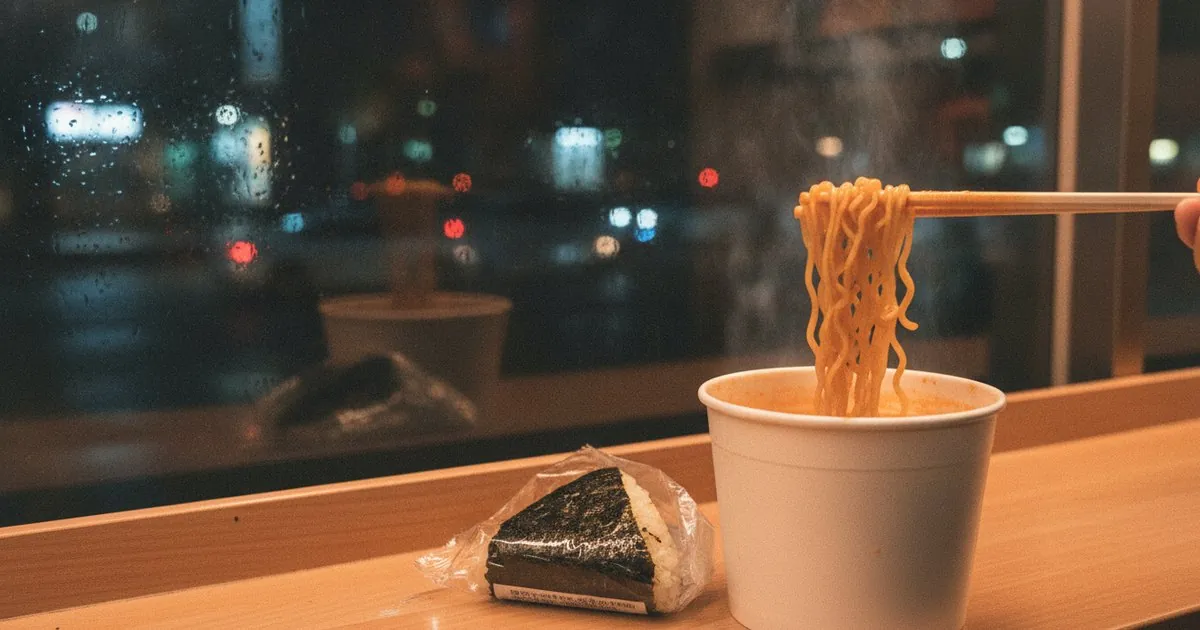
At some point, every first-time visitor to Korea has the same revelation. They walk into a CU or GS25 at 11 PM, expecting an ordinary convenience store, and find themselves standing in front of a wall of instant noodles, a rotating hot bar of corn dogs and tteokbokki, a refrigerator full of triangle kimbap, and a seating area where actual people are eating actual meals. Not reluctant snacks. Meals. With concentration. With enjoyment.
Korean convenience stores are not like 7-Eleven in the United States or a British motorway petrol station. They are a food culture unto themselves — a parallel restaurant system that operates 24 hours a day, costs almost nothing, and has somehow produced some of the most creative, viral, internationally-sought food in the world.
This is your guide to the 12 hacks, combinations, and techniques that have taken the Korean convenience store format from local institution to global inspiration.
Why Korean Convenience Stores Are Different
Before the hacks, some context.
The Korean convenience store market is fiercely competitive. CU (씨유), GS25, 7-Eleven Korea, and Emart24 compete not just on product selection but on exclusive food innovations — a seasonal corn dog flavor only available at GS25, a collaboration ramyeon cup made with a specific Korean celebrity’s preferred combination, a limited-edition triangular kimbap flavor that sells out by noon.
This competition has pushed Korean convenience store food quality to an objectively higher level than most countries. The triangle kimbap (삼각김밥) that a Korean high schooler buys for breakfast is fresh, well-seasoned, and made from actual ingredients. The hot bar tteokbokki that an office worker grabs for lunch is properly spiced. The instant ramyeon that a college student makes at the in-store cooker station uses good noodles.
And then there’s the culture of eating at the store. Most Korean convenience stores have a small seating area — sometimes just a few bar stools and a counter facing the window. People eat there. Alone, with friends, after late work, before a train. The convenience store is a legitimate venue for a meal.
These 12 hacks reflect how Koreans actually use this system — and how you can recreate the experience at home.
Hack 1: Ramen + Triangle Kimbap (라면 + 삼각김밥)
This is the canonical Korean convenience store meal. A cup of hot ramyeon (made in the store’s hot water dispenser) plus one or two triangular kimbap is the default choice at 1 AM, between study sessions, after a late train.
The combination: The kimbap provides contrast — cold, slightly sweet rice, nori wrapping, a salty filling (tuna-mayo, bulgogi, spam-egg, kimchi-spam) — against the hot, spicy, brothy ramyeon. The temperatures, textures, and flavors play off each other in a way that makes the whole greater than the sum.
At home: Cook your ramyeon normally. Make triangular kimbap by pressing seasoned rice into plastic wrap in a triangle shape around a filling (tuna mixed with mayo and corn is the classic), then wrapping in a half-sheet of nori. Or just buy triangle kimbap at your nearest Asian grocery store and pair with cup noodles.
Hack 2: Ramen + Kimbap Roll (In the Soup)
This is a more aggressive version of the above. Rather than eating the kimbap alongside the ramyeon, you tear the kimbap into pieces and drop them into the ramen broth.
The rice absorbs the spicy broth and becomes something between a dumpling and a congee cluster. The seaweed softens and becomes part of the broth. The filling disperses into the noodle bowl. What started as two separate items becomes a single, cohesive, very filling hybrid.
At home: Make a full pot of ramyeon (not a cup — you want more broth). Cook until noodles are done. Drop torn kimbap pieces in, let them soak for about two minutes, then eat. The rice absorbs broth fast, so work quickly.
Hack 3: The Two-Ramyeon Mix
Korean convenience stores have hot water dispensers and individual cup noodle options from every major brand. The hack is simple: buy two different cup noodles, mix them in a single large cup.
This is how jjapaguri (Chapagetti + Neoguri, the dish from Parasite) became a known combination — people were mixing packets at convenience store counters long before the film. See our full guide to ram-don from Parasite for the definitive recipe.
Other popular combinations:
- Shin Ramyun + Neoguri: Spicy soup base doubled up, with two different noodle textures
- Chapagetti + Neoguri: The jjapaguri classic (black bean + seafood)
- Buldak Cup + any mild ramyun: Dilutes the Buldak heat into something manageable — see Buldak ramen hacks for the full approach
Hack 4: Corn Dog + Mustard + Ketchup (Korean Style)
The Korean corn dog (핫도그) is an entirely different animal from its American counterpart. It’s coated in a thicker, chewier batter — often using rice flour — and the variations are endless: half-cheese (with a mozzarella layer that stretches when you bite), sweet potato batter coating, potato cube coating (tiny cubed potatoes embedded in the outer layer), ramyun crumb coating.
At Korean convenience stores, the hot bar typically has multiple corn dog varieties. The key: squeeze yellow mustard and ketchup in alternating lines lengthwise along the corn dog, then rotate as you eat so every bite has both condiments. This sounds excessive. It’s perfect.
At home: You can buy Korean corn dogs from frozen at most H-Mart locations and major Asian grocery stores. Cook in the air fryer at 375°F / 190°C for 8-10 minutes from frozen, flipping halfway. The air fryer gives a better result than the oven — crispier exterior without the corn dog drying out.
Hack 5: Tteokbokki + Instant Noodles = Rabokki (라볶이)
Rabokki (라볶이) is the official name for the combination of ramyeon + tteokbokki, and it’s enormously popular at Korean convenience stores. The hot bar often sells tteokbokki (spicy rice cakes) alongside ramyun stations — the hack is to combine them.
The noodles add bulk and absorb the spicy gochujang sauce from the tteokbokki. The rice cakes give the noodles chewy company. The broth from the ramyun thins the tteokbokki sauce slightly, making it easier to eat. The whole thing is carb-heavy, spicy, sweet, and deeply satisfying.
At home: Make a small pot of tteokbokki with a slightly thinner-than-usual sauce. Separately cook ramyun noodles (just the noodles, not the broth) until 80% done, drain, and add to the tteokbokki pot. Finish cooking everything together for 2-3 minutes until the noodles are fully cooked and the sauce has coated everything. Add the ramyun’s spice powder for extra depth.
Hack 6: Banana Milk + Bread = Korean Convenience Store Breakfast
This one is less a hack and more a classic combination: Binggrae Banana Milk (the iconic yellow barrel-shaped bottle) with any soft bread from the convenience store bakery section — whether a cream-filled bun, a red bean bun, or a thick-sliced toast.
The banana milk is sweet and milk-fat rich. The bread provides substance. Together they form a breakfast that tens of millions of Korean children grew up eating, and that BTS’s Jungkook made internationally famous through his well-documented love for banana milk specifically.
At home: Binggrae Banana Milk is available at Korean grocery stores and increasingly mainstream grocery stores with international sections. Any milk-heavy sweet bread works as the pairing.
Hack 7: Spicy Cup Noodle Ice Cream Chaser
This is the one that sounds wrong until you try it. In Korean convenience stores, it’s extremely common to eat ice cream or cold sweet items immediately after or alongside spicy food — not as dessert in the Western sense, but as an active palate management technique during the meal.
The fat in ice cream neutralizes capsaicin (the heat compound in gochujang and chili). Soft-serve ice cream from the GS25 or CU cone machine immediately after spicy tteokbokki is both physiologically effective and extraordinarily satisfying. The contrast between hot spicy food and cold sweet dairy is one of Korean convenience store eating’s great pleasures.
At home: Keep vanilla ice cream in the freezer. Make spicy ramyun or tteokbokki. Eat a small scoop of ice cream when the heat peaks. This is not weird. This is correct.
Hack 8: Cheese on Everything
Korean convenience stores sell small packets of processed cheese slices (the Kraft-equivalent domestic versions). These get added to everything:
- Laid over hot ramyun noodles to melt
- Stuffed inside kimbap rolls before eating
- Placed on hot tteokbokki cups and left for 30 seconds
- Added to soft tofu (sundubu) cup soups
Processed cheese works specifically well with Korean spicy foods because the fat and protein structure physically binds to capsaicin molecules. You’re not just cooling the heat with dairy — you’re chemically neutralizing it. The result is a richer, creamier, less aggressively spicy experience.
Hack 9: The GS25 Churros + Condensed Milk
GS25 (one of the two dominant Korean convenience store chains alongside CU) has been particularly creative with their hot bar items. Their churros with sweetened condensed milk dipping sauce became a genuine sensation — crispy fried dough dusted with cinnamon sugar, served with a small container of condensed milk for dipping.
This combination achieved viral status because it’s genuinely excellent and costs almost nothing. The condensed milk is thicker and sweeter than any chocolate sauce or caramel dip, and it clings to the churro in a way that makes each bite complete.
At home: Make or buy churros (frozen churros work fine, baked at 400°F / 200°C until golden). For the dip, use condensed milk straight from the can — it needs nothing else.
Hack 10: The Egg Sandwich Technique
Korean convenience store egg salad sandwiches (달걀샌드위치) are famous in their own right — the egg salad is made with Japanese-style Kewpie mayo, is creamier and richer than most Western egg salad, and the bread is thick-cut, slightly sweet milk bread.
The technique that elevates this further: toast the sandwich in the store’s microwave or press it between the hot food lamps for about 30 seconds. The bread softens slightly, the filling warms, and the sandwich becomes something better than either a cold sandwich or a hot sandwich — a liminal state that K-food people understand intuitively.
At home: Make egg salad with Japanese Kewpie mayo (available at Asian grocery stores), a tiny bit of yellow mustard, salt, and pepper. Use milk bread (shokupan) or a close equivalent. Toast lightly in a pan with a tiny bit of butter for 30 seconds per side.
Hack 11: Instant Coffee + Hot Canned Corn
This one is specifically for the in-store eating experience. Korean convenience stores sell small cans of corn (often butter-flavored) near the hot bar, alongside instant coffee sticks (믹스커피, the three-in-one kind with coffee, creamer, and sugar pre-mixed).
Eating sweet buttered corn while drinking instant coffee is a legitimate Korean snack combination with a nostalgic quality for people who grew up with it. The corn is warm and slightly sweet; the coffee is sweet and milky. It’s aggressively humble and completely satisfying.
At home: Canned sweet corn (the small kernel kind) tossed in butter and a pinch of salt, microwaved until hot. Paired with a cup of instant Korean three-in-one coffee (Maxim is the dominant brand, available at any Korean grocery store and on Amazon).
Hack 12: The 2025-26 Viral Trend — Buldak Topped Soft Tofu
This one emerged from social media in 2025-26 and has been showing up consistently in convenience store TikTok content. Korean convenience stores sell soft tofu (sundubu) soup cups — a small cup of silken tofu in a savory or spicy broth that you heat in a microwave. The hack: add a spoonful of Buldak sauce (from the fire noodle packets) to the tofu soup, stir, and eat.
The result is a spicy, protein-rich, surprisingly satisfying meal that’s both very cheap and very good. The tofu’s gentle flavor absorbs the Buldak sauce’s aggressive heat and smokiness, resulting in something more nuanced than either product alone.
At home: Buy a packaged silken tofu. Make a simple dashi or anchovy broth (or use a Korean soup stock packet). Heat the tofu gently in the broth. Add Buldak sauce to taste. Garnish with a scallion. Total cost: a few dollars. Total satisfaction: disproportionately high.
Making Korean Convenience Store Culture at Home
Recreating Korean convenience store eating at home isn’t really about specific recipes — it’s about an attitude toward food. The combination of whatever’s available, the lack of pretension, the willingness to mix things that weren’t meant to be mixed, the eating at an unusual hour because you’re hungry and the food is there.
The canonical Korean convenience store ingredients to keep on hand:
- Instant ramyeon (Shin Ramyun, Neoguri, Buldak, Chapagetti — at least two or three)
- Triangle kimbap or the ingredients to make them (nori, cooked rice, canned tuna, mayo)
- Processed cheese slices
- Eggs
- Gochujang and gochugaru for making impromptu spicy additions
- Milk bread or any soft sweet bread
- Binggrae Banana Milk or another Korean flavored milk
For the specific instant noodle combination recipes — including the famous Buldak mix from Jungkook’s livestream — see our full guide to Buldak ramen hacks.
Common Misconceptions
Korean corn dogs are basically the same as American corn dogs. The name creates false familiarity. American corn dogs use a thin cornmeal batter around a frank; Korean corn dogs (핫도그) use a thicker, chewier batter — often partially rice flour — that produces a distinctly different texture, and the fillings and coatings vary widely: mozzarella-stuffed interiors that stretch on the pull, sweet potato batter, embedded potato cubes on the outside. The two share a shape and a stick. That’s roughly where the similarity ends.
Jjapaguri (ram-don) was invented as a dish for the film Parasite. The movie brought it to global attention, but the combination of Chapagetti and Neoguri was already a well-known convenience store counter hack — the kind of thing people improvised at hot-water dispensers long before the film existed. Parasite didn’t invent it; it documented something that was already culturally embedded and gave it an international audience.
Triangle kimbap is just Korean sushi. This comparison is understandable — rice, nori, fillings — but the two are culinarily distinct. Kimbap rice is seasoned with sesame oil and salt, not rice vinegar, which gives it a nuttier, richer flavor profile. Traditional kimbap doesn’t use raw fish. The triangle format is also specifically a convenience-store-optimized design for easy handling, not a presentation style borrowed from Japanese onigiri (though the shapes are similar). Treating it as “sushi” sets up incorrect flavor expectations before you even open the wrapper.
Korean convenience store food is low-quality snack food, not real food. The article’s core argument is worth reinforcing: the competitive pressure among chains like CU, GS25, and Emart24 has driven the quality of Korean convenience store food significantly above what most Western consumers associate with the category. Triangle kimbap uses fresh, properly seasoned rice and real fillings. Hot bar tteokbokki is made to an actual recipe. The ramyeon noodles are higher quality than their Western equivalents at similar price points.
The two-ramyeon mix hack only works with specific brand pairs. The Chapagetti + Neoguri combination is famous, but the underlying logic — balancing different bases, textures, and spice levels across two cup noodles — applies broadly. Mixing a very spicy cup (like Buldak) with a milder one to calibrate heat is the same principle. The combination is a technique, not a fixed formula.
These are “weird food hacks” invented for social media virality. Rabokki (ramyeon + tteokbokki), kimbap dropped into ramyeon broth, two-ramyeon blends — these aren’t stunts. They are how people actually eat at Korean convenience stores, developed organically through practical, cost-conscious, flavor-driven habit, and shared through proximity long before any algorithm got involved.
Frequently Asked Questions
Are Korean convenience stores actually as good as people say? Yes, and arguably better. The CU and GS25 chains specifically have invested heavily in fresh food, exclusive collaborations, and innovative hot bar items. The quality floor for Korean convenience store food is significantly higher than most Western equivalents. Visiting one in Korea (especially a larger urban location) is genuinely a worthwhile food experience.
What are the main Korean convenience store chains? The big three are CU (씨유), GS25, and 7-Eleven Korea. Emart24 is a strong fourth. Each chain has exclusive products and collaborations that the others don’t carry, which drives competitive innovation. CU and GS25 are the most covered in international K-food content.
Can I find Korean convenience store products outside Korea? Many of the packaged products (Shin Ramyun, Buldak, Chapagetti, Neoguri, Binggrae Banana Milk, Maxim coffee, Kewpie mayo) are available internationally at Korean grocery stores, Asian grocery stores, and online retailers. The fresh items (hot bar corn dogs, triangle kimbap, fresh bento) are specific to Korea, though some Korean grocery stores in the US carry triangle kimbap.
Why does BTS eat so much convenience store food in their content? Because Korean convenience stores are where everyone eats, at every age and income level. Convenience store food in Korea doesn’t carry the stigma it might in other countries — it’s not a poverty signal or a lazy choice, it’s a normal and often beloved part of Korean food culture. BTS eating convenience store food on camera is just them eating normally.
What’s the appeal of mixing two different instant noodle packets? Each instant noodle has a specific flavor profile and noodle character. Mixing two creates a combination that can be richer, more complex, and more balanced than either alone. Jjapaguri (Chapagetti + Neoguri, from Parasite) is the most famous example — the black bean sauce and seafood broth create something genuinely better than either component. The full exploration is at ram-don Jjapaguri from Parasite.
Is eating instant noodles at a convenience store seating area normal in Korea? Completely normal and very common. Korean convenience stores specifically design their seating areas for this use — hot water dispensers, a microwave, utensils available. Eating a full cup of ramen at a convenience store counter is a standard Korean experience across all demographics, not a last resort.