
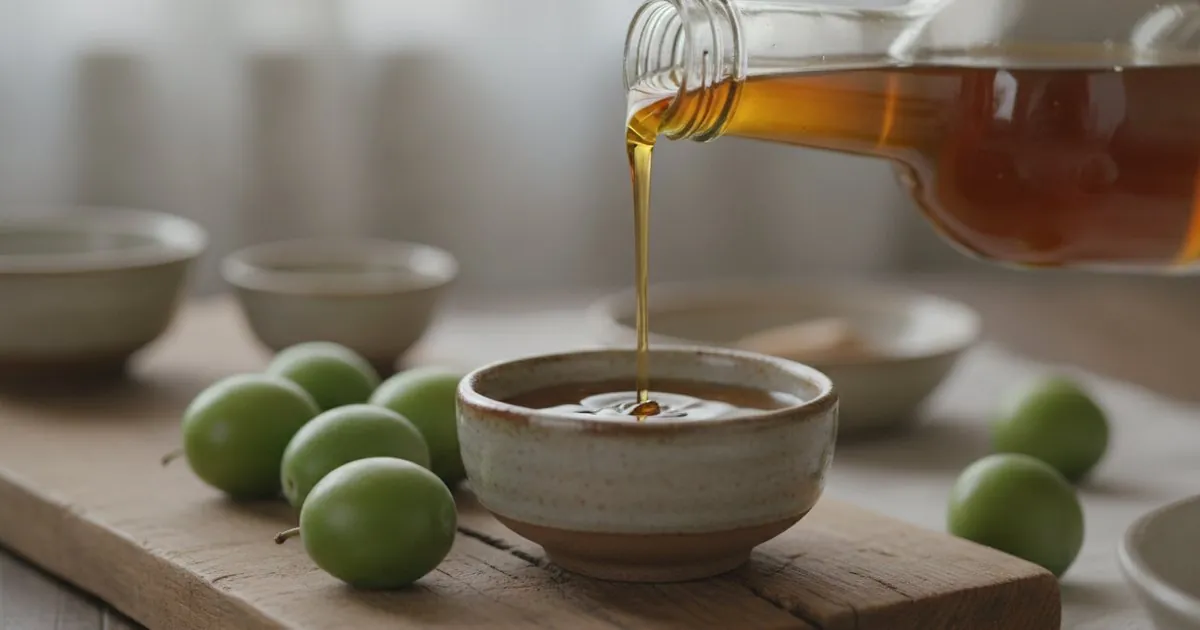
There’s a bottle at the Korean grocery store that most Western shoppers walk right past — a dark amber syrup labeled maesil-cheong (매실청) or simply “green plum extract.” The ingredient list is almost always just two things: Korean green plums and sugar. Yet that deceptively simple combination produces one of the most versatile flavor-boosters in the entire Korean pantry.
Maesil syrup is sweet but not cloying. Tangy but not harsh. Faintly floral with a fruity brightness that regular sugar, honey, or even fruit jam simply cannot replicate. Once you start using it, you’ll understand why Korean home cooks reach for this bottle every time a sauce needs something — that elusive finishing note that lifts a marinade from competent to genuinely memorable.
This guide covers everything: what maesil actually is (the answer may surprise you), its deep cultural history, how the syrup is made, exactly how to cook with it, and where to source it outside Korea.
What Exactly Is Maesil? The Great Plum Confusion
Let’s clear something up immediately: despite being universally marketed as “Korean plum,” maesil (매실) is botanically Prunus mume — and it is genetically closer to an apricot than a true plum. The fruit is classified in the Armeniaca section of the Prunus genus, the same section as apricots (P. armeniaca). The “plum” label stuck because early Western botanists applied the term broadly across Asian stone fruits.
You may know this fruit under other names. In Japan, it’s ume — the same fruit used for umeboshi (pickled plum) and umeshu (plum wine). In China, it’s méi (梅). In Korea, maesil. One species, three distinct culinary traditions built around it.
The fruit originated around China’s Yangtze River basin and arrived on the Korean peninsula during the Three Kingdoms Era (57 BCE–668 CE). It has since woven itself into Korean culture — not only as food, but as art, medicine, and philosophical symbol.
For cooking purposes, think of maesil as a tart, lightly floral stone fruit with much higher acidity than a ripe apricot and a more complex flavor profile than any plum you’d encounter at a Western supermarket. That distinction matters when you’re cooking.
A Fruit Steeped in History
Blossoms Before Bottles
Before maesil became a pantry staple, it was a cultural icon. The plum blossom — maehwa (매화) — holds a place among the “Four Gracious Plants” (Sagunja, 사군자) of classical Korean and East Asian art, alongside orchid, chrysanthemum, and bamboo. Scholar-officials (seonbi) revered it for its defiant timing: maehwa blooms in late winter snow, long before any other flower dares to open. It became an enduring symbol of integrity and indomitable spirit — the capacity to hold one’s character under pressure.
This reverence is documented throughout Korea’s artistic heritage. The painter Yi Jeong (1554–1626) captured the blossom’s spare elegance in ink; Eo Mong-ryong (1566–1617) dedicated entire series of works to the genre. Even the celebrated maebyeong celadon vase — the elegant hourglass silhouette you’ve likely seen in museum collections — takes its name from the Chinese for “plum vase,” originally designed to display a single plum branch.
The annual Gwangyang Maehwa Festival in Jeollanam-do (held each March, running approximately two weeks) draws visitors to see those blossoms before the fruit even forms. By the time summer arrives, those same trees are heavy with the green plums that eventually become your bottle of maesil-cheong.
Medicine Before Marinade
Maesil’s culinary identity grew directly from centuries of medicinal use. Records of therapeutic applications appear in Chinese medicine as far back as approximately 200 AD. In Korea, the landmark documentation came through Heo Jun’s Donguibogam (동의보감), published in 1613 — a comprehensive encyclopedia of Korean medicine. Heo Jun recorded maesil as a treatment for inflammation, coughing, diarrhea, and thirst, noting that it “helps regain energy in the muscles and the pulse.”
Modern analysis has identified maesil as a meaningful source of citric acid, malic acid, tartaric acid, and various polyphenols — compounds consistent with its long reputation as a digestive aid. Whether you’re reaching for it purely for flavor or appreciate that it comes with centuries of functional history behind it, maesil-cheong is an ingredient that genuinely earned its place at the Korean table.
From Orchard to Jar: How Maesil-Cheong Is Made
The word cheong (청) in Korean refers to a syrup or extract made by macerating fruit in sugar — a technique that draws out the fruit’s liquid, acids, and aromatic compounds through osmosis. Maesil-cheong follows a beautifully minimal process.
The traditional method:
- Unripe green plums (cheong-maesil) are harvested from late May to mid-June, when they are firm, deeply acidic, and still dense with tartness.
- The plums are washed, dried completely (any residual moisture can cause unwanted fermentation), and combined with an equal weight of sugar — typically white sugar or raw sugar, occasionally rock sugar. A 1:1 ratio by weight is the traditional baseline.
- The mixture rests in a sealed container — ceramic onggi pots are traditional; wide-mouth glass jars are the modern standard — for a minimum of 100 days. During this time, the sugar draws liquid from the plums through osmosis, the fruit shrivels, and a glossy, amber syrup accumulates.
- After 100 days, the spent plums are strained out. The resulting liquid is the maesil-cheong sold commercially.
Two stages of fruit, two flavor profiles: Korean producers distinguish between cheong-maesil (청매실, green and unripe — peak acidity, maximum tartness) and hwang-maesil (황매실, yellow and ripened — sweeter, gentler, with significantly fewer cyanogenic compounds that occur naturally in unripe stone fruits). Commercial syrups typically indicate which type was used. Green-plum syrups are sharper and more assertive; yellow-plum versions are rounder and more mellow.
Korea’s prime maesil-growing heartland is Gwangyang, Jeollanam-do, where orchards climb the hillsides above the Seomjin River. The most celebrated producer in the region is Hong Ssang Ri — designated Korean Food Grand Master No. 14 — who has cultivated plum trees in Gwangyang for over 50 years, managing approximately 10,000 trees across 200,000 square meters. Bottles from this region represent the premium end of the category and are worth seeking out when you see them.
The Flavor Profile: What Does It Actually Taste Like?
Open a bottle of quality maesil-cheong and smell it before you do anything else. You’ll catch a clean, bright stone-fruit aroma — apricot-adjacent, faintly floral, with a sharp acidic undercurrent. It doesn’t smell like plum jam or plum sauce. It’s lighter, fresher, and considerably more complex.
Taste a small spoonful on its own. The first impression is sweetness, but it resolves quickly into a bright, almost zingy tartness — more refined than lemon juice, more layered than plain vinegar. There’s a subtle tannin grip at the very back of the throat that keeps it from tasting flat or one-dimensional. Longer-macerated batches mellow this quality; younger or lower-quality products can feel slightly astringent in a way that doesn’t always integrate smoothly into dishes.
In a sauce context, maesil functions like a sophisticated combination of sugar, a squeeze of citrus, and a whisper of stone fruit. It contributes:
- Sweet depth without the heaviness of honey or the blankness of refined white sugar
- Acidity that brightens surrounding flavors without competing with or overshadowing them
- Aromatic lift that elevates the overall fragrance of finished sauces and marinades
- Subtle umami amplification — this last one you won’t consciously identify, but you will notice when it’s absent
Seven Ways to Use Maesil Syrup Right Now
1. Korean Meat Marinades — The Classic Application
Maesil syrup is a foundational ingredient in Korean meat marinades. A bulgogi marinade benefits enormously from 1–2 tablespoons (15–30 ml) of maesil-cheong per 500g (about 1 lb) of beef: it tenderizes slightly (organic acids work on surface proteins), adds complexity, and leaves a clean finish that plain sugar never manages. If you’ve worked through our gochujang guide, you know Korean seasoning tends to balance heat, sweetness, and fermented depth simultaneously — maesil is one of the primary tools for the “sweetness with intention” component of that balance.
2. Spicy Sauces and Tteokbokki
Adding 1–2 teaspoons (5–10 ml) of maesil to a spicy sauce — the tteokbokki sauce being the prime example — rounds the sharp edges of gochujang’s intensity without dulling the heat level. The goal isn’t sweetness for its own sake; it’s completeness.
3. Namul and Vegetable Dressings
For banchan vegetable sides, a simple dressing of sesame oil, soy sauce, a pinch of salt, and about 1 teaspoon (5 ml) of maesil-cheong will give your blanched greens a brightness that plain sesame oil alone never delivers.
4. All-Purpose Dipping Sauce
Combine maesil syrup with soy sauce, rice vinegar, sesame oil, minced garlic, and gochugaru for a dipping sauce that works equally well with pan-fried dumplings, grilled pork belly, or crispy scallion pancakes. A good starting ratio: 1 tablespoon (15 ml) maesil, 2 tablespoons (30 ml) soy sauce, 1 tablespoon (15 ml) rice vinegar.
5. Korean-Style Vinaigrette
Whisk together 2 tablespoons (30 ml) maesil-cheong, 1 tablespoon (15 ml) rice vinegar, 1 tablespoon (15 ml) soy sauce, 1 teaspoon (5 ml) sesame oil, and a small amount of minced fresh ginger. This dressing over shredded cabbage, thin-sliced cucumber, and fresh perilla leaves is one of the cleaner, more refreshing salads in the Korean repertoire.
6. Maesil-Ade and Cocktails
Diluted 1:5 to 1:6 with cold sparkling water — roughly 30 ml syrup per 150–180 ml water — maesil-cheong becomes a simple, deeply refreshing summer drink called maesil-ade. For cocktail applications, it substitutes interestingly for simple syrup in gin-based drinks, adding a floral-tart note that pairs naturally with citrus-forward spirits.
7. Glazes and Finishing Drizzles
Reduce maesil syrup by about 25% over low heat to concentrate it slightly, then brush it over roasted vegetables or pork belly in the final 3–4 minutes of oven time. The sugars caramelize, the fruit acids concentrate, and the result is a lacquered finish with genuine complexity — nothing like the candy-shop sweetness of plain sugar glazes.
Where to Find Maesil Syrup (and Smart Substitutes)
Best sources in the US:
- H Mart and Korean grocery stores: Look for bottles labeled maesil-cheong (매실청), “green plum syrup,” or “green plum extract.” Chung Jung One (청정원) produces a widely available, reliably consistent version that’s a solid starting point for any kitchen. Read the ingredients label: it should list plums and sugar, nothing more.
- Online retailers: Weee!, Hmart.com, and specialty importers all carry maesil-cheong. Check that the product isn’t heavily diluted or loaded with preservatives — the shorter the ingredient list, the better.
- Whole Foods or specialty food stores: Less reliable, but some locations carry it under “plum extract” near other specialty Asian sauces. Japanese umeshu (plum wine) isn’t the same thing, but it’s adjacent enough to understand the flavor family.
Substitutes when you’re mid-recipe and out of options: No substitute fully replicates maesil-cheong, but these approximations will prevent a recipe from falling apart:
- Honey + fresh lemon juice (2:1 by volume): Gets you sweet + acidic, loses the floral stone-fruit character
- Japanese umeshu (plum wine), reduced by half: Very close flavor cousin, works particularly well in marinades and braises
- White grape juice reduced to a light syrup + a squeeze of lemon: Approximates the color and some of the brightness without Asian stone-fruit character
- Apricot jam thinned with lemon juice: Most accessible Western-pantry option; tends to be sweeter and less acidic, so use less than the recipe specifies
Common Mistakes to Avoid
1. Confusing Maesil-Cheong with Maesil Concentrate (Won-Aek)
Korean grocery shelves carry both maesil-cheong (the ready-to-use syrup) and maesil won-aek (원액, a more intensely concentrated juice or extract sold for further dilution). The concentrate is dramatically more sour and potent — using it as a 1:1 swap for the syrup will make your marinade taste aggressively acidic and almost medicinal. Read the label before you buy. If it says “100% juice,” “concentrate,” or “원액,” plan to dilute it by at least 50% before using it in any recipe calling for maesil-cheong.
2. Heavy-Handing the Quantity
Maesil syrup is simultaneously sweet and acidic, which makes it easy to overshoot. Too much and your sauce starts tasting like an aggressively fruity candy. Start with half the amount you think you need — for a marinade covering 500g (1.1 lbs) of meat, 1 tablespoon (15 ml) is a reasonable opening move. Taste, then decide whether it needs more. Mistakes in this direction are hard to rescue.
3. Treating It as a Direct Sugar Substitute Without Adjusting for Acidity
Some cooks swap maesil syrup in for honey or white sugar on a 1:1 basis, then are surprised when the finished dish tastes sharp or off-balanced. Maesil-cheong is not just a sweetener — it carries meaningful acidity alongside its sugar content. If you’re replacing a plain sweetener with maesil, reduce or eliminate other acidic components in the recipe (vinegar, citrus juice) before you taste and adjust. This isn’t optional; the acid balance shifts significantly.
4. Adding It Too Early in High-Heat Cooking
The delicate floral and stone-fruit aromatics that distinguish maesil from plain sugar are volatile — they evaporate quickly over sustained high heat. Cooking a sauce with maesil in it from the beginning at full heat will drive off everything interesting, leaving behind only generic sweetness. Add maesil syrup in the final 2–3 minutes of cooking, or after you’ve pulled a sauce off the heat entirely, to preserve its characteristic fragrance. The exception is low-and-slow braises, where a small quantity early on can integrate nicely.
5. Overlooking It for Kimchi
This is a mistake of omission rather than commission. Many traditional kimchi pastes — particularly geotjeori (fresh, unfermented kimchi) — include a small amount of maesil-cheong to round out the gochugaru’s heat and add aromatic depth. If your homemade kimchi tastes flat or aggressively one-dimensional despite accurate gochugaru and garlic quantities, 1–2 teaspoons of maesil syrup in the paste may be exactly what bridges the gap.
6. Storing an Opened Bottle at Room Temperature
Commercial maesil-cheong can last 1–2 years unopened, but once the seal is broken, the flavor degrades faster than most people expect — particularly in a warm kitchen. Refrigerate after opening and aim to use within 6–12 months. A properly stored bottle will actually mellow and deepen gracefully over time. A bottle left on a countertop in a warm kitchen can develop flat, slightly fermented off-notes that won’t improve any sauce.
FAQ
What is the difference between maesil-cheong and umeshu? Maesil-cheong is a non-alcoholic sugar syrup made by macerating Korean green plums (Prunus mume) in sugar until the fruit releases its liquid. Umeshu is a Japanese liqueur made by macerating the same species of fruit in shochu or sake with sugar — it has an alcohol content of roughly 10–15%. Both start from the same botanical source; the base liquid is the key difference. This means maesil-cheong works in any cooking context, including dishes for children or people avoiding alcohol, while umeshu is specifically a beverage.
Can I make maesil-cheong at home outside Korea? Yes, if you can source the right fruit at the right stage. Unripe green Prunus mume plums are occasionally available at Asian grocery stores in late spring (May–June) and sometimes through farmers markets that carry Japanese ume varieties. The method is straightforward: equal weights of firm green plums and white sugar, sealed in a glass jar, rested for 100 days with occasional gentle shaking. The critical variable is fruit ripeness — over-ripe plums don’t carry the acid structure necessary for a properly balanced syrup.
Is maesil syrup the same as “Korean plum sauce”? No. “Korean plum sauce” typically refers to a cooked, thickened condiment made from plums, vinegar, sugar, and spices — similar in texture and application to Chinese plum sauce or duck sauce. Maesil-cheong is a pure macerated syrup: considerably thinner, brighter, and more versatile as a cooking ingredient rather than a standalone condiment. The flavor profiles are related but distinct.
How much maesil syrup should I use in a marinade? A reliable starting point for meat marinades is 1–2 tablespoons (15–30 ml) per 500g (about 1 lb) of protein — this applies to beef, pork, and chicken alike. For delicate fish or shellfish, scale back to 1 teaspoon (5 ml) to avoid the acid beginning to cure the surface of the protein before it hits the heat. In dipping sauces and dressings, start with 1 teaspoon and adjust to taste; it’s much easier to add than to compensate for excess.
Does maesil syrup contain cyanide? Is it safe? Unprocessed, unripe Prunus mume stones and raw fruit contain amygdalin — a naturally occurring cyanogenic compound found in many stone fruits (including apricots and peaches). However, the 100-day maceration process, the removal of the stones, and the sugar concentration all mitigate this significantly. Additionally, hwang-maesil (the riper yellow variety) contains roughly 70% fewer cyanogenic compounds than cheong-maesil to begin with. Commercially produced maesil-cheong is safe to consume in normal culinary quantities, and the product has been in widespread Korean household use for centuries. If you’re making it at home, avoid crushing or cracking the stones during maceration.
If there’s one Korean pantry ingredient worth hunting down before nearly any other — beyond the foundational gochujang and soy sauce — maesil-cheong is consistently the one that surprises Western cooks most. It’s the ingredient that makes other people ask “what’s in this?” when you serve them a marinade or a dipping sauce. Start with a drizzle in your next sauce. Try it in a dipping sauce the week after. By the time the bottle is half empty, you’ll already be thinking about where to find a larger one.