
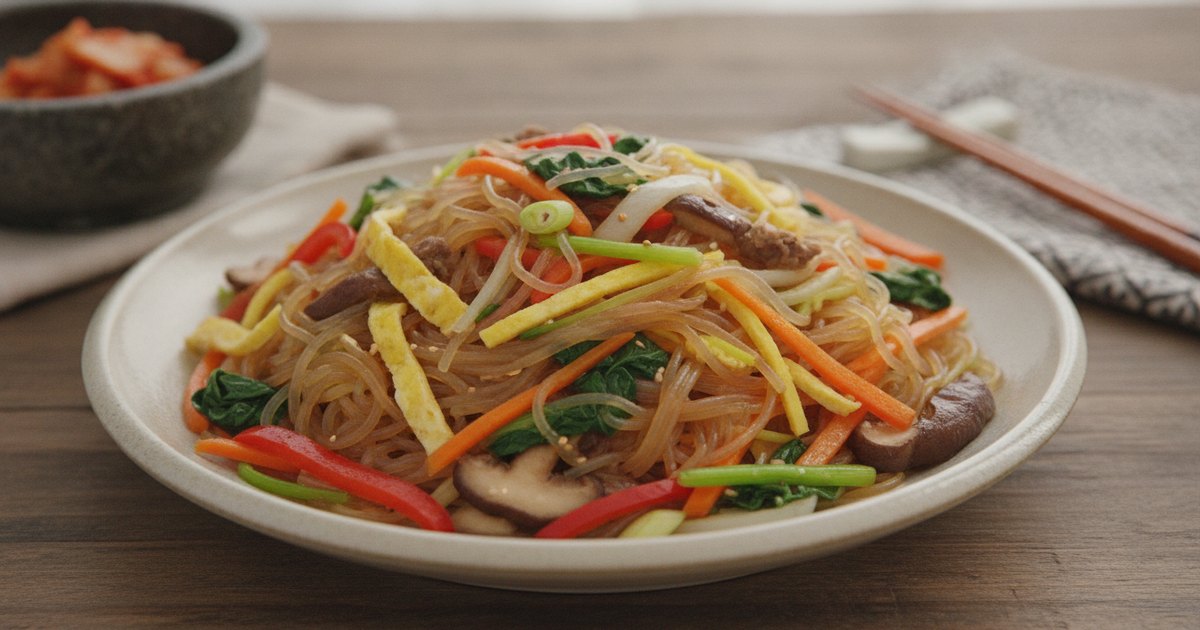
Japchae — literally "mixed vegetables" — has been winning over dinner tables for more than four centuries. What started as a royal court dish during the Joseon Dynasty (and initially made without the noodles, believe it or not) has evolved into one of Korea's most beloved celebration foods: a fixture at birthday dinners, Chuseok spreads, Lunar New Year feasts, and potlucks where someone always pulls the host aside to ask "what is this noodle dish?"
The short answer: glass noodles stir-fried with vegetables, protein, and a sauce built on soy, sesame, and a touch of sweetness. The longer, more useful answer: a dish with a flexible, logical structure that accommodates dozens of variations — and once you understand why each step works, you can riff on it endlessly. Beef is traditional, but seafood japchae is stunning. A pure-mushroom version is deeply savory and happens to be vegan. Spicy, chicken, pork — they're all legitimate.
This guide builds from the foundation up: the noodle, the classic beef version, then seafood and mushroom variations in full detail, plus a few more directions worth exploring. Whether you're making japchae as the centerpiece of a weeknight dinner or anchoring a banchan spread for a crowd, everything you need is here.
The Noodle That Makes It Japchae: Dangmyeon 101
Before anything else, let's talk about the ingredient that defines the dish: dangmyeon (당면), Korean sweet potato starch noodles. Called glass noodles or cellophane noodles in English, dangmyeon comes dried in grayish-translucent bundles that look almost like fishing line. Post-cooking, they transform into silky, semi-transparent, pleasantly chewy strands — a texture that's genuinely unlike anything in Italian or Chinese pasta traditions.
At H Mart, Lotte Mart, 99 Ranch, or any Korean grocery, look for the label 당면 or "Korean sweet potato starch noodles." It comes in 500g and 1kg bags, keeps indefinitely sealed, and is worth stocking. Most recipes for 4-6 people call for 200-250g (7-8.8 oz) dried.
Can you substitute mung bean glass noodles? The thin variety used across Chinese and Southeast Asian cooking can work in a true pinch, but the result is noticeably different. Dangmyeon is thicker, starchier, and holds up to vigorous stir-frying without going to mush; mung bean noodles are more delicate and will absorb the sauce faster, risking collapse. If you're making this for the first time or for guests, find the real thing.
Cooking dangmyeon correctly: Boil in plenty of unsalted water for 6-8 minutes. Pull one strand at 6 minutes and bite through it — you want fully translucent noodles that bend without snapping, with the faintest resistance at the center. Think of it like pasta al dente. Drain immediately, rinse under cold water to stop cooking, then cut into 15-20 cm (6-8 inch) lengths with kitchen scissors and toss at once with a few drops of sesame oil to prevent clumping.
The Classic: Beef Japchae
The foundational version is built around thinly sliced beef, a focused lineup of vegetables, and a three-ingredient sauce. Understanding its structure makes every variation obvious.
The Beef and Its Marinade
For a traditional, lighter-protein japchae (4-6 servings), use 150g (5.3 oz) of beef sirloin or ribeye. Slice against the grain into strips about 3mm thick — the thinner the cut, the faster it absorbs the marinade and the more tender the result. If the beef is slipping under your knife, freeze it for 20 minutes first for cleaner cuts.
Marinade: 1 tbsp soy sauce, 1 tbsp sugar, 1 tsp sesame oil, 1 tsp minced garlic. Fifteen minutes is enough. The beef gets further seasoned when everything combines later, so this is a flavor foundation, not the whole picture. If you prefer a meat-heavier dish as a main course, you can scale to 200-300g (7-10.5 oz) — the rest of the recipe accommodates it well.
The Vegetables
The classic lineup: shiitake mushrooms, spinach, carrot, onion, and scallions. One element that often gets dropped from Western recipes but is very much traditional: wood ear mushrooms (목이버섯, mogi beoseot). Their crunchy, slightly gelatinous texture provides real contrast to the silky noodles. Find them dried at any Asian grocery (sometimes labeled "black fungus" or "cloud ear"). Soak 10g in warm water for 20-30 minutes, drain, and slice into strips.
If you're using dried shiitake instead of fresh, reserve the clear soaking liquid. Strained of its sediment, it's concentrated umami and goes directly into the sauce.
The Sauce
Three ingredients: 4 tbsp soy sauce + 2.5 tbsp brown sugar + 1.5 tbsp sesame oil. Whisk until the sugar dissolves. Brown sugar over white adds a subtle molasses depth that gives the finished dish a richer amber color. Some recipes add 1 tbsp honey for gloss and a floral sweetness — worth trying. Use standard all-purpose or Korean soy sauce (Kikkoman works fine); avoid dark Chinese soy sauce, which is too intense and slightly bitter here.
Variation 1: Seafood Japchae
Seafood japchae trades the beef for ocean proteins and produces a dish that's lighter, slightly briny, and visually striking. The translucent noodles against vivid shrimp and calamari make a genuinely beautiful plate — it's a strong choice when you want japchae to serve as a proper dinner centerpiece rather than a side.
What Seafood to Use and How to Cook It
Squid / Calamari: The classic choice for seafood japchae. Score the body in a crosshatch pattern — this makes the pieces curl attractively when cooked and creates more surface area for sauce absorption. Cook over very high heat for 1-2 minutes maximum. The moment the pieces curl and turn fully opaque, they're done. Push past that and you're into rubber territory, with no coming back.
Shrimp: Medium to large (26/30 count), peeled and deveined. They take 2-3 minutes per side. Watch the color change: grey-translucent shifts to pink-opaque at the outer edge, working inward. When the tail just starts to curl and the center has lost its raw sheen, pull them.
King oyster mushroom "scallops" (for a vegetarian seafood-style version): Slice the thick stems into rounds about 2 cm thick. Press into a hot, lightly oiled pan and resist touching them for 2-3 minutes — you want a genuine golden sear, not just warm-through. They turn meaty and slightly sweet, and read visually almost like scallops.
Clams or mussels: Steam briefly until open (discard any that don't), pull from the shell, and add to the final toss. They bring a coastal Korean note that works especially well with a touch of gochugaru in the sauce.
Critical Western-kitchen tip: Frozen seafood works very well for japchae. Thaw overnight in the fridge, then pat completely dry with paper towels before cooking. Surface moisture steams the seafood instead of searing it — you lose the caramelized edge and get pale, slightly watery protein instead.
Adjusting the Sauce
The base soy-sesame sauce translates directly. For a spicy coastal-style version, stir 1-2 tsp of gochugaru (Korean red pepper flakes) into the sauce before using. For more depth, add 1 tbsp gochujang — it contributes body and a low, smoky heat in addition to color. Balance with a pinch of extra sugar. The fragrance of sesame oil fades quickly at high heat, so add a finishing drizzle right at the end, just before serving.
Variation 2: Mushroom Japchae (The Forest Version)
Mushroom japchae replaces all the meat with a layered selection of mushrooms. Done right, it's one of the most deeply savory versions of the dish — earthy, meaty in texture, and satisfying in a way that surprises people who expect it to feel like a compromise. Use tamari instead of regular soy sauce and the dish is fully vegan.
The Mushroom Lineup: Variety Is Non-Negotiable
The key here is using multiple mushroom types. A single-variety mushroom japchae tastes flat; three or four types together create a layered, complex result where each bite offers something slightly different.
A strong combination for 4 servings (aim for 350-400g / 12-14 oz total):
- Shiitake (fresh or rehydrated dried): The umami backbone. Meaty, firm, holds its texture through stir-frying. Don't skip these.
- King oyster mushrooms: Slice the stems into rounds and sear until golden. Their dense flesh becomes almost scallop-like — a texture anchor in the dish.
- Wood ear mushrooms: For crunch and a slightly gelatinous contrast. Always include these in a mushroom variation.
- Oyster mushrooms: Tear into strips rather than slicing. Their fibrous pull apart nicely and absorb sauce well.
- Enoki mushrooms: Add these in the last 30 seconds only. They wilt almost instantly and add a delicate, slightly sweet note — but they'll disappear to nothing if overcooked.
Amplifying the sauce for mushrooms: Swap 1 tbsp of the soy sauce for dark soy sauce for more color depth. Alternatively, dissolve ½-1 tsp of doenjang (Korean fermented soybean paste) into the sauce. You won't taste the doenjang directly — at this quantity, it acts as a silent background amplifier, rounding out the mushroom flavor and adding a savory complexity that's hard to identify but immediately noticeable. If you want to understand doenjang's full range of uses, our doenjang guide goes deep on it.
If you use dried shiitake here, strain and add the soaking liquid to the sauce. It will contribute more umami than almost anything else you can add.
More Japchae Directions Worth Exploring
Chicken Japchae: Thinly sliced chicken thigh (not breast — thigh has enough fat to stay tender through stir-frying) marinated and cooked exactly like the beef. A leaner but still substantial option. The sauce flavors work particularly well with chicken's mild profile.
Pork Japchae: Pork loin or shoulder, thinly sliced. A straightforward beef substitute — pork's natural sweetness plays well against the soy-sesame sauce. Some recipes add a small amount of doenjang to the pork marinade to deepen the flavor.
Spicy Japchae: Add 1-2 tbsp gochujang to the main sauce. Bold, fiery, and excellent alongside cold beer. Compensate with an extra pinch of sugar to balance the spice and acidity of the paste. This style has roots in coastal Korean cooking.
Vegetable-Only Japchae: Bell peppers (red and yellow for color), zucchini, and mushrooms replace the protein. A good option for large mixed-dietary-need groups — faster to make, lighter to eat.
The Assembly Method: Why Everything Gets Cooked Separately
Japchae's defining cooking step is stir-frying each ingredient in its own turn, setting it aside, and combining everything at the end. This isn't fussiness — it's practical. Each vegetable has a different water content and a different ideal texture. Toss them all in together and you get a steamed, wet pile where nothing is properly caramelized.
Work in a large non-stick skillet or wok. Between each batch, wipe the pan if needed and add a fresh drizzle of neutral oil. Cook in this order: carrot first (it takes the longest), then onion, scallions, mushrooms, protein. Spinach is blanched separately in boiling water for 5-10 seconds — barely long enough for the leaves to collapse into vivid, bright green. Drain and squeeze out aggressively (both hands, like wringing a sponge) before adding to the bowl. Water in the spinach = watery final dish.
Once all components are ready, add the noodles to the pan with the sauce, toss continuously over medium heat for 1-2 minutes until the noodles are glossy and uniformly dark amber. Each strand should look coated and slightly sticky, not pale or soupy. Add everything else, toss gently for another minute, taste, and adjust.
Where to Find Key Ingredients
| Ingredient | Best sources |
|---|---|
| Dangmyeon | H Mart, Lotte Mart, 99 Ranch, Amazon |
| Fresh shiitake | Whole Foods, Trader Joe's, most mainstream grocery stores |
| Dried shiitake | Asian grocery, Whole Foods bulk/dried section |
| Wood ear mushrooms | Asian grocery; Amazon (labeled "black fungus" or "cloud ear") |
| King oyster mushrooms | H Mart, Whole Foods, specialty grocers |
| Gochugaru | H Mart (best selection); some Whole Foods; Amazon |
| Dangmyeon (bulk) | H Mart carries 1kg bags; online is cheapest per unit |
If you're building a pantry for Korean cooking, pairing dangmyeon and gochugaru with soy sauce and sesame oil covers the base for a large number of dishes. Many of the same ingredients show up in bulgogi, where the beef marinade logic is very similar.
Common Mistakes to Avoid
1. Overcooking the dangmyeon — and not rinsing immediately. Overcooked dangmyeon turns gummy and mats together in an irreversible clump. The window between perfectly cooked and overcooked is only about a minute. Start testing at 6 minutes: bite one strand — it should be fully translucent with just a faint resistance at the center. The instant they're done, drain and run cold water over them. Residual heat in the pot continues cooking the noodles if you leave them even 30 seconds too long.
2. Wet spinach tanking the sauce. This is the single most common cause of watery, flavor-diluted japchae. After blanching (5-10 seconds — the spinach should be vivid green, not dull or limp), drain and squeeze with real force. Set the squeezed spinach on a board and check: if it still looks wet, squeeze again. A tablespoon of excess spinach water in the pan will cause the sauce to slide off the noodles rather than cling to them.
3. Steaming the mushrooms instead of searing them. Mushrooms are 80-90% water and release it quickly when heated. Crowd them in the pan and they'll steam in their own liquid, turning pale, soft, and bland. Give them space and leave them undisturbed for 2-3 minutes before tossing — you want to see golden, slightly caramelized edges and a noticeable reduction in size. If your pan isn't large enough, cook in two batches.
4. Adding sauce to the noodles before they're in the pan. If you pre-mix sauce and cold noodles, the sauce pools on the bottom of the bowl and never coats evenly. Instead: heat the noodles in the pan first (30 seconds), then pour the sauce over them and toss continuously over medium heat. The heat helps the noodles absorb the sauce rather than just sitting in it. When every strand has taken on that dark, glossy amber color and there's no sauce pooling at the bottom, you're there.
5. Not seasoning components individually. The final toss with soy-based sauce is not a rescue operation for under-seasoned vegetables. Each component — carrot, onion, mushrooms, protein — should be seasoned with a pinch of salt as it cooks. Under-salted vegetables taste flat in the final dish even when everything is properly combined, and there's no clean way to fix it after the fact without oversalting the sauce.
6. Using the wrong soy sauce. Standard Korean soy sauce or Kikkoman all-purpose soy sauce is correct for this recipe. Dark Chinese soy sauce (labeled "dark" or "老抽") will make the dish too deeply colored and slightly bitter. Low-sodium soy sauce changes the liquid-to-salt ratio and requires upward adjustment. Fish sauce is a different flavor profile entirely — not a substitute here.
FAQ
Can I make japchae ahead of time? Yes, and it holds up well — which is part of why it's such a reliable party dish. You can cook all components separately, refrigerate them, and combine with freshly sauced noodles before serving. The fully assembled dish keeps refrigerated for up to 2 days. Reheat in a skillet over medium heat with a small splash of water, tossing until evenly hot. Microwave reheating works but tends to heat unevenly and can make the noodles slightly gummy.
Is japchae gluten-free? Dangmyeon itself is gluten-free — it's pure sweet potato starch. The main risk is soy sauce, which typically contains wheat. Use tamari or a certified gluten-free soy sauce, and the entire dish is gluten-free. Check your soy sauce label; even "reduced sodium" versions sometimes contain wheat.
How do I keep the noodles from clumping while I cook other components in batches? Rinse with cold water immediately after boiling, then toss with sesame oil right away. The oil creates a light coating that keeps strands separate. Even so, they'll begin to clump after 10-15 minutes of sitting — just break them apart with tongs before adding to the final pan.
Why do my noodles absorb all the sauce and turn dry? Two likely causes: the noodles were slightly overcooked before combining (overcooked dangmyeon is more absorbent and mushy), or the final toss went on too long. The noodle-and-sauce toss should be 1-2 minutes on medium heat — enough time for even coating, not so long that the sauce fully dries into the noodles. If they look dry, add a teaspoon of soy sauce and a drop of sesame oil and toss for 30 more seconds.
What's a good main dish to serve alongside japchae? Japchae works naturally in a full Korean spread. Alongside grilled meats from a Korean BBQ at home setup, it provides a sauce-rich, chewy contrast to the smokiness of the grill. It's also a traditional companion to miyeok guk (seaweed soup) at Korean birthday celebrations, where its role as a festive dish makes it particularly fitting. ```