
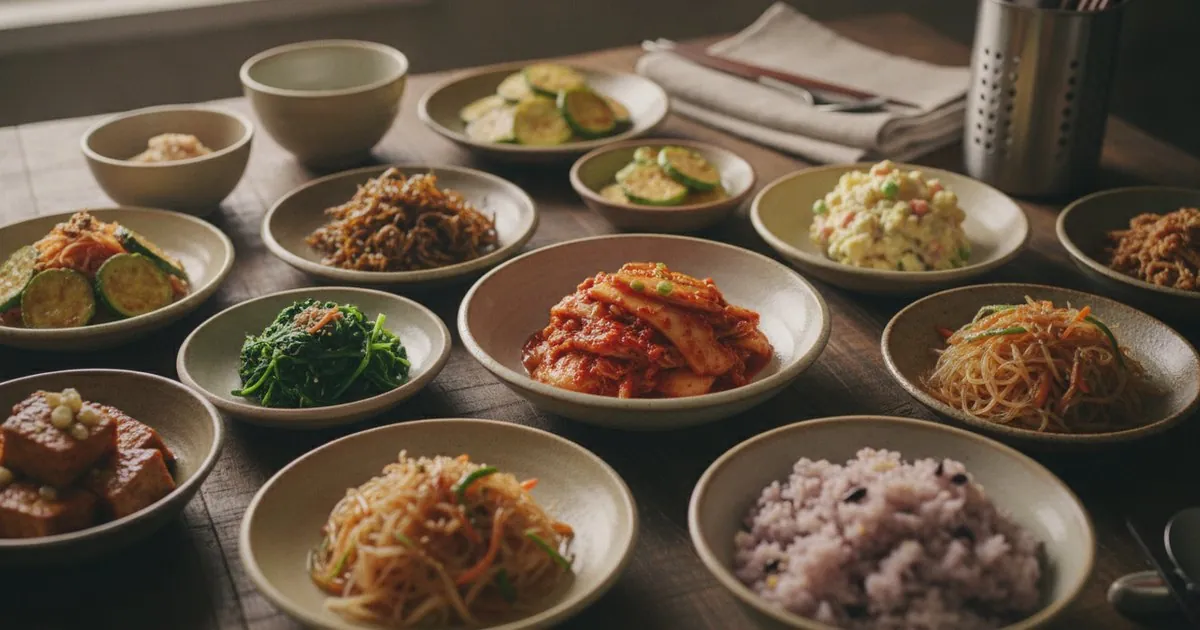
Walk into any Korean restaurant — even a no-frills lunch spot — and before you’ve ordered a single thing, the table fills up. Small dishes arrive in a quiet flurry: a ruby-red pile of kimchi glistening under the lights, spinach flecked with sesame seeds, sticky braised potatoes glazed dark as lacquer, pale squares of seasoned tofu. Nobody ordered them. Nobody gets charged extra for them. They just appear.
That choreographed abundance is banchan (반찬), and understanding it is the key to understanding Korean food at a fundamental level. This guide covers everything: where banchan comes from, why it looks the way it does, the major dish families you’ll encounter, and how to start building your own spread at home — no matter what Western city you’re cooking in.
What Exactly Is Banchan?
The word banchan (반찬) is written with two Chinese characters: 飯饌 — bap (飯), meaning cooked rice, and chan (饌), meaning side dish. Pronounced roughly “bahn-chahn” in English, it functions as both singular and plural in Korean — you can have one banchan or twenty banchan without changing the word.
In practice, banchan refers to the small communal dishes placed at the center of the table alongside each diner’s individual bowl of rice (bap) and soup (guk or jjigae). They are never plated in front of a single person — they belong to the whole table, to be shared freely throughout the meal. That physical arrangement isn’t just logistical. It encodes a core Korean cultural value: eating together is a communal act, not a solo performance.
There’s another important distinction worth making immediately: at a proper Korean restaurant, you don’t order banchan. They come with the meal, refillable on request, at no extra charge. The quality and variety of those dishes says something honest about a kitchen’s care and philosophy. A table with three tired dishes of pale kimchi and canned corn tells a very different story than one loaded with eight housemade banchan, each executed with intention.
A Brief History: From Buddhist Temples to Royal Banquets
Banchan’s roots stretch back further than most people expect — all the way to the Three Kingdoms Period (57 BCE–935 CE). Buddhist influence over Korea’s ruling monarchies led to official prohibitions on meat-eating, pushing royal and aristocratic kitchens to develop sophisticated vegetable preparations. Fermentation, pickling, blanching and dressing, and careful seasoning techniques flourished as alternatives to meat-centered cooking.
But this wasn’t purely religious in origin. Korean food scholar Kim Chan-Sook has observed that economic reality was equally decisive: “We were historically a poor country.” For ordinary Koreans across centuries, meat was scarce. Vegetables, fermented soybean pastes, dried fish, wild greens, and rice were what most households actually had. Both the temples and the peasant kitchens arrived at similar solutions — small, intensely flavored accompaniments to stretch a modest table — but they arrived there from very different starting points. Think of it as two rivers feeding the same sea.
The Goryeo Dynasty and the Long Fermentation Tradition
During the Goryeo Dynasty (918–1392), Buddhist vegetarianism continued to shape official culture, and fermentation traditions deepened considerably. One structural factor that shaped Korean banchan in a way that distinguishes it sharply from Chinese cuisine: Korea had historically limited cooking oil. Without cheap oil for frying, fermentation became the primary preservation strategy — and that constraint echoes through thousands of years of banchan development. It’s a major reason Korean side dishes tend toward bright, pickled, lightly dressed preparations rather than the deep-fried style more common elsewhere in East Asia.
The Mongol invasions of the 13th century formally ended the official meat ban. But six centuries of vegetable-based culinary culture had already taken deep root. The pantry instincts, the techniques, the flavor logic — they weren’t going anywhere.
The Joseon Royal Table: Banchan as Social Hierarchy
Under the Joseon Dynasty (1392–1910), Confucianism replaced Buddhism as the state philosophy, and banchan became codified into a formal hierarchical system called the cheop (첩) — essentially a count of how many side dishes were served at table.
| Cheop Setting | Who It Was For |
|---|---|
| 12-cheop (십이첩) | The King’s formal royal table (수라상, surasang) |
| 9-cheop (구첩) | Noble families |
| 7-cheop (칠첩) | Upper commoners / lower nobility |
| 5-cheop (오첩) | Ordinary citizens |
| 3-cheop (삼첩) | Simplest formal setting |
The King’s surasang was something extraordinary: two varieties of rice (white and red sura), two soups, two types of jjigae (stew), one steamed meat dish (jjim), one casserole (jeongol), three types of kimchi, three types of jang (fermented sauces and pastes), and twelve side dishes — all served simultaneously. Three royal palace attendants known as sura sanggung waited on the monarch, tasting each dish before it was presented to check for poison.
Here’s a detail that surprises almost everyone: kimchi was not counted in the cheop number. It was considered so fundamental, so structurally essential to the Korean table, that it existed outside the classification system entirely. That small fact says everything about kimchi’s status in Korean food culture.
Joseon-era food philosophy also formalized the concept of Yaksikdongwon (약식동원) — the idea that food and medicine share the same origin. Banchan wasn’t just sustenance; it was preventative care, balanced nutrition, and sensory pleasure woven together. This philosophy is why traditional Korean meals instinctively include fermented, raw, and cooked preparations side by side.
The Philosophy of the Shared Table
Modern banchan still carries these historical values into every meal.
Communal sharing (공동체, gongdongche) is built into the physical arrangement: nothing sits in front of one person alone. Everyone reaches to the center. This encourages a natural awareness of the people you’re eating with — it’s difficult to eat in isolation when you’re sharing from common dishes.
Balance (균형, gyunhyeong) is another organizing principle. A well-composed banchan spread instinctively offers variety across texture (crunchy, soft, chewy), temperature (room temperature, chilled, warm), flavor profile (spicy, savory, slightly sweet, sour, nutty), and cooking method (fermented, braised, stir-fried, steamed, blanched). The goal isn’t to eat one thing loudly — it’s to eat many things in dialogue with each other, and with your rice.
Seasonality and preservation run equally deep. Traditional banchan was organized around what was actually available: spring wild greens (namul), summer cucumber kimchi (oi sobagi), fall and winter’s kimjang kimchi (the annual communal kimchi-making tradition). The reason Korean palates are so sophisticated around fermented flavors isn’t mystery — it’s centuries of banchan.
The Main Families of Banchan
There are dozens of individual banchan dishes, but they cluster into recognizable families. Here’s your orientation guide.
Kimchi (김치)
The anchor of every banchan spread. While baechu kimchi — napa cabbage kimchi — is the archetype, there are hundreds of regional and seasonal variations: kkakdugi (cubed radish kimchi, with a satisfying crunch and cleaner heat than baechu), oi sobagi (stuffed cucumber kimchi, bright and fresh), kkat kimchi (mustard leaf kimchi, peppery and slightly bitter), yeolmu kimchi (young radish kimchi, springtime only). Kimchi delivers fermented depth, acidic brightness, and heat all at once. If you want to try making your own from scratch, our full guide How to Make Kimchi walks through every step.
Namul (나물) — Seasoned Vegetables
Raw or blanched vegetables dressed with sesame oil, garlic, soy sauce, or gochugaru. Classic examples include sigeumchi namul (blanched spinach with sesame oil and garlic), kongnamul (soybean sprouts, crisp and clean), gosari namul (bracken fern, earthy and chewy), and musaengchae (shredded radish, either gochugaru-dressed or vinegar-dressed). Good namul should smell like toasted sesame with a distinct vegetable note underneath — it should glisten lightly but never drip. These are light and clean by design; the dressing amplifies the vegetable’s character rather than hiding it.
Jorim (조림) — Braised and Glazed Dishes
Proteins or vegetables simmered in a seasoned liquid until the sauce reduces to a sticky, lacquered coating. Dubu jorim (spicy braised tofu), gamja jorim (braised potatoes in a soy-gochujang glaze), and ganjang gejang (soy-marinated raw crab) all belong here. The finish line for jorim is visual and textural: the sauce should cling to each piece rather than pool at the bottom of the dish, and everything should have absorbed deep, even color. If it still looks pale and watery, it needs more time on the heat.
Jeon (전) — Savory Pancakes
Pan-fried fritters that can feature vegetables, tofu, meat, or seafood. Hobak jeon (zucchini), haemul pajeon (seafood and scallion), and kimchi jeon are the most common. These are served at room temperature as banchan but are often eaten fresh off the pan as a snack or anju (drinking food). They should be golden and crisp on the outside with a tender interior. A hollow sound when you tap the surface gently is a reliable sign it’s cooked through.
Bokkeum (볶음) — Stir-Fried Dishes
Quick, high-heat preparations. Myeolchi bokkeum — stir-fried dried anchovies glazed with gochujang, soy sauce, and honey — is one of the most beloved, delivering intensely savory, slightly sweet crunch that makes plain white rice irresistible. Odeng bokkeum (stir-fried fish cake with vegetables) and dubu bokkeum (spicy stir-fried tofu cubes) are also common. For myeolchi bokkeum specifically, done means coated and shiny with a faint caramel smell. Pull them off heat before they turn hard — overcooked anchovies taste bitter and leathery.
Building Your Banchan Spread at Home
You don’t need to make twelve dishes for a Korean meal at home. Even three well-chosen banchan — one fermented, one lightly dressed vegetable, one braised or stir-fried — creates an authentic, balanced table. Think of the composition: one dish that’s punchy and acidic (kimchi), one that’s soft and nutty (namul), one that’s sticky and savory (jorim or bokkeum). That triangle works every time.
Stocking Your Korean Pantry
For the Western home cook, a handful of key ingredients unlocks the majority of banchan:
- Gochugaru (고추가루) — Korean red pepper flakes. Not interchangeable with cayenne or generic chili flakes; it has a distinctly fruity, slightly smoky character that generic alternatives can’t replicate. Find it at H Mart, Korean grocery stores, or increasingly at Whole Foods and online via Amazon. For context on how it fits into Korean flavor building, our Gochujang Guide covers the gochugaru/gochujang pair in depth.
- Doenjang (된장) — Fermented soybean paste. Earthier and more pungent than Japanese miso. Available at H Mart; Japanese miso works as a substitute (use slightly less, as it’s saltier and smoother).
- Soup soy sauce (국간장, guk ganjang) — A lighter, saltier soy sauce used specifically for seasoning vegetables and clear soups. Regular dark soy sauce works in a pinch but will darken your namul visibly and add more sweetness. The difference matters — our Korean Soy Sauce Types guide explains exactly when to use which.
- Toasted sesame oil — This is a finishing oil in Korean cooking, not a cooking fat. Korean-brand sesame oil (Ottogi and Beksul are widely available) has a depth and intensity that generic supermarket sesame oil typically lacks. Always add it off the heat. Add it during cooking and that fragrance disappears.
- Fish sauce (멸치액젓) — Used in kimchi and many namul. Red Boat or Tiparos are widely available Western substitutes that work well.
Shopping strategy: H Mart is the gold standard for Korean groceries in the US and Canada. For dried anchovies, perilla leaves, doenjang in bulk, and specialty pickled vegetables, it’s essentially irreplaceable. For weeknight pantry basics — gochugaru, sesame oil, doenjang — most Whole Foods locations now stock them. Amazon covers dry and shelf-stable ingredients reliably if no Korean grocery is nearby.
Banchan Storage and Prep Strategy
Most banchan stores beautifully — this is by design. The tradition of banchan evolved precisely because preserved and fermented dishes could be prepared in advance and kept. Kimchi lasts weeks refrigerated (and deepens in flavor as it ages). Gamja jorim and myeolchi bokkeum keep well for 5–7 days in airtight containers. Namul is freshest within 2–3 days. Store each banchan in a separate container; the flavors are distinct and should remain that way.
Prep investment is genuinely modest. Most namul takes under 15 minutes: blanch, squeeze dry, season, done. The longer-cooked jorim dishes are largely hands-off once they’re simmering. Make a batch on a Sunday afternoon and your weeknight rice bowls are already half-assembled for the week ahead.
Common Mistakes to Avoid
1. Under-Seasoning Namul Because You Forgot to Dry It
Namul depends on precision seasoning — but residual water from blanching is the hidden enemy. After squeezing your greens, squeeze them again. Then squeeze once more. Residual moisture dilutes your dressing as you mix, and the finished dish tastes flat and faint no matter how much sesame oil you add. The correctly dried handful of spinach should feel almost dense and compact. Season from that baseline. The finished dish should have a clearly present, rounded flavor that hits immediately.
2. Adding Sesame Oil Too Early
This is one of the most common beginner errors in Korean cooking generally. Sesame oil is a finishing oil — the volatile aromatic compounds that give it that toasty, nutty depth evaporate quickly under heat. Added during stir-frying or blanching, the aroma disappears and you’re left with faint bitterness. Always add sesame oil after removing the pan from heat, or immediately before serving. The smell test is decisive: added correctly at the end, it’s intensely fragrant; cooked in, it barely registers.
3. Pulling Jorim Too Early
The goal of jorim is a sticky, lacquered glaze — the liquid should reduce until it clings to every piece rather than pooling. The most common failure mode: removing the pan from heat while the sauce is still visually watery and pale. Keep simmering on medium-low heat, stirring gently every few minutes, until the liquid is nearly gone and the pieces look genuinely coated and shiny. If you’re second-guessing whether it’s done, it almost certainly needs more time. Don’t add more liquid.
4. Making Jeon in an Insufficiently Hot Pan
Jeon batter poured into a cool pan absorbs oil rather than crisping, and the result is greasy, pale, dense pancakes that never achieve proper texture. Preheat your pan thoroughly before adding oil, then add the batter — it should sizzle audibly and immediately on contact. Maintain medium to medium-high heat throughout. Resist the impulse to press down with a spatula (it pushes moisture inward rather than letting it escape). After 3–4 minutes, the bottom should be golden. If it’s still pale, your heat is too low.
5. Using the Wrong Gochugaru
Generic red chili flakes from the supermarket spice aisle look similar to gochugaru but produce a completely different result — sharper, hotter, without the fruity-sweet background note that Korean gochugaru provides. The color difference is also visible in good light: Korean gochugaru is a warm, brick red; generic chili flakes lean darker and more brown-red. If you’re making kimchi or myeolchi bokkeum with the wrong flakes, the dish will taste harsh and one-dimensional. This is one ingredient worth tracking down properly before you start.
6. Cooking with Fresh Kimchi Instead of Aged Kimchi
Kimchi jeon or kimchi stir-fry made with very fresh kimchi lacks complexity — it tastes raw and slightly sharp without depth. The best results come from kimchi that has been fermenting for at least 2–3 weeks, long enough to develop genuine sourness and savory funk. If your kimchi is still young, a small splash of rice vinegar (about 1 teaspoon / 5 ml per cup / 240 ml of kimchi) can approximate the missing acidity. The right aged kimchi for cooking smells sharp, funky, and almost effervescent when you open the jar — that’s the quality you’re cooking toward.
Frequently Asked Questions
Is banchan free at Korean restaurants? Yes — at virtually all Korean restaurants in Korea and abroad, banchan is included with your meal at no extra charge. It arrives automatically when you sit down. Refills are standard practice and completely normal to request; don’t hesitate to ask for more kimchi or more of any dish you enjoyed. If you encounter a restaurant that charges separately for banchan refills, that is genuinely unusual.
How many banchan dishes are typically served at a Korean meal? At home, three to five is standard for an everyday meal. Restaurant spreads often range from five to ten or more. The historical royal standard was twelve side dishes for the king’s table — but for a casual weeknight dinner at home, three thoughtfully chosen dishes that balance fermented, fresh, and cooked elements is entirely proper.
Can banchan be made ahead of time? Absolutely — in fact, many banchan improve with time. Kimchi deepens with fermentation. Jorim dishes like gamja jorim taste better on day two after the flavors have fully absorbed into the ingredients. Namul ideally should be made the same day or the day before. Building a small rotation of ready-made banchan in your refrigerator is one of the most practical strategies for easier Korean cooking throughout the week.
What’s the difference between banchan and anju? Anju (안주) refers specifically to food eaten alongside alcohol — Korean drinking food. There’s meaningful overlap (myeolchi bokkeum and jeon appear in both contexts frequently), but anju tends toward heartier, often fried preparations, while banchan emphasizes the balance and variety suited to accompanying rice. Many dishes cross between the two categories depending purely on context and what you’re drinking.
Do I need special equipment to make banchan at home? For most banchan, no. A heavy-bottomed skillet or wok, a pot for blanching, and a sharp knife cover the majority of dishes. Kimchi-making requires only a large mixing bowl and a sealable container for fermentation — though a proper kimchi container (kimchi tong) helps for long-term storage. The biggest requirement isn’t equipment; it’s having the right pantry staples on hand. Build that Korean pantry shelf first, and the rest follows naturally.
Ready to put your banchan to work? Try building a full Korean table around a bowl of Kimchi Fried Rice — it’s the perfect vehicle for whatever banchan you have on hand — or go bigger and plan a proper Korean BBQ at Home spread where banchan plays its most dramatic role.