
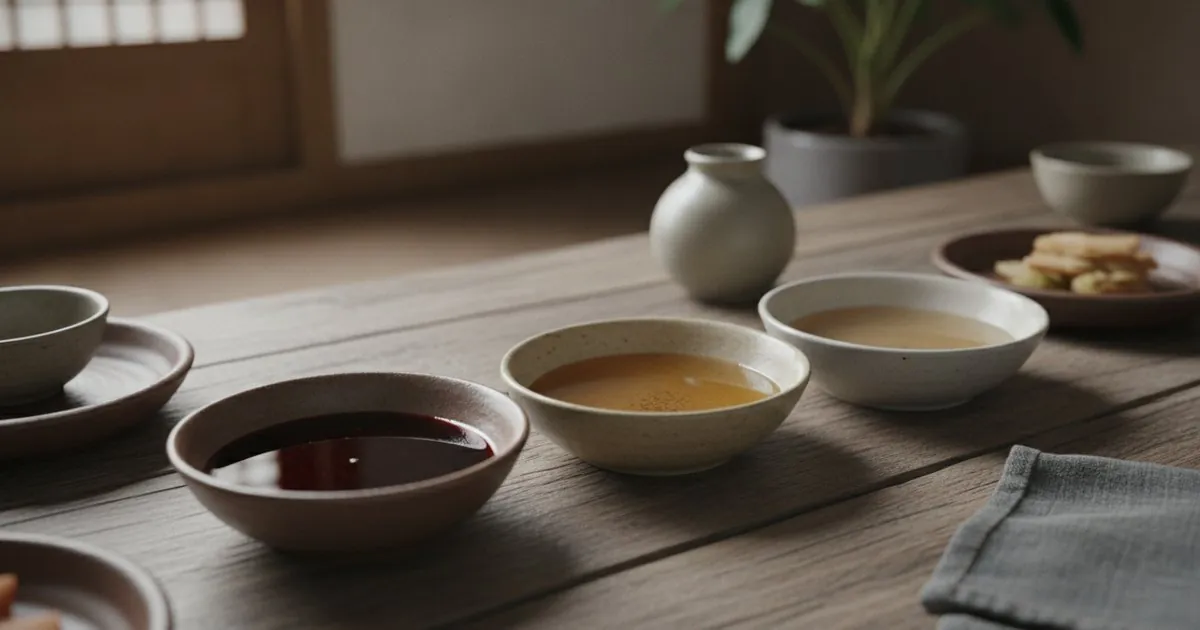
If you’ve ever stood in the soy sauce aisle of H Mart squinting at four different bottles — all labelled something like ganjang — with no idea which one to grab, you are absolutely not alone. Korean soy sauce is one of those ingredients where even experienced home cooks get tripped up, because the labelling is genuinely complicated. There’s guk ganjang, yangjo ganjang, jin ganjang, and then there’s jin ganjang again — meaning something completely different.
Yes, really.
This guide is going to untangle all of it. By the end, you’ll understand not just what each type tastes like, but why they taste that way, which dishes each one belongs in, and — critically — how to read a Korean soy sauce label so you’re never guessing again. Whether you’re building out your Korean pantry essentials from scratch or you’ve been cooking Korean food for years but just assumed “soy sauce is soy sauce,” this one’s for you.
The Big Picture: Two Axes, One Confusing Aisle
Here’s the framework that nobody tells you upfront: Korean soy sauce exists on two completely separate axes that overlap in ways that create genuine confusion.
Axis One is about production method — how the soy sauce was made. This is the modern commercial classification system used by Korean food law. It determines flavour profile, quality tier, and price.
Axis Two is about age — how long the soy sauce was fermented and matured. This axis only applies to one specific production type (the traditional kind), and it uses terms like haet-ganjang, jung-ganjang, and jin-ganjang.
The chaos happens because the term “jin ganjang” (진간장) appears on both axes — but refers to two completely different products depending on context. We’ll come back to that in detail, because it’s the single most important thing to understand about Korean soy sauce.
The Production Method Axis: Four Types to Know
1. Hansik Ganjang / Guk Ganjang (한식간장 / 국간장) — Traditional Soy Sauce
This is the original. The ancestor. Guk ganjang, which literally means “soup soy sauce,” is also called joseon ganjang (Joseon-era soy sauce), hansik ganjang (the official government term, meaning “Korean-style soy sauce”), or jip ganjang (house soy sauce, when it’s homemade). All of these terms refer to the same product.
How it’s made: Cooked soybeans are mashed and formed into brick-shaped blocks called meju. These meju are hung to dry and ferment naturally — the wild bacteria and moulds on the surface do all the work. Then the meju blocks are submerged in brine (just salt and water, nothing else) inside traditional earthenware onggi pots for 60 to 70 days. To prevent unwanted bacteria, Korean grandmothers traditionally drop dried red chilli peppers and chunks of charcoal into the pot — the chilli for its antimicrobial properties, the charcoal to absorb impurities. After fermentation, the liquid is strained off and becomes guk ganjang. The leftover solids become doenjang (fermented soybean paste). Nothing is wasted.
What it tastes like: Guk ganjang is lighter in colour than Japanese soy sauce — closer to a reddish amber — but dramatically saltier and more pungent. It has a funky, complex, almost minerally depth that comes entirely from soybeans and time. No wheat, no additives.
How to use it: The clue is in the name — soups. Miyeok-guk (seaweed soup), doenjang-jjigae, bean sprout soup, any dish where you need seasoning without adding dark colour. It’s also essential in spinach namul, cucumber salads, and light vegetable banchan. A very little goes a long way — it’s noticeably saltier than Japanese soy sauce, so use about 20–25% less than you think you need.
Where to find it: H Mart carries Sempio and Chung Jung One guk ganjang reliably. Some Whole Foods stores in major cities carry it under the “soup soy sauce” label. Online, you can order direct from Korean specialty retailers.
2. Yangjo Ganjang (양조간장) — Naturally Brewed Soy Sauce
Yangjo ganjang is the modern, naturally brewed soy sauce — the Korean equivalent of Japanese shoyu, and actually most similar to what Western cooks think of when they imagine soy sauce.
How it’s made: Soybeans and wheat are inoculated with Aspergillus mould (koji), then mixed with brine and fermented in a controlled factory environment for a minimum of six months. The wheat adds sweetness and rounds out the flavour. The result is a darker, glossier, less aggressively salty sauce than guk ganjang.
What it tastes like: Rich, balanced, slightly sweet, with deep umami. This is the “everyday” soy sauce of the Korean table — versatile and approachable. If you’re cooking Korean BBQ at home and making a bulgogi marinade, yangjo ganjang is almost certainly what the recipe is calling for, even if it just says “soy sauce.”
How to use it: Marinades, dipping sauces, stir-fries, rice dishes, japchae. This is your workhorse. In a pinch, Japanese shoyu (Kikkoman, etc.) works as a substitute, though it lacks some of the depth of properly aged yangjo.
3. Honhap Ganjang (혼합간장) and Acid-Hydrolyzed Soy Sauce — The Budget Tier
Honhap ganjang (blended soy sauce) is yangjo ganjang mixed with acid-hydrolyzed soy sauce (산분해간장 — san-bunhae ganjang). Acid-hydrolyzed soy sauce is made by treating defatted soybean meal with hydrochloric acid, which breaks down the proteins into amino acids in a matter of days rather than months. It’s fast, cheap, and produces a product that mimics the flavour profile of brewed soy sauce without the time investment.
Blended soy sauce tastes acceptable, but it lacks the layered complexity of naturally brewed yangjo. You’ll often find honhap ganjang in budget-priced bottles. Check the label: if you see “혼합간장” or a mention of “산분해간장” in the ingredients, you’re in blended territory.
4. Mat Ganjang (맛간장) — Flavoured Soy Sauce
Mat ganjang means “flavour soy sauce” — it’s a category of convenience sauces where mushrooms, garlic, onion, fruit, corn syrup, or other aromatics are added to a soy sauce base. Think of it as a pre-seasoned shortcut product. It’s not a base ingredient; it’s more of a finishing condiment or all-in-one sauce for specific dishes. Useful to know about, but not an everyday pantry staple for most Western cooks.
The Age Axis: What “Jin Ganjang” Really Means (and Doesn’t)
Now we come to the genuinely confusing part. Within the traditional hansik ganjang category, age dramatically affects flavour — and the Korean food safety ministry has official classifications for it:
| Name | Age | Colour | Flavour |
|---|---|---|---|
| Cheongjang / Haet-ganjang (청장/햇간장) | Up to 1 year | Pale amber | Light, clean, delicate |
| Jung-ganjang (중간장) | 1–4 years | Amber | Rounded, medium umami |
| Jin-jang / Jinjang (진장/진간장) | 5+ years | Dark, syrupy | Complex, slightly sweet, intensely savory |
The word jin (진, sometimes written 眞 or 陳) means “aged,” “genuine,” or “matured.” Jinjang — 5+ year aged traditional soy sauce — is the pinnacle of the hansik ganjang lineage. It’s syrupy, almost molasses-dark, with a sweetness that comes purely from long fermentation rather than added sugar. Korean grandmothers sometimes keep jinjang for decades, adding a few drops to finish abalone stew or other special-occasion dishes.
⚠️ The Jin Ganjang Confusion: Two Products, One Name
Here is the thing that will save you from many future headaches: the “진간장” you see on mass-market commercial bottles in Korean supermarkets is almost never this aged traditional product.
Modern commercial labels use “진간장” to describe their blended or yangjo soy sauce because it tends to be darker in colour than guk ganjang — so it looks like aged soy sauce. The Korean government’s own documentation notes that gaeryang-ganjang (modernised soy sauce) is often called jin-ganjang informally, because of its darker appearance. This is a marketing and labelling convention, not a quality guarantee.
The tell is the price. Authentic aged jinjang from a traditional producer — the kind that’s been fermenting for five or more years in onggi pots — costs significantly more than a standard commercial bottle. If you’re picking up a “jin ganjang” at a budget price point, it is almost certainly a blended or naturally brewed yangjo product using the term as a colour descriptor, not an age claim.
If you want true aged hansik ganjang, look for producers like Kim’C Market (who work with Master Ki Soondo’s traditional methods) or seek out “jip ganjang” from Korean specialty stores.
Quick Reference: Which Bottle for Which Dish?
| Dish | Reach For |
|---|---|
| Korean soups & stews (miyeok-guk, doenjang-jjigae) | Guk ganjang |
| Seasoning light namul vegetables | Guk ganjang |
| Bulgogi marinade | Yangjo ganjang |
| Japchae | Yangjo ganjang |
| Dipping sauces | Yangjo ganjang |
| Gochujang-based dishes | Yangjo ganjang |
| Finishing a long-braised dish | Aged jinjang (if you can find it) |
| Budget everyday cooking | Honhap ganjang (acceptable) |
If a Korean recipe just says “간장” (ganjang) without specifying, context is your guide: if it’s a soup or light vegetable dish, it almost certainly means guk ganjang. If it’s a marinade or stir-fry sauce, it means yangjo ganjang. This distinction trips up a lot of recipe translations.
Western Kitchen Tips: Sourcing and Substituting
H Mart is your best bet for the full range. Look for Sempio or Chung Jung One guk ganjang (usually in a green-labelled bottle), and Sempio or Kikkoman yangjo ganjang for your everyday bottle. If you’re near a large H Mart, you may also find artisanal jip ganjang from smaller producers near the back of the soy sauce section.
Whole Foods and upscale grocery stores typically carry yangjo ganjang or standard Korean soy sauce under the “soy sauce” label. They rarely carry guk ganjang. If guk ganjang is unavailable, a very small amount of fish sauce added to regular soy sauce can approximate the funky, salty depth — it won’t be the same, but it works in a pinch.
Japanese shoyu is a reasonable substitute for yangjo ganjang in most applications. The flavour profile is similar — wheat-brewed, naturally fermented, balanced umami. Use a 1:1 ratio. It doesn’t substitute well for guk ganjang because it’s much less salty and lacks that distinctive pungency.
Storage: All soy sauce should be refrigerated after opening, particularly guk ganjang, which can develop surface moulds if left at room temperature. A well-sealed yangjo ganjang can last a year in the fridge; guk ganjang is even more shelf-stable due to its high salt content.
Building Your Korean Pantry Soy Sauce Collection
You don’t need all of these at once. Here’s a practical progression:
Start here: One bottle of yangjo ganjang. This handles 80% of Korean recipes you’ll encounter — bulgogi, japchae, dipping sauces, rice dishes.
Add next: Guk ganjang. Once you start making Korean soups regularly (and you will, because kimchi jjigae will change your life), you’ll want the real thing.
Eventually: A small bottle of aged traditional hansik ganjang if you can track one down. Just a drizzle into a finished braise or over steamed tofu is a revelation.
Common Misconceptions
“Jin ganjang” is one specific product. This is the most pervasive source of confusion in the Korean soy sauce aisle, and the article addresses it directly: “jin ganjang” (진간장) appears as a label on two entirely unrelated products. As an age designation for traditional hansik ganjang, it refers to the darkest, longest-fermented batch. As a commercial product name on bottles of yangjo or honhap ganjang, it simply signals a rich, full-flavored style. Picking up a bottle labeled “jin ganjang” tells you almost nothing until you also check the production method listed on the label.
Lighter-colored soy sauce is milder and less salty. In Western cooking, color generally signals intensity — a pale sauce seems gentler than a dark one. Korean soy sauce inverts this assumption entirely. Guk ganjang is a reddish amber, noticeably lighter than Japanese shoyu or yangjo ganjang, yet it is dramatically saltier and more pungent. Substituting it 1:1 for yangjo will over-salt your dish; the article specifically recommends using about 20–25% less than you think you need.
Guk ganjang and yangjo ganjang are interchangeable. They are not. Guk ganjang’s funky, mineral depth and high salinity make it the right choice for clear soups and light vegetable dishes, precisely because its amber color won’t darken the broth. Yangjo ganjang is darker but more balanced — the better fit for marinades, stir-fries, and dipping sauces. Pouring guk ganjang into a bulgogi marinade will make it far too salty; using yangjo in a clear miyeok-guk muddies the color and shifts the flavor profile.
Japanese soy sauce is a direct substitute for Korean soy sauce. Japanese shoyu is the closest widely available stand-in for yangjo ganjang, and for many recipes it performs acceptably. But they are not identical: properly aged yangjo ganjang tends to carry a deeper, more layered umami character. More importantly, for dishes that call specifically for guk ganjang, shoyu is not a workable swap at all — the salinity, color, and flavor profile are too different.
Blended soy sauce (honhap ganjang) is adulterated or unsafe. The acid-hydrolysis process sounds alarming to Western readers unfamiliar with it, and some assume honhap ganjang is a counterfeit or harmful product. It is neither — it is a recognized commercial category regulated under Korean food law. The real trade-off is flavor complexity, not safety: it’s a budget-tier choice that lacks the layered depth of naturally brewed yangjo, nothing more.
The most traditional soy sauce is the best all-purpose choice. Guk ganjang’s traditional credentials are real and impressive, but tradition doesn’t equal versatility. Its aggressive salinity and distinctive funk actively work against many dishes — particularly anything where color matters or where a rounder, sweeter umami note is needed. Matching the soy sauce to the dish, not defaulting to whichever production method is oldest, is what actually produces good results.
FAQ
Can I use Japanese soy sauce instead of Korean soy sauce?
For yangjo ganjang (naturally brewed Korean soy sauce), yes — Japanese shoyu is a close substitute in most recipes. The flavour is slightly different (Japanese soy sauce tends to have a more pronounced wheat sweetness), but the results will be excellent. For guk ganjang (soup soy sauce), Japanese soy sauce is not a good substitute — it’s much less salty and has a completely different flavour profile. Stick to guk ganjang for Korean soups.
What does “진간장” on a label actually mean?
It depends on the context and producer. In the traditional sense, 진간장 means soy sauce aged 5 or more years — a premium product. On most mass-market commercial bottles, however, “진간장” is used to describe a darker, richer blended or naturally brewed product, not necessarily one that’s been aged for years. Price is the most reliable indicator: genuine aged jinjang is expensive.
Why is guk ganjang so much saltier than regular soy sauce?
Guk ganjang is made with a much higher salt-to-water ratio during fermentation, and it undergoes less dilution than commercially brewed soy sauce. It’s designed to season dishes in small quantities — you get flavour and saltiness from a teaspoon where you might use a tablespoon of yangjo. When substituting, use about 70–80% of the quantity specified for regular soy sauce.
Is Korean soy sauce gluten-free?
Guk ganjang (traditional/soup soy sauce) is naturally gluten-free — it’s made from only soybeans and salt, with no wheat. Yangjo ganjang contains wheat as part of the brewing process and is NOT gluten-free. Always check the label. If you have a gluten intolerance and are cooking Korean food, guk ganjang or tamari is your best bet.
What’s the difference between ganjang and doenjang?
They come from the same fermentation process but are two different products. When traditional meju blocks are fermented in brine, the liquid that’s strained off is ganjang (soy sauce). The solid leftover is doenjang (fermented soybean paste). They’re siblings from the same mother — which is why they have a complementary depth when used together, as in many classic Korean soups and stews.