
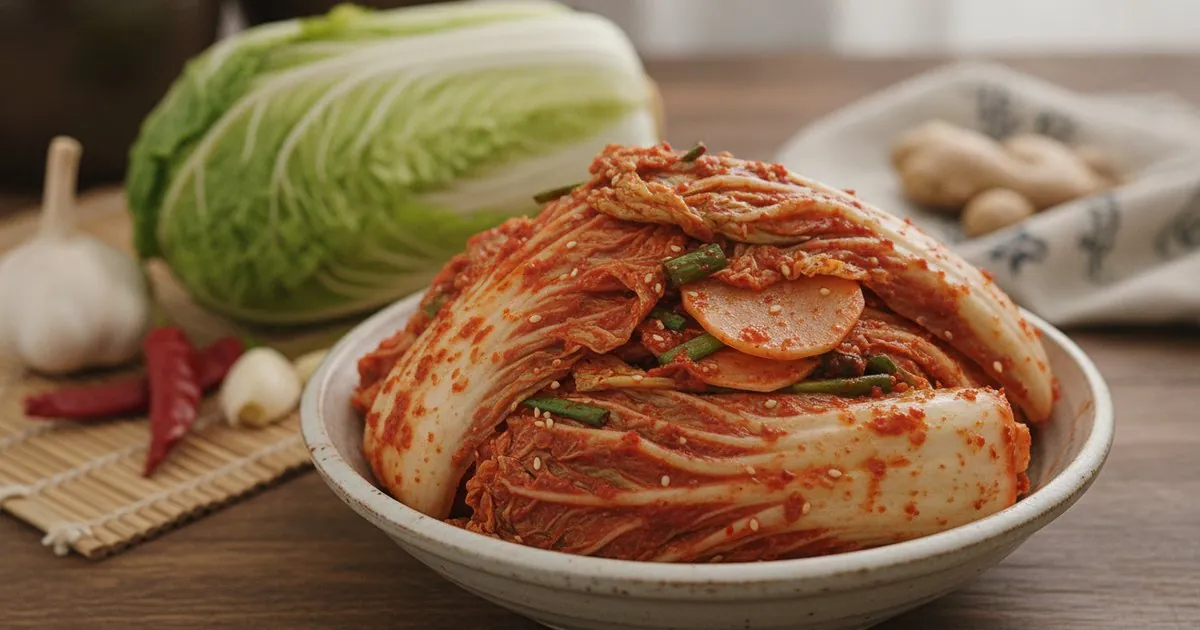
There’s a reason Korean households measure their pantry’s health by the state of the kimchi. Baechu kimchi (배추김치) — napa cabbage kimchi — is not just a side dish; it is a living, evolving fermented food that changes in flavor, texture, and character over weeks and months. Making it at home is one of the most rewarding cooking projects you can undertake, and once you do it once, you’ll understand why Korean families have been doing it for generations.
This is a full, proper guide to making real baechu kimchi. Not a shortcut version. Not “kimchi-style” anything. The real thing — salty, spicy, garlicky, funky, and alive with beneficial bacteria that get better every day it sits in your fridge.
Why Make Kimchi at Home?
Store-bought kimchi is genuinely good. Brands like Jongga and Bibigo have made excellent kimchi accessible at mainstream grocery stores and H Mart locations across North America. So why make your own?
Control. When you make kimchi, you decide every variable: how much gochugaru (and therefore how spicy it is), how much garlic, whether to use fish sauce or go fully plant-based, how salty, how sweet. Store-bought kimchi is calibrated for the broadest possible palate.
Freshness stages. Homemade kimchi lets you eat it across the full arc of its life — fresh and crunchy on day one, bright and tangy at one week, deeply complex and slightly effervescent at one month. Store-bought almost always arrives at a fixed stage.
Satisfaction. There’s something profound about fermenting your own food. Kimchi-making (kimjang) is so culturally significant in Korea that it’s been designated an Intangible Cultural Heritage by UNESCO. Joining that tradition in your own kitchen is genuinely meaningful.
Cost. A head of napa cabbage and the pantry ingredients typically cost a fraction of what a comparable jar of premium store-bought kimchi runs.
Understanding the Ingredients
Before you start, it helps to understand what each component does and where to find it.
Napa cabbage (배추, baechu): The star. Look for a dense, heavy head with pale green outer leaves and white ribs. Korean grocery stores almost always have them; mainstream grocery stores increasingly stock them in the Asian produce section. H Mart and similar stores often sell them for very reasonable prices.
Gochugaru (고추가루): Korean red pepper flakes — not regular red pepper flakes, not cayenne, not paprika. Gochugaru is made from a specific variety of Korean red pepper that is mildly hot, fruity, and has a characteristic brick-red color. It is the ingredient responsible for kimchi’s color and heat. You can find it at any Korean grocery store, often in large bags. See our guide to Korean pantry essentials for buying tips.
Fish sauce (멸치액젓, myeolchi aekjeot — anchovy fish sauce): Traditional kimchi uses fish sauce and/or salted fermented shrimp (saeujeot) to add umami depth and help with fermentation. Korean fish sauce (anchovy-based) is ideal; Vietnamese fish sauce (Red Boat or Tiparos) is a good substitute. For a vegan/vegetarian version, replace the fish sauce with soy sauce and omit the saeujeot — the kimchi will still be excellent, just slightly less funky.
Saeujeot (새우젓, salted fermented shrimp): A traditional ingredient that adds an intense umami punch. It’s sold in Korean grocery stores in the refrigerated section. If you can’t find it, just increase the fish sauce slightly. Not essential but traditional.
Glutinous rice flour (찹쌀가루): Used to make a simple porridge/paste that helps the seasoning coat the vegetables and provides starch for the fermenting bacteria to feed on. You can find it at Asian grocery stores. Plain all-purpose flour paste can substitute in a pinch.
A note on gochugaru amounts: The amount of gochugaru in this recipe (4 tablespoons for a full head of cabbage) produces a moderately spicy kimchi. If you like mild kimchi, use 2-3 tablespoons. If you want the real, properly spicy version, go up to 5-6.
The Brining Step: Don’t Rush This
Brining is the step that determines your kimchi’s texture, and it’s the one most beginners rush. The salt draws water out of the cabbage through osmosis, which accomplishes two things: it creates the crunchy-yet-pliable texture that makes good kimchi distinctive, and it acts as the first preservation step.
The 1-2 hour method works well for a same-day project. Use slightly more salt (about ½ cup for a large cabbage) and toss every 30 minutes.
The overnight method is gentler and arguably produces better results. Use slightly less salt (about ⅓ cup) and let the cabbage sit in the fridge overnight or for 8-12 hours. This allows the brine to work more slowly and evenly.
Either way, the goal is the same: the cabbage should be noticeably wilted, pliable enough to bend without snapping, and significantly reduced in volume. The ribs, which are the thickest part, should yield slightly when pressed.
Rinsing is crucial. Under-rinsed kimchi is impossibly salty. Over-rinsed kimchi lacks the salinity needed to ferment properly. The sweet spot: rinse 2-3 times thoroughly, then taste a piece. It should taste pleasantly salty — not like ocean water, not bland. When in doubt, err slightly on the salty side; the sourness of fermentation will balance it over time.
Making the Paste
The kimchi paste is where all the flavor lives. Making it is straightforward, but a few notes:
Wear gloves. Gochugaru stains everything — hands, cutting boards, clothes, surfaces — intensely red, and the color takes a while to fade. Disposable gloves are your friend here.
The rice paste thickens the mixture. Some recipes skip it, but the rice paste (called pul in Korean) makes the seasoning stick to the vegetables much better and gives the finished kimchi a slightly more cohesive texture. It takes 5 minutes to make and is worth the effort.
Taste the paste before you add it to the vegetables. It should taste intense — almost too salty, very garlicky, noticeably spicy. Remember that you’re seasoning a large quantity of cabbage, so the paste needs to be bold. If it tastes timid, add more of whatever it’s lacking.
Fermentation: Patience Is the Ingredient
Fresh kimchi (geotjeori) is wonderful — crunchy, vibrant, and sharp. But most people’s idea of “kimchi flavor” comes from fermented kimchi, where the lactic acid bacteria have had time to do their work.
Room temperature fermentation (1-2 days): Leave your packed kimchi at room temperature out of direct sunlight. In a warm kitchen (70°F / 21°C or above), fermentation moves faster — you might see bubbles and notice a tangy smell within 24 hours. In a cooler kitchen, it may take 48 hours. Signs of active fermentation: small bubbles, a sour-tangy smell when you open the lid, and brine that has pushed up to the surface.
A critical step: Open the jar once or twice a day during room temperature fermentation and press the kimchi down firmly with a clean spoon. This “burping” releases built-up CO2 and pushes the vegetables back under the brine. Without this step, the kimchi can over-ferment at the top while under-fermenting at the bottom.
Refrigerator fermentation: Once the kimchi reaches a level of sourness you like, transfer it to the fridge. Cold temperatures dramatically slow fermentation but don’t stop it entirely. The kimchi will continue to develop flavor for weeks and months. Here’s a rough taste timeline:
- Day 1-3 (fresh): Crunchy, raw-vegetable texture, bright spice, mild tang
- Week 1: Noticeably soured, still crunchy, flavors starting to meld
- Week 2-4: The sweet spot for many people — deeply flavored, pleasantly sour, texture starting to soften slightly
- Month 1-3: Fully fermented, intensely sour, deeply complex. Excellent for kimchi fried rice and kimchi jjigae
Old, well-fermented kimchi (called mukeunji in Korean) is genuinely prized for cooking. Don’t throw out kimchi just because it’s gotten very sour — that’s when it becomes the perfect ingredient for kimchi fried rice.
Tips for Perfect Kimchi Every Time
Use the best gochugaru you can find. The quality of the gochugaru affects the final color (dull brick vs. vivid red) and flavor. Look for Korean-origin gochugaru in sealed bags at a Korean grocery store. The difference between fresh, high-quality gochugaru and a stale jar sitting in a general spice rack is substantial.
Salt concentration matters. Too little salt and the kimchi won’t ferment safely or develop proper texture. Too much and it’s inedible. The guideline: the properly brined cabbage should taste moderately salty before seasoning.
Pack tightly. Air pockets are the enemy of consistent fermentation. Press firmly as you fill the jar, and make sure there’s enough brine to cover the vegetables. If the vegetables seem dry after packing, mix a small amount of water with a pinch of salt and pour it in.
Temperature control. If your kitchen is very warm (above 75°F / 24°C), room-temperature fermentation will be fast — check after 12-24 hours. In a cold kitchen or during winter, it may take 3 days. The process is forgiving as long as you taste as you go.
Adjust gochugaru based on freshness. Fresh, recently purchased gochugaru is vivid red and quite fragrant. Gochugaru that’s been sitting in a bag for six months is dull and less flavorful. If your gochugaru looks pale or faded, use a larger quantity to compensate.
Serving Kimchi
Fresh kimchi: serve alongside almost any Korean meal as a banchan (side dish). It pairs beautifully with plain white rice, grilled meats, fried eggs, tofu, and noodle dishes.
Fermented kimchi: use in cooking. The most famous application is kimchi fried rice — stir-fry leftover rice with well-fermented kimchi and a little sesame oil for one of the quickest, most satisfying one-pan meals imaginable. Kimchi jjigae (kimchi stew) with tofu and pork is another essential that improves the older the kimchi gets.
For a deeper pantry foundation that makes all of this possible, read our guide to gochujang and fermented pastes.
Common Mistakes to Avoid
Pulling the cabbage from the brine too early. The most common first-timer error: the cabbage looks wilted after an hour and feels “close enough,” so you rinse it. But the thick white ribs need time — if they still snap rather than bend, fermentation will produce uneven texture, with mushy leaves and tough stems in the same jar. Press a rib between your fingers; it should give and flex without breaking. If it resists, give it another 30–60 minutes and test again.
Under-rinsing, then skipping the squeeze. An under-rinsed cabbage carries so much residual salt that it overwhelms the paste and stalls fermentation. Rinse at least twice, taste a piece of rib, and aim for pleasantly salty — not briny. Just as important: after rinsing, squeeze each cabbage quarter firmly over the sink. Excess water sitting in the leaves dilutes your gochugaru paste on contact, turning a vibrant brick-red coating into a pale, slippery wash that slides right off.
Substituting gochugaru with cayenne, paprika, or generic red pepper flakes. These are not equivalent. Cayenne is sharply hot without the fruity depth; paprika adds color but almost no heat; standard red pepper flakes lack the fine texture needed to coat the paste evenly. Gochugaru’s mild, fruity, slightly smoky character is structural to the flavor of baechu kimchi. If the only option is a different pepper, the finished kimchi will taste noticeably off — hotter in a raw way, with none of the rounding quality that makes kimchi addictive. Source gochugaru from a Korean grocery or online; it keeps well in the freezer for months.
Skipping the rice paste (pul). Without it, the seasoning is too loose to cling to the cabbage’s slick, wet surface. The result is kimchi where the paste pools at the bottom of the jar while the cabbage stays under-seasoned. The five minutes it takes to simmer glutinous rice flour and water into a thick porridge makes the difference between seasoning that sticks and seasons every leaf versus one that sinks.
Packing the jar with air pockets. Kimchi ferments anaerobically — the lactobacillus bacteria work without oxygen, and any air trapped between leaves creates conditions for surface mold and uneven sourness. Press the kimchi down firmly as you pack, until brine rises to cover the surface. Leave about an inch of headspace for expansion, then press down once more before sealing.
Tasting and opening constantly during fermentation. Every time you open the jar in the first few days, you introduce oxygen and disrupt the CO₂ environment the bacteria are building. Check once at day two, press the kimchi down if it has risen above the brine, and let it do its work. Patience here is the difference between bright, complex acidity and a flat, slightly off-smelling result.
Frequently Asked Questions
Can I make kimchi without fish sauce or shrimp (vegan)? Yes, and it’s genuinely excellent. Replace fish sauce with equal amounts of soy sauce (or a soy sauce + a little seaweed powder combination for extra umami) and simply omit the saeujeot. Many Koreans in Buddhist communities have made vegan kimchi for centuries — it’s not a compromise version, just a different tradition.
How long does homemade kimchi last? In the refrigerator, kimchi keeps for 3-6 months easily, and often much longer. As long as it smells pleasantly sour (not off or rotten), and the vegetables are submerged in brine, it’s safe to eat. Very old kimchi becomes extremely sour and softer in texture, which makes it ideal for cooking even if it’s too tart to eat as-is.
My kimchi isn’t bubbling — did I do something wrong? Not necessarily. Fermentation speed depends heavily on temperature, salt concentration, and the microbial environment in your kitchen. If it’s cold, fermentation is slower. Give it another 24-48 hours at room temperature before worrying. If after 3-4 days at room temperature there’s still no activity, the salt concentration may be too high — try adding a small splash of water and repacking.
Why does my kimchi taste too salty? This usually means the cabbage wasn’t rinsed enough after brining. Unfortunately, this is difficult to fully correct after the fact. Rinse the vegetables again under cold water, squeeze very well, and re-season with less fish sauce or salt. Future batches: taste during rinsing and keep going until the cabbage tastes pleasantly (not excessively) salty.
Can I use regular cabbage instead of napa cabbage? Napa cabbage is strongly preferred for baechu kimchi — its texture, water content, and mild flavor are specifically suited to this fermentation process. Regular green cabbage can technically be used but produces a substantially different result: crunchier, less flavorful, and slower to ferment. If napa cabbage is unavailable, look for it online or at an Asian grocery store before substituting.
Do I need special equipment? No. The main tool is a large bowl for mixing (ideally non-reactive — glass or stainless steel, not bare aluminum). Wide-mouth glass jars (Mason jars or the large glass kimchi containers sold at Korean grocery stores) work perfectly for storage. Rubber gloves are strongly recommended. Everything else is optional.