
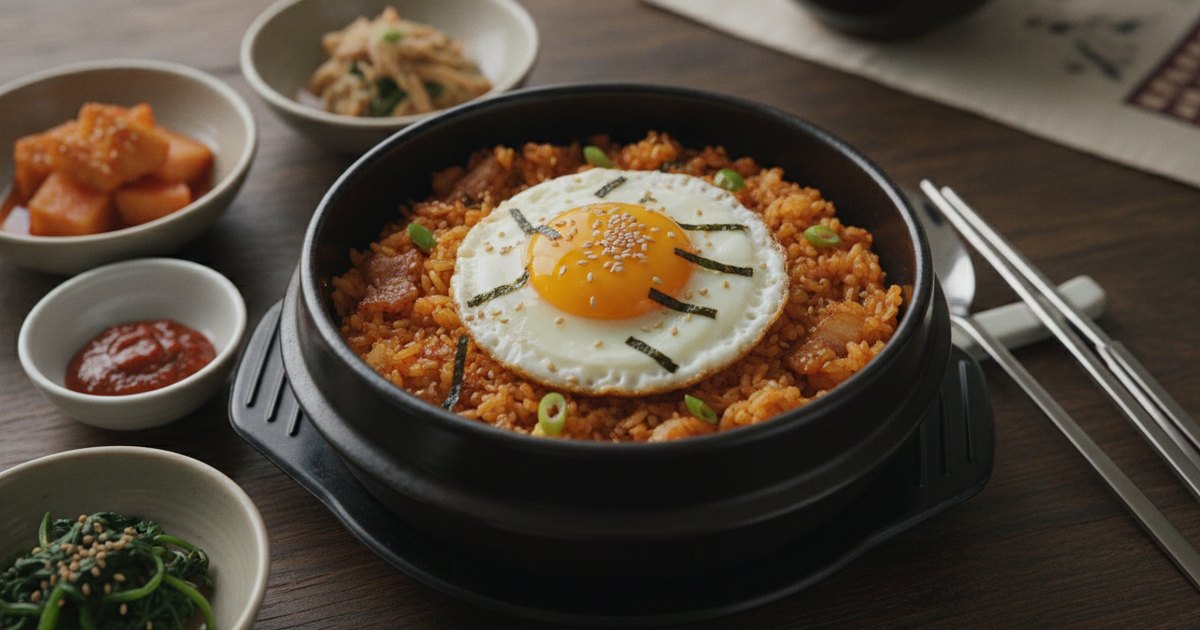
Bokkeumbap (볶음밥) is Korea's definitive answer to leftover rice — and one of the most satisfying quick meals in the Korean cooking canon. The name breaks down simply: bokkeum means "stir-fried," bap means "rice." But do not let the simplicity mislead you. This is a dish with real technique, real depth of flavor, and a logic that — once you understand it — opens the door to endless variations.
What separates bokkeumbap from other fried rices around the world is its reliance on fermented flavors: funky, sour kimchi that caramelizes against a screaming-hot wok surface, a drizzle of toasted sesame oil added only after the pan comes off the heat, and almost always a fried egg on top whose runny yolk becomes an instant sauce the moment you break it. The result is intensely savory, tangy at the edges, smoky in the middle, and deeply comforting in a way that transcends "leftover meal."
This guide covers everything — the foundational technique, the famous kimchi bokkeumbap recipe, key variations, and the most common places things go wrong.
What Is Bokkeumbap? A Quick Cultural Note
Bokkeumbap spans Korean home kitchens, casual restaurants, and late-night pojangmacha (street tent stalls) with equal presence. At its core it is a leftover-rice tradition, but it has accumulated enough regional and stylistic variation to be a genuine culinary category rather than a single recipe.
The most famous version is kimchi bokkeumbap (김치볶음밥), which uses well-aged kimchi as its primary flavoring agent — the sour, tangy liquid and the fermented vegetables do double duty as both seasoning and vegetable. From there, the variations multiply: tuna-and-mayonnaise (chamchi bokkeumbap), Spam-and-vegetable combinations (enormously popular in Korean households, a legacy of post-Korean War American military surplus), beef with sesame, shrimp, and even dolsot versions served in a scorching stone bowl so that the bottom layer of rice sizzles into a crackling golden crust.
If you have already worked through our bibimbap guide, you know that Korean rice dishes reward attention to detail and care with seasoning. Bokkeumbap is more forgiving but no less intentional.
The Most Important Ingredient Is Not Kimchi — It Is Your Rice
Every experienced Korean cook agrees on this without exception: cold, day-old short-grain rice is non-negotiable for proper bokkeumbap.
Freshly cooked short-grain rice is loaded with surface moisture. The moment it hits a hot pan, it steams rather than fries — clumping into a gummy, soft mass instead of separating into individual, lightly toasted grains. Overnight refrigeration changes the rice structurally: surface moisture evaporates, and a process called starch retrogradation partially recrystallizes the starch, firming up each grain. The result is rice that can actually fry — grains that make contact with the hot pan and develop light color and a faintly nutty crust rather than steaming themselves soft.
Sourcing: Short-grain or medium-grain white rice is standard. Brands like Kokuho Rose, Nishiki, or any Korean-label short-grain rice — readily available at H Mart, most Asian grocery stores, and increasingly at Whole Foods in the international foods aisle — work perfectly. Jasmine rice is an acceptable substitute; the texture will be slightly less springy but the technique is the same.
Emergency shortcut: If you only have freshly cooked rice, spread it in a thin, even layer on a rimmed sheet pan and refrigerate uncovered for 30–45 minutes. It is not a perfect substitute for overnight rice, but it is workable — and dramatically better than warm rice straight from the pot.
The Kimchi Factor: Why Old, Sour Kimchi Is the Right Kimchi
For kimchi bokkeumbap, the age and fermentation level of your kimchi matters more than the brand. You want well-fermented, noticeably sour kimchi — not the fresh, still-crunchy variety.
Here is why: as kimchi ferments, lactic acid builds up, the cabbage softens, and the flavor shifts from bright and vegetal to something deeper, more complex, almost wine-like in its tang. When that aged kimchi hits a hot pan, the sugars and acids caramelize — turning the kimchi from an acidic, sharp vegetable into a deeply savory, slightly smoky flavoring agent. Fresh kimchi lacks this transformation potential. It stays sharp and one-dimensional in the pan; it does not caramelize the same way.
At H Mart, look for kimchi that is at least a few weeks old — ask a staff member which jars have been in stock longer. Whole Foods and Trader Joe's kimchi tends to be milder and less fermented, which means you will need to compensate (more on that in the Mistakes section below). If you want to control the fermentation from the start, our step-by-step kimchi making guide walks through the whole process.
The juice is an ingredient, not a byproduct. That liquid at the bottom of your kimchi jar — it is packed with fermented umami, salt, and lactic acid. Reserve 3 tablespoons (45 ml) before you chop the kimchi and add it to the pan during cooking. It seasons the rice in a way that no combination of soy sauce and vinegar can fully replicate.
Understanding the Protein Options
Bacon is the single most popular protein in home-cooked kimchi bokkeumbap, and it earns its place: the rendered fat becomes your cooking oil, carrying a smokiness through every grain of rice. Three to four strips is the standard for two servings — enough to flavor the dish without overpowering the kimchi.
Spam (Korean brand: 스팸, available at every H Mart and many regular supermarkets) is not a novelty or an ironic choice in Korean cooking — it is a genuinely beloved ingredient with deep roots in Korean food culture, its widespread use dating to the post-Korean War period when American military rations introduced canned meats to the Korean diet. Its slightly sweet, intensely salty character plays very well against sour kimchi.
Other options: Deli ham (ATK found 4 oz / 115g of deli ham works well), canned tuna (one 140g / 5 oz can, well-drained), diced tofu, or shrimp. For a fully vegetarian version, skip the meat, use 1 tablespoon of vegetable oil, and add a teaspoon of doenjang (Korean fermented soybean paste) for umami depth — learn more in our doenjang guide.
The Step-by-Step Technique That Actually Works
Heat: Get the Pan Seriously Hot
A wok is ideal for bokkeumbap — the sloped walls give you surface area, and the thin carbon steel retains heat differently from a flat-bottomed pan. A large stainless steel skillet or cast iron pan are both solid alternatives. Skip non-stick here: the temperatures needed for proper fried rice can damage non-stick coatings, and you will not achieve the same caramelization on the rice or kimchi.
Test heat by flicking a drop of water at the pan surface. If it evaporates instantly with a sharp, immediate sizzle, you are at the right temperature. If it beads up and rolls around (Leidenfrost effect), turn the heat down slightly — the pan is too hot for the first stage.
Cook Protein First, Keep Every Drop of Fat
Lay bacon strips in the hot, dry pan. Let them cook undisturbed for 1–2 minutes before stirring, so the fat renders gradually. For Spam, add 1 tbsp oil first since it does not have the same fat content as bacon. Once lightly browned — not crisp to the point of brittleness — remove any solid pieces briefly if you want them to stay distinct in the final dish, or leave them in if you prefer them integrated.
Do not drain the fat. Everything that follows cooks in that fat and picks up its character.
Caramelize the Kimchi — This Step Earns the Flavor
Add your chopped kimchi to the pan. The initial contact should produce a loud, aggressive sizzle as the moisture in the kimchi hits the hot fat. That is moisture cooking off, not caramelization happening. Keep the heat at medium-high and stir every 30 seconds. As the moisture evaporates, the sizzle will quiet and deepen. At 2–3 minutes, you should see the kimchi pieces browning at the edges and the color deepening from bright red-orange to a richer, almost brick-red tone. The smell in the kitchen should shift from sharp and acidic to something toasty, sweeter, and complex. That is your cue to add rice.
Rushing past this stage — adding rice after only 30 seconds of kimchi frying — is the single most common error in home-cooked bokkeumbap. You will get a version of the dish, but you will miss the defining depth of flavor.
Fry the Rice: Stir, Rest, Stir, Rest
Add all the cold rice at once. Work immediately to break clumps with a stiff spatula. Once the rice is evenly distributed, alternate between spreading it flat against the hot surface (resting) and folding/stirring. Those undisturbed 20–30 second intervals are where the rice makes direct contact with the pan and develops faint toasted texture. You will hear a quiet, steady hissing pop from the grains against the hot surface. After 3–4 minutes, the rice should look coated and slightly oily with no pale, dry patches.
Add soy sauce and kimchi juice during this stage. Stir well, taste, and adjust.
The Egg on Top Is Not Optional
The fried egg crowning a bowl of bokkeumbap is not decorative — the runny yolk is a sauce. It enriches and binds the rice in the moment you break it, adding a layer of richness that balances the acidity of the kimchi. Whites fully set, yolk fully liquid — sunny-side up is the standard. Cook it separately for control, or cleared-center in the same pan at reduced heat.
Sesame Oil: Always Off the Heat
Toasted sesame oil is a finishing flavor. Its aromatic compounds begin to evaporate almost immediately when heated. If you drizzle it into a hot pan, what you will taste in the final dish is just the fat, not the fragrance. Remove the pan from heat entirely, then drizzle, then stir once.
Variations Worth Building Into Your Rotation
Chamchi (Tuna) Bokkeumbap: Replace the bacon with one 140g (5 oz) can of well-drained tuna. Stir in 1 tablespoon of Kewpie or regular mayonnaise off heat for richness. This is one of the most popular Korean student and home-cook variations — fast, cheap, and satisfying.
Doenjang Bokkeumbap (Vegetarian): No kimchi, no meat. Sauté minced garlic, diced mushrooms, and zucchini in oil. Season with 1 heaped teaspoon of doenjang and 1 teaspoon of gochujang for depth. The doenjang provides miso-like umami that makes this version feel genuinely substantial.
Spam and Vegetable Bokkeumbap: Diced Spam with frozen corn, diced carrot, and frozen peas stirred in during the last minute of rice frying. This is a classic Korean household staple — easy to batch-cook and popular with kids.
Common Mistakes to Avoid
1. Using warm, freshly cooked rice. This is the root cause of gummy, clumped bokkeumbap. Warm rice releases moisture in the pan and steams rather than fries. There is no technique fix once the rice is in the pan — you have to start with cold rice. Plan ahead, or use the sheet-pan refrigerator method described above.
2. Using mild, under-fermented kimchi without compensating. If your kimchi still tastes largely of fresh cabbage rather than funk and acid, your bokkeumbap will taste flat and oddly sweet when the kimchi caramelizes. The fix: stir in 1 tablespoon of gochujang for depth and a teaspoon of rice vinegar or a splash more kimchi juice if you have it.
3. Not giving the kimchi time to caramelize before adding rice. Adding rice to the pan within 60 seconds of adding the kimchi gives you steamed kimchi, not caramelized kimchi. The flavor difference is significant. Wait for the sizzle to deepen, the edges to brown, and the aroma to shift before proceeding.
4. Overcrowding the pan. Doubling the recipe without scaling up to a much larger pan drops the cooking temperature sharply and turns the whole batch into a steam situation. Bokkeumbap needs hot, dry contact heat and surface area to fry rather than braise. For 4 servings, use a very large wok or cook in two batches.
5. Adding sesame oil while the pan is still on the heat. Its aromatic compounds cook off almost instantly. The sesame oil should always go in after the pan has been removed from the burner. This is one of the most frequently skipped instructions in fried rice recipes, and one of the most consequential for final flavor.
6. Over-correcting saltiness with more soy sauce at the end. Kimchi varies enormously in sodium content depending on brand and age. Taste after your first soy sauce addition. If the dish already tastes salty, do not add more — you cannot take it out. A small splash of water stirred in and fried off, or a little extra plain rice folded in, can help dilute. Season incrementally, not all at once.
FAQ
Can I use freshly cooked rice if I don't have leftovers? You can, but you must dry it out first. Spread hot rice on a sheet pan and refrigerate uncovered for at least 30–45 minutes. The goal is to evaporate surface moisture and firm the grains slightly. Straight-from-the-pot rice will almost always produce gummy results.
What if I can only find mild, fresh kimchi? Compensate by adding 1 tablespoon of gochujang to the pan during the kimchi caramelization stage, plus a small splash of rice vinegar (about 1 tsp / 5 ml) to mimic the lactic acid tang. It is not identical to well-fermented kimchi, but it approximates the flavor profile reasonably well.
Can I make a fully vegetarian bokkeumbap? Absolutely. Omit the meat, use 1–1.5 tablespoons of vegetable oil as your cooking fat, and lean on doenjang, mushrooms, or extra gochujang for umami depth. The fried egg topper is optional but highly recommended even in vegetarian versions — it adds richness that makes the dish feel complete.
Can I use brown rice or another grain? Brown rice works but requires longer contact time with the pan to develop any toasty texture, and the result is chewier than the classic. Jasmine rice is a reasonable substitute — slightly less sticky, but it fries well. Cauliflower rice releases too much water in the pan and will not produce a proper fried texture; if dietary restrictions require it, expect a noticeably wetter, softer result.
How do I store and reheat leftover bokkeumbap? Bokkeumbap keeps in the refrigerator for up to 2 days. Reheat in a hot, dry pan — not the microwave, which will make it sticky and soft again. Add a tiny splash of water, stir constantly, and let the pan restore some surface texture. Leftovers of leftovers: there is a certain poetry to it. ```