
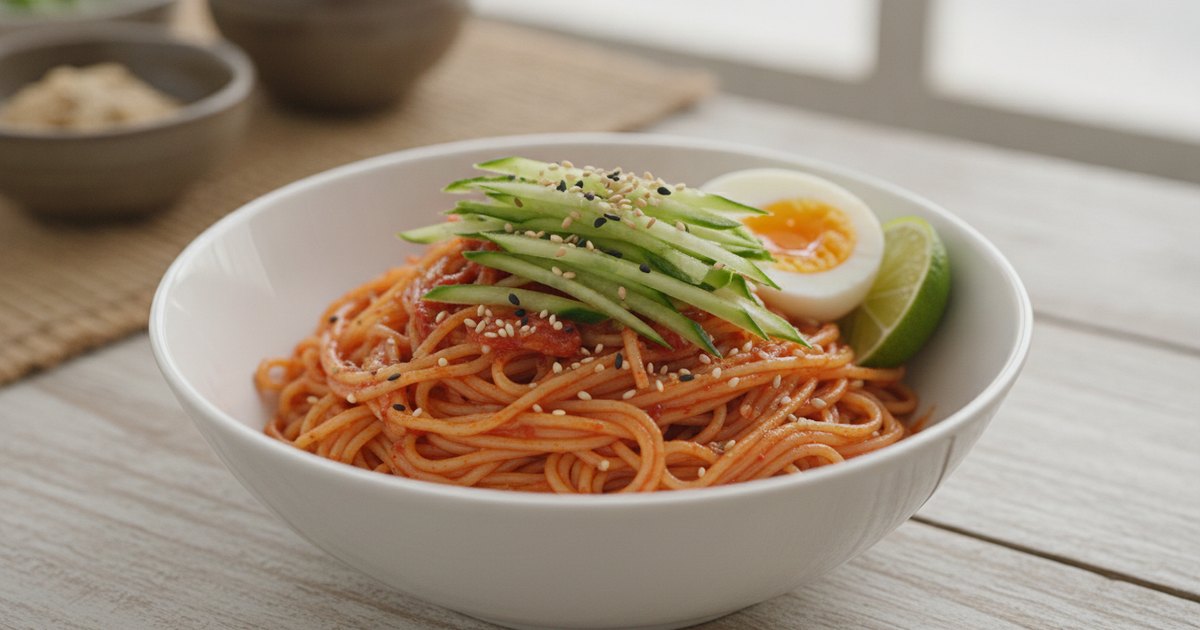
When the temperature climbs and the idea of standing over a hot stove feels genuinely unreasonable, Korean cuisine has a clear answer: bibim guksu (비빔국수). These spicy, tangy cold noodles are tossed in a gochujang-based sauce and topped with crisp cucumber, fresh greens, and a halved hard-boiled egg. The whole thing comes together in about 15 minutes — and most of that time is simply waiting for your water to boil.
Bibim guksu is a dish that demonstrates something fundamental about Korean cooking: the deliberate tension between opposing forces. The noodles are icy cold and slippery-springy; the sauce is bold and punchy, spiked with heat, acid, and just enough sweetness to keep you coming back. Each topping plays a textural role. Everything works in opposition, and the result is something deeply satisfying in a way that simple ingredient lists don't quite predict.
This is weeknight food, summer food, "too hot to think about dinner" food — and one of the easiest Korean recipes you can add to your regular rotation.
What Is Bibim Guksu? (비빔국수)
The name tells you exactly what you're getting. Bibim (비빔) means "mixed" in Korean — the same root that appears in bibimbap, the beloved mixed rice bowl. Guksu (국수) means noodles. Bibim guksu is, quite literally, mixed noodles: thin wheat strands tossed vigorously with a spicy, seasoned sauce until every strand is evenly coated.
It's worth distinguishing bibim guksu from naengmyeon, Korea's other famous cold noodle dish. Naengmyeon arrives in an icy buckwheat broth and uses chewy buckwheat noodles; the experience is restrained and subtle. Bibim guksu is the opposite — all sauce, no broth, with assertive flavor and a satisfying springy texture from the noodles.
The noodle here is somyeon (소면): thin, machine-made dried wheat noodles, roughly 1mm in diameter, that cook in under three minutes and absorb sauce beautifully. Historically, thin wheat noodles in Korea were tied to celebration and longevity — long noodle strands symbolizing a long life, typically served in clear broth at feasts (a dish called janchi guksu, or "party noodles"). The cold, spicy bibim version evolved into an everyday staple: quick, economical, deeply flavorful with a short pantry list, and particularly beloved through the hot summer months.
The Key Ingredients
Somyeon — Getting the Right Noodle
Korean somyeon is the correct noodle for this dish, and it's worth seeking out. Korean brands like Sempio and Pulmuone are the most commonly found at H Mart or Korean grocery stores, and they're inexpensive. Japanese somen is a genuinely close substitute — the shape, cook time, and overall character are very similar — but Korean somyeon tends to be slightly firmer after cooking and behaves a bit differently in texture under sauce. Use Japanese somen with confidence if that's what's available; just be aware the result will be subtly different.
At a mainstream grocery store or Whole Foods, angel hair pasta (capellini) cooked al dente and shocked in cold water works in a pinch. The texture won't be quite right — softer, less springy — but you'll still capture the dish's essential spirit.
Gochujang — The Heart of the Sauce
The sauce lives or dies on gochujang (고추장): Korea's fermented red pepper paste, built from chili, glutinous rice, fermented soybeans, and salt. It brings heat, sweetness, umami depth, and that deep red-orange color that makes the finished dish so visually striking. If you're new to working with gochujang, our complete gochujang guide covers everything from choosing the right heat level to storage.
For this recipe, a medium-heat gochujang is ideal. Haechandle and CJ Haepyo are reliable brands widely available at H Mart. Chung Jung One's tube-packaged gochujang, found at many Whole Foods locations, is also a solid option. Avoid the very mild "sweet" versions — they lack the fermented edge that the sauce needs.
Gochugaru — Optional but Worth It
Many authentic bibim guksu recipes add gochugaru (고춧가루, Korean red chili flakes) to the sauce alongside the gochujang. Gochugaru introduces a more textured, direct heat — less molasses-sweet than gochujang alone — and adds visual depth with its bright red flecks. If you want a smoother, sweeter sauce profile, skip it. If you want more complexity and a slightly coarser texture, 1 tablespoon is the standard addition. For a deeper look at this ingredient, see our gochugaru guide.
The Sauce Architecture
Every component of the sauce has a specific job:
- Rice vinegar provides the sharp, clean acidity that cuts through the paste's richness. Without enough of it, the noodles taste heavy after the first few bites.
- Soy sauce adds savory depth and salinity — more dimensional than plain salt.
- Sugar + honey balance the heat and acid. Using both gives a more rounded sweetness: sugar is clean and direct; honey adds a floral note and contributes to the sauce's glossy sheen.
- Sesame oil is the nutty, toasty backbone. It cannot be substituted — the dish loses its fundamental character without it.
- Garlic provides aromatic punch. One minced clove is standard; go to two if you want it more forward in the final flavor.
Building the Sauce: Taste Aggressively
Mix the sauce before you do anything else — before you boil water, before you prep vegetables. This gives it a few minutes to bloom while you work on everything else, and also ensures you're not tasting it while distracted.
Once combined, it should look deeply glossy and uniformly red-orange. If it looks matte or chunky, the sugar and honey haven't fully dissolved — keep stirring. Taste it directly off the spoon. The raw sauce should be quite intense: noticeably more punchy, more acidic, and more aggressively seasoned than you'd want to eat alone. That's deliberate. Once the sauce coats and absorbs into cold, slightly wet noodles, its intensity drops meaningfully. If it tastes mild at this stage, it will taste flat on the finished plate.
What you're calibrating for: heat that builds gradually rather than stabbing, a clear acidity that makes you salivate, sweetness that rounds the edges without dominating, and savory depth underneath everything. Too sharp? A small pinch of sugar. Tastes flat? More vinegar. Too thick to toss easily? A teaspoon of water loosens it without diluting flavor.
The Ice Bath: Non-Negotiable
Somyeon cook fast — two to three minutes at a rolling boil. Don't salt the water. Bite-test a strand around the 1:45 mark: fully tender, no white chalky center, slight springiness still present. The moment they're done, drain and submerge in ice water — not just cold tap water, but an actual bowl with ice cubes. The rapid temperature drop stops cooking instantly and develops the characteristic slick, springy texture that defines the dish.
Swirl the noodles in the ice bath for 30–45 seconds. The water will turn slightly milky as excess starch rinses away. This rinsing step is what separates springy, sauce-ready noodles from gummy clumps. After the ice bath, drain very thoroughly — shake the colander hard, or gently press the noodles in your hands. Any water clinging to the strands will dilute the sauce and prevent it from coating evenly.
Toppings and Variations
The classic toppings are deliberately simple: julienned cucumber, shredded red leaf lettuce, and a halved hard-boiled egg. The cucumber provides cooling crunch; the lettuce adds a slight bitter freshness; the egg brings richness and protein. Each one has a structural role in the bowl.
For the cucumber, aim for matchsticks about 5cm (2 inches) long and 3mm (⅛ inch) wide. Too thick and they dominate texturally; too thin and they wilt and disappear.
Kimchi version: One of the most popular variations is kimchi bibim guksu — roughly half a cup of well-fermented, punchy kimchi, sliced and folded into both the sauce and used as a topping. The kimchi's acidity and fermented depth push the dish into more complex territory. If your kimchi has been sitting for a few weeks and is starting to turn pleasantly sour, this is an ideal vehicle for it.
Protein additions: Thinly sliced bulgogi or leftover grilled chicken integrate naturally. Canned tuna, drained and lightly seasoned with sesame oil, is a classic Korean convenience addition that tastes more intentional than it has any right to.
Milder version: Eliminate the gochugaru, reduce gochujang to 1 tablespoon, and compensate with an extra teaspoon of honey. If you have Korean plum syrup (maesilcheong, 매실청) — available at H Mart — a tablespoon adds brightness and gentle sweetness without heat, and is excellent in this application.
Common Mistakes to Avoid
1. Not drying the noodles after the ice bath This is the single most common failure point. Wet noodles repel sauce. If you add bibim sauce to noodles that are still dripping, the sauce slides off, pools at the bowl's bottom, and you end up with clumped, under-dressed noodles sitting in a red puddle. The fix is simple but requires intention: shake the colander hard and repeatedly, or squeeze the noodles gently in your (clean) hands, until they feel damp rather than wet.
2. Making the sauce taste "right" before tossing The raw sauce needs to taste aggressively seasoned — bolder than seems pleasant to eat straight. Noodle moisture, cold temperature, and the dilution effect of tossing all reduce the sauce's perceived intensity by roughly 20–30%. If the sauce tastes balanced and mild off the spoon, it will taste flat and disappointing on the plate.
3. Overcooking the noodles Somyeon are thin, and they tip from perfectly cooked to mushy in under a minute. Mushy noodles won't hold sauce — they clump into a starchy mass regardless of how well you've rinsed them. Set a timer and start bite-testing at 1 minute 45 seconds. If they're still chalky, check every 20 seconds after that.
4. Letting dressed noodles sit before serving Bibim guksu is made to be eaten immediately. Within 10–15 minutes of dressing, the noodles begin absorbing the sauce and releasing starch, the cucumbers release water, and the texture degrades noticeably. If you're cooking for people arriving at different times, keep the noodles, sauce, and toppings separate and assemble each bowl to order.
5. Salting the cooking water Salting pasta water is good practice for Italian dishes, but it actively hurts you here. Somyeon already contain salt from manufacturing. Boiling in salted water makes the finished dish overpoweringly salty once the soy-heavy bibim sauce is applied. Use plain, unsalted boiling water.
6. Skipping the pre-sauce sesame oil toss The teaspoon of sesame oil you toss the drained noodles in before adding the sauce does two things: it prevents the strands from welding into a clump as they cool, and it creates a thin, even surface that helps the sauce grip and coat uniformly. Without this step, the sauce tends to coat the outside of a noodle mass while the interior strands stay bare.
Frequently Asked Questions
Can I make bibim guksu ahead of time? The sauce stores well — make it up to 3 days ahead and refrigerate in a sealed container. The noodles, however, need to be cooked and dressed right before serving. Pre-dressed bibim guksu degrades in texture within 15 minutes as the noodles absorb sauce and vegetables release water. For meal-prep situations, store sauce, cooked-and-drained noodles (tossed only in sesame oil), and toppings in separate containers, and combine just before eating.
What can I substitute for somyeon? Japanese somen is the closest and most widely available alternative — find it at Asian grocery stores, many Whole Foods locations, and online. Thin rice noodles (the kind used in Vietnamese bún bowls) also work well: cook per package directions and rinse in cold water the same way. Angel hair pasta cooked al dente is the most accessible Western substitute, though the texture will be softer and less springy than the real thing.
Is bibim guksu very spicy? At the quantities listed, it reads as medium-hot by Korean standards. For Western palates less accustomed to gochujang heat, it may land on the spicier end. To dial it back: omit the gochugaru entirely, reduce gochujang to 1 tablespoon, and add an extra teaspoon of honey. To push it hotter: increase the gochugaru to 1½ tablespoons, or add ½ teaspoon of gochujang on top of what the recipe calls for.
Can I make this vegan? Almost entirely. Replace the honey with sugar or maple syrup in equal measure, and either skip the egg or substitute with sliced silken tofu. The rest of the recipe is already plant-based. One check worth doing: most gochujang brands are vegan, but a few formulations include small amounts of fish sauce — look for labels marked 순 (pure) or check the ingredient list if that's a concern for you.
What's the difference between bibim guksu and janchi guksu? Both use somyeon as the noodle, but the experience is entirely different. Janchi guksu (잔치국수, "party noodles") is served warm in a delicate, clear anchovy-based broth with simple garnishes — subtle, light, and restorative. Bibim guksu is its bold, spicy, cold counterpart. Same noodle, completely opposite dish. If you've had one and are curious about the other, they're worth making back to back to appreciate how much the preparation changes the final character. ```