
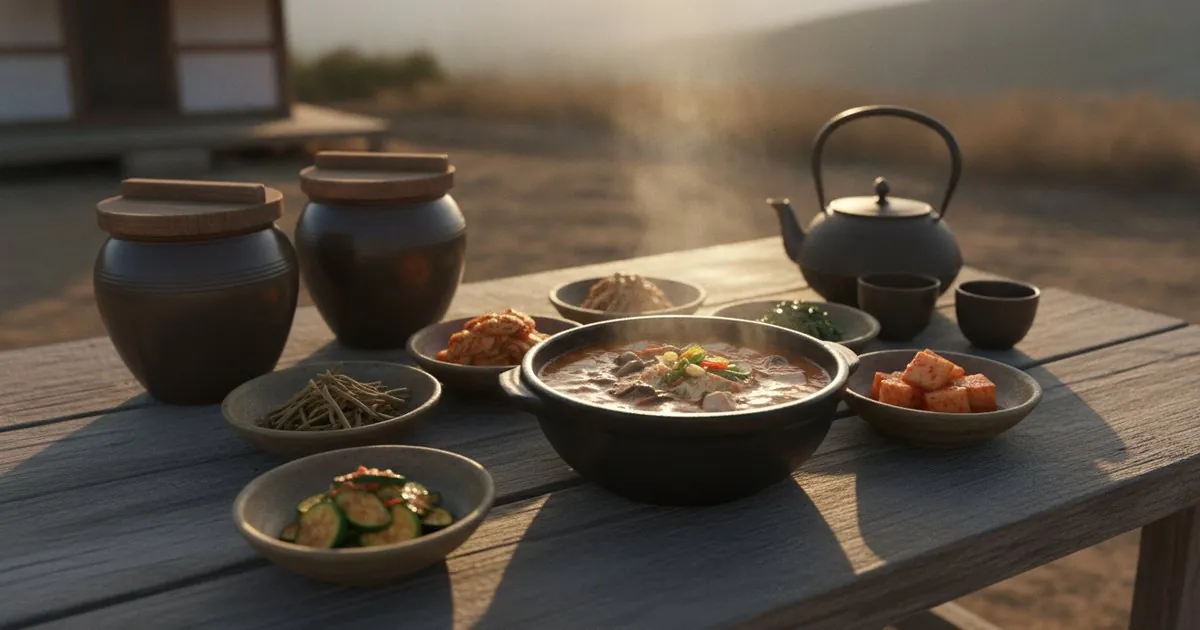
If you’ve watched Crash Landing on You (사랑의 불시착), you already know that Director Lee Jung-hyo uses food the way other directors use dialogue. Captain Ri Jeong-hyeok doesn’t tell Yoon Se-ri she matters — he hand-cranks noodles and ladles them into a bowl. The village women don’t formally welcome her — they show up bearing kimchi. This is Korean food culture in one of its most honest portrayals on screen: care made edible.
The show aired on tvN from December 2019 to February 2020, reaching a jaw-dropping 21.7% nationwide rating for its finale — the highest in tvN’s history at the time. It arrived on Netflix internationally in February 2020, and for many Western viewers, it was both a love story and an unexpected culinary education. Beyond the South Korean dishes that K-food fans already recognize, Crash Landing on You offered something rarer: a glimpse of what daily meals look like north of the 38th parallel.
This guide breaks down every major dish featured in the series, unpacks the cultural weight each scene carries, and gives you practical, concrete advice for cooking them at home — whether you’re sourcing from H Mart, a well-stocked Whole Foods, or ordering online.
The Food Philosophy Behind Crash Landing on You
Writer Park Ji-eun didn’t use food as background texture. Every meal in the show earns its screen time. This reflects something deeply embedded in Korean culture: the phrase 밥 먹었어? (“Have you eaten?”) is one of the most common ways Koreans express care and check in on someone — functionally equivalent to asking “are you okay?” Food isn’t fuel; it’s emotional vocabulary.
The production team consulted with North Korean defectors during research for the series, which is why the food details hold up to scrutiny. The corn-tinged noodle color, the lightly spiced kimchi, the seawater salting technique — these aren’t invented for the plot. They’re documented features of North Korean food culture that most international viewers would never have encountered otherwise.
Dish 1: Onmyeon (온면) — The Noodle Scene That Broke the Internet
Featured in: Episodes 2 and 9
Of all the food moments in the series, this is the one that set off a thousand home cooking experiments. In Episode 2, Se-Ri’s very first meal in North Korea is prepared by Captain Ri himself: thin noodles pressed through a hand-cranked noodle maker, drained through a bamboo strainer, and set in a bowl of doenjang (된장, fermented soybean paste) broth. The noodles appear slightly yellow — a detail consistent with the North Korean practice of incorporating corn flour, since corn is one of the primary grains available in the country. Toppings are minimal: a thin fried egg and finely chopped chili pepper.
Episode 9 layers on the symbolism. Now it’s Ri’s mother who prepares the same dish for Se-Ri, this time with a garnish of mushrooms, julienned carrot, zucchini, and egg. In Korean culture, a mother cooking for her son’s partner is an unambiguous act of acceptance — and the fact that she makes the same dish Ri first cooked for her is the show’s quiet way of saying: you belong here now.
The South Korean Equivalent: Janchi Guksu (잔치국수)
The closest Southern counterpart is janchi guksu (“banquet noodles”) — thin somyeon in a clean anchovy or beef broth, traditionally served at weddings, birthdays, and celebrations. The noodle’s long, uncut strands symbolize longevity and happiness. Same emotional register, different geography.
Making It at Home
- Noodles: Use somyeon (소면), the thin dried wheat noodles sold at H Mart and most Korean grocery stores. Japanese sōmen is structurally identical and works as a direct substitute. Cook for 2–3 minutes in a separate pot of actively boiling water, then drain and rinse immediately under cold running water — this stops the cooking and prevents clumping.
- Broth: Combine 4 cups (1 litre) of cold water with one 6-inch (15 cm) piece of dashima (dried kelp) and 3–4 dried anchovies. Bring slowly to a simmer over medium-low heat, steep for 20 minutes, then remove the solids. Season with 1–1½ tablespoons (15–22 ml) of doenjang and a splash of light soy sauce. The broth should be savory and slightly amber — clear and clean, not thick or murky.
- Toppings: A thin fried egg with lacy golden edges, a few strips of zucchini tossed in sesame oil, and a pinch of shredded red chili.
For sourcing doenjang in Western kitchens — including what the label should say and which brands are most reliable — see the doenjang guide. Don’t substitute Japanese miso here; the fermentation process is different, and doenjang has an earthier, more complex depth that is genuinely irreplaceable in this broth.
Dish 2: Three Kinds of Kimchi — A Study in Regional Identity
Featured in: Episodes 2, 3, 6, and 9
Crash Landing on You treats kimchi with more nuance than most K-dramas. Rather than presenting it as a single undifferentiated side dish, the show depicts three distinct varieties — and their visual differences are intentional signals about where we are.
Kkakdugi (깍두기) — Cubed Radish Kimchi
Served alongside the onmyeon in Episode 2, kkakdugi is Korean radish (mu) cut into roughly 2 cm (¾ inch) cubes and fermented with gochugaru, garlic, and salted shrimp. The version shown is noticeably lighter in color — less deeply red than Seoul-style kkakdugi — reflecting the Northern tradition of less heavily spiced kimchi. The crunch it provides against soft noodles is textural contrast at its most satisfying.
Mak Kimchi (막김치) — Everyday Cabbage Kimchi
Captain Ri’s mother serves mak kimchi, sometimes called “rough kimchi” — napa cabbage cut into smaller pieces rather than fermented whole in large quarters. It’s practical, lightly fermented, and again shown in a milder red than you’d find in Seoul markets.
Chonggak Kimchi (총각김치) — Ponytail Radish Kimchi
This smaller, whole-fermented radish kimchi — fermented with its leafy green tops still attached — appears at the farewell picnic. The greens give it a slightly bitter, peppery edge that distinguishes it clearly from both kkakdugi and baechu kimchi.
The Kimjang Scenes
Episodes 2–3 include kimjang (김장) sequences — the communal late-autumn tradition of making and packing kimchi for winter. The show depicts cabbages being salted with seawater, which is authentic to coastal North Korean communities. South Korea’s kimjang was inscribed on UNESCO’s Representative List of Intangible Cultural Heritage in 2013; North Korea received its own separate UNESCO recognition for the identical tradition — a striking example of shared cultural heritage that exists in parallel across the border.
For a thorough walkthrough of the fermentation process, the right ratio of gochugaru, and the ideal salting technique for Western kitchens, the how to make kimchi guide covers everything you need.
Dish 3: Grilled Meat — The Same Spirit, Different Means
Featured in: Episodes 2 and 12
Korean BBQ appears twice in Crash Landing on You, and the contrast between the two scenes is deliberate. In Episode 2, North Korean soldiers grill pork belly over live charcoal on a simple iron grate. There are no table grills, no gas burners — just fire and fat. They eat it wrapped in whole napa cabbage leaves with ssamjang (쌈장), the thick, assertive dipping paste made from doenjang and gochujang. Episode 12 presents the South Korean version: marinated beef with mushrooms, onions, and garlic, grilled at a proper restaurant table with lettuce wraps and banchan spread across the surface.
Same DNA — the Korean practice of ssam (쌈), wrapping grilled meat in a leafy green with paste and rice — expressed through dramatically different material circumstances. The show makes the point gently but clearly: the pleasure of eating together is not divided by the DMZ.
At home: A heavy cast iron pan or griddle is the right tool for the pork belly approach. Use samgyeopsal (삼겹살) sliced about 1.5 cm (½ inch) thick — available at H Mart pre-sliced. Season with just coarse salt and a brush of sesame oil; no marinade. The pan needs to be genuinely, aggressively hot before the pork goes in — you should see a faint haze of smoke rising from the surface. The fat should hiss and spit on contact; if it doesn’t, the pan isn’t ready.
For technique, timing, and the full range of accompaniments, see the complete Korean BBQ at home guide.
Dish 4: Petrol Clams and Soju in a Shell
Featured in: Episode 4
This is the scene that made food researchers do a double-take. North Korean soldiers grill clams directly over a petroleum heat source — a detail that sounds invented for dramatic effect but has been documented as authentic to the coastal city of Nampo, one of North Korea’s main port cities. Travel researchers with verified access to North Korea have described petrol-grilled clams as one of that city’s signature culinary experiences. After the clams are eaten, the characters pour soju (소주) into the emptied shells and drink from them.
The Korean treatment of clams outside this specific context is more accessible: clams sautéed with gochugaru, garlic, doenjang butter, and a splash of soju; or clams steamed open in broth and added to doenjang jjigae for depth of flavor.
Western kitchen adaptation: Use littleneck clams or manila clams (readily available at most fishmongers). Heat a wide pan over high heat, add a knob of butter and two minced garlic cloves, then add the clams in a single layer. Pour in 60 ml (¼ cup) of soju or dry white wine, cover immediately, and cook for 4–5 minutes until the shells open. Discard any that remain closed. The liquid in the pan — clam liquor, soju, garlic butter — is worth drinking with a spoon.
Sourcing Korean Ingredients in Western Kitchens
| Ingredient | Where to Find It | Acceptable Substitute |
|---|---|---|
| Somyeon (thin noodles) | H Mart, Korean grocery, Amazon | Japanese sōmen (identical format) |
| Doenjang (fermented soybean paste) | H Mart, Whole Foods intl. aisle | No close substitute — worth tracking down |
| Gochugaru (Korean chili flakes) | H Mart, Amazon | ½ mild paprika + ½ cayenne (imperfect) |
| Ssamjang | H Mart, Asian grocery | 1:1 mix of doenjang + gochujang |
| Korean radish (mu) | H Mart, Whole Foods produce | Daikon radish |
| Soju | Korean/Asian liquor stores, Total Wine | 20% ABV vodka diluted with still water |
Common Mistakes to Avoid
1. Making the Doenjang Broth Too Heavy
Onmyeon broth should be clear and gently savory — not thick or assertive like a miso soup. Dissolving more than 2 tablespoons (30 ml) of doenjang per litre of stock turns the broth murky and lets it overpower the noodle. Start with 1 tablespoon (15 ml), taste after it’s fully dissolved, then adjust. The noodle is the centerpiece; the broth is the frame.
2. Skipping the Cold Rinse on Noodles
This is the single most common error with somyeon. If you drain the noodles and go straight to the bowl, residual heat continues cooking them for another 2–3 minutes. Within 5 minutes, you have a soft, clumped mass that has absorbed all the broth. Immediately after draining, transfer the noodles to cold running water (or a bowl of ice water), swirl, then drain again. They should feel slightly springy and separate cleanly when you pull them apart.
3. Using the Wrong Kimchi for the Wrong Dish
The age and type of kimchi matters more than most non-Korean cooks realize. Fresh or lightly fermented kkakdugi (1 week or less) works beautifully alongside a clean broth — its mild acidity complements rather than dominates. A heavily fermented, sharply sour cabbage kimchi will overwhelm the same bowl entirely. Match the kimchi’s age to the dish: fresh kimchi with delicate soups, older kimchi with robust stews and fried rice.
4. BBQ Pan That Isn’t Hot Enough
Pork belly needs a surface temperature around 230–260°C (450–500°F) to sear rather than steam. If you add the meat before the cast iron is properly preheated, the fat renders slowly, the meat sticks, and you get pale, soft pork instead of caramelized, slightly charred slices. Preheat your cast iron for a minimum of 3–4 minutes over high heat with no oil. You should see a faint haze rising from the surface. The moment the pork makes contact, you should hear an aggressive, sustained sizzle — anything quieter means the pan needs more time.
5. Over-Seasoning Ssamjang Before Wrapping
Ssamjang tastes significantly saltier and spicier when eaten alone on a spoon than when it’s wrapped inside a lettuce leaf with pork and rice. The natural fat of the pork, the bitterness of the lettuce, and the starch of the rice dramatically soften the paste’s intensity. If you keep adjusting the seasoning by tasting ssamjang plain, you’ll end up with something completely unbalanced once it’s wrapped. Always do your final seasoning test with a small assembled ssam.
6. Rushing the Kimchi Salting Stage
The kimjang scenes in the show depict seawater salting — a coastal North Korean practice. The home equivalent is dry-salting with coarse sea salt: approximately 2 tablespoons (30 g) per 1 kg (2.2 lbs) of cabbage, left to draw out moisture for 1–2 hours. If you try to accelerate this by adding more salt or using warm water, you either get over-salted kimchi that’s too sharp to eat in quantity, or you break down the cabbage cell structure prematurely — leading to mushy texture after fermentation. Patience at the salting stage is what gives kimchi its characteristic crunch.
Frequently Asked Questions
Is the North Korean food in Crash Landing on You accurate, or was it invented for the show?
Several key details have been documented as authentic. The corn flour in the noodles, the lighter chili seasoning on kimchi, the seawater salting for kimjang, and the petrol-grilled clams from Nampo are all consistent with accounts from North Korean defectors and researchers who have visited the country. The production team consulted with defectors during research, and it shows.
What’s the difference between North Korean and South Korean kimchi?
Both traditions share the same core method — salted cabbage fermented with garlic, ginger, and chili — but North Korean kimchi is traditionally less heavily seasoned, with less gochugaru and a shorter fermentation window. Coastal northern regions use seawater for initial salting. The lighter red color of the kimchi visible on screen in Crash Landing on You is a deliberate, accurate detail.
Where can I watch Crash Landing on You to follow along with this food guide?
All 16 episodes are available on Netflix in most regions. Food scenes appear prominently from Episode 2 onward — whenever characters sit down together, something significant is almost always being eaten or prepared.
What soju should I buy for a Korean dinner night inspired by the show?
Jinro Chamisul is the world’s best-selling spirit by volume and the standard for Korean dining tables. It’s widely available at Korean grocery stores, Asian liquor shops, and increasingly at Total Wine locations across the US. Serve it chilled, in small glasses, alongside the grilled meat — not as a standalone drink.
Can I make janchi guksu-style noodles ahead of time?
The broth can be made up to 3 days ahead and refrigerated. However, cook and rinse the noodles fresh immediately before serving — pre-cooked somyeon left sitting in broth for even 20 minutes becomes unpleasantly soft. If you’re serving guests, keep the noodles in a separate bowl of cold water and portion them into hot broth bowls at the table.