
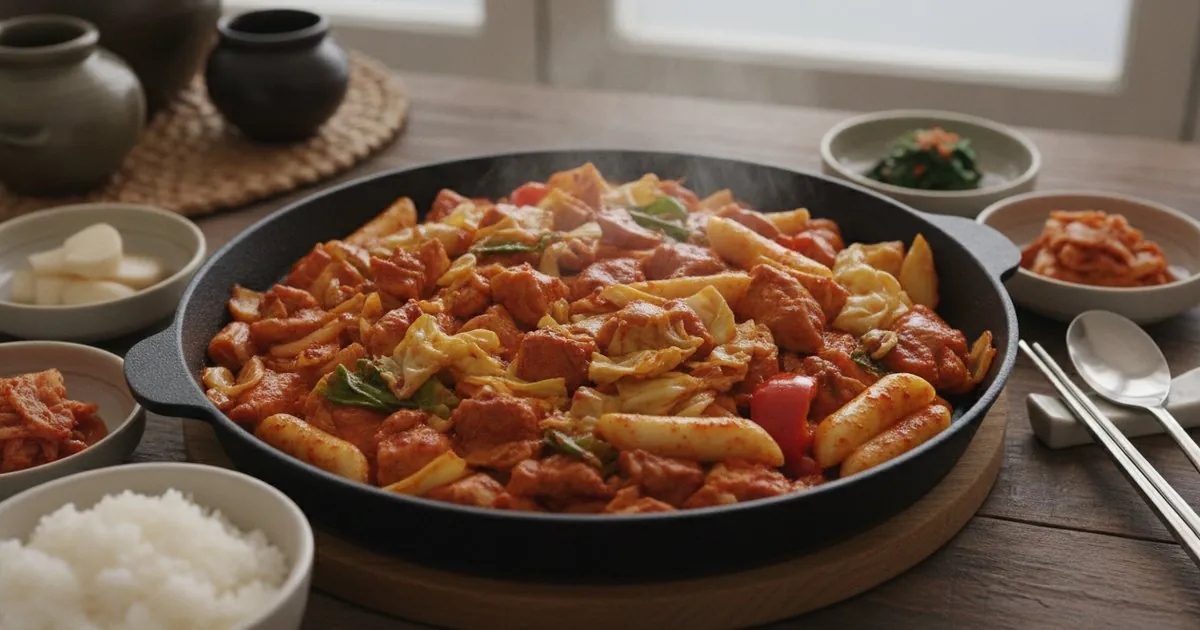
Dakgalbi (닭갈비) is one of those Korean dishes that earns genuine devotion the moment you taste it. Marinated chicken, chewy rice cakes, and tender sweet potato all stir-fried together in a vivid, slightly caramelized gochujang sauce — edges catching just enough char to perfume the whole kitchen with something deeply savory, spicy, and a little bit sweet. It’s street food turned weeknight dinner, a dish that takes barely 35 minutes from fridge to table but tastes like it’s been worked over all afternoon.
If you’ve spent any time in a Korean restaurant and wondered about that glossy, fiery red chicken stir-fry at the next table, there’s a good chance it was dakgalbi. This guide covers everything: the sauce, the chicken cut, handling rice cakes, where to source Korean ingredients in Western cities, and the specific mistakes that separate a genuinely great dakgalbi from something that’s merely okay.
What Is Dakgalbi?
The name translates literally as “chicken ribs” (닭 = chicken, 갈비 = ribs) — which is puzzling, because there are no ribs involved. The origin story: in the 1960s, as pork galbi was becoming fashionable in Korea, a cheaper alternative emerged using the most affordable protein available at the time, which was chicken. Marketers borrowed the prestigious galbi name to give the dish appeal, the cooking style stuck, and the word followed.
What you actually get is a bold stir-fry: boneless chicken thighs marinated in a gochujang-based sauce, cooked together with sweet potato, green cabbage, onion, and cylindrical rice cakes until everything is lacquered in a sticky, spicy, deeply savory sauce. Many home cooks and modern restaurants also add a whisper of Korean curry powder to the marinade, which provides a subtle aromatic warmth that rounds out the chili heat — though it’s far from universal, and the dish is fully authentic without it.
The Chuncheon Connection
Dakgalbi is the signature dish of Chuncheon, a city about 80km northeast of Seoul in Gangwon Province. By the late 1970s and 1980s, the city had developed an entire dakgalbi alley (닭갈비 골목) in its downtown core, drawing visitors from Seoul who would make the trip specifically for the dish. Today that alley still operates with dozens of restaurants packed closely together, each cooking on large round cast-iron griddles set directly into the restaurant tables. Diners gather around the heat as everything sizzles in front of them — it’s as much a social ritual as a meal.
That tabletop experience is absolutely worth approximating at home: a cast-iron skillet on a portable induction burner at the center of the table, everyone reaching in with chopsticks, captures a genuine piece of the Chuncheon spirit.
Ingredients: What You Need and Why It Matters
The Chicken
Boneless, skinless chicken thighs are the universal choice, and the reason is straightforward: thigh meat stays moist under the high, sustained heat of a stir-fry, absorbs the marinade more readily than breast, and has enough intramuscular fat to caramelize against a hot pan without drying out. Cut them into roughly 3cm (1¼-inch) pieces — big enough to have some satisfying chew, small enough to cook through in five minutes.
One optional technique from Chuncheon-style cooking: Some recipes recommend soaking the raw chicken in a bowl of cold whole milk for 10–15 minutes before marinating. The milk proteins help neutralize gamey odor and very slightly tenderize the surface. Rinse and pat the chicken completely dry before adding to the marinade. This step is mentioned by Chuncheon specialists rather than being a widely-agreed consensus technique — think of it as worth experimenting with, not obligatory.
The Sauce
The marinade is the soul of the dish. Here’s what goes in and what each element is actually doing:
- Gochujang (3 tbsp / 60g): The primary flavor driver — fermented, spicy, slightly sweet, deeply umami. This is non-negotiable. Sriracha is a completely different flavor profile and will not substitute. For brand comparisons and heat level guidance, our complete gochujang guide breaks it all down.
- Gochugaru (1–2 tbsp / 8–14g): Layered on top of the gochujang for a brighter, fruitier chili heat. Start with 1 tablespoon if you’re heat-sensitive; use 2 for the full experience.
- Soy sauce (2 tbsp / 30ml): Provides salt, color depth, and a savory backbone that gochujang alone doesn’t fully supply.
- Mirim or rice cooking wine (2 tbsp / 30ml): Tenderizes the chicken and adds a mild sweetness. Use Korean mirim (미림) or Japanese sake — not Japanese mirin, which is noticeably sweeter and will push the sauce too far toward candy territory. Dry white wine works in a pinch.
- Sugar (1 tbsp / 12g): Just enough to balance the chili heat and encourage caramelization along the pan edges. One tablespoon is the standard. Two or more tablespoons starts to taste novelty-sweet rather than well-balanced.
- Korean curry powder (1 tsp / optional): Appears in many home-style and modern restaurant versions. It doesn’t make the dish taste like curry — it adds a subtle aromatic warmth in the background. Completely valid to skip it if you want a cleaner, purer gochujang-forward sauce.
- Garlic (1 tbsp / 10g) and ginger (1 tsp / 5g): Both freshly minced or grated. Neither is optional.
- Sesame oil (1 tbsp / 15ml): Goes into the marinade for aroma and gets drizzled again at the finish for a final perfume hit.
The Vegetables and Rice Cakes
Tteokbokki rice cakes — the short, cylindrical ones — are what give dakgalbi its most distinctive textural contrast. Slightly chewy and almost bouncy, they absorb the sauce and turn a deep, burnished red. Refrigerated ones need a 10–20-minute cold water soak to soften; frozen ones need longer. For a deeper look at how these rice cakes behave across different cooking methods, our tteokbokki guide is worth a read.
Sweet potato provides natural sweetness that plays directly against the heat of the sauce. Slice it thin — about 5mm (¼ inch) — so it cooks through without holding up the rest of the pan. Korean sweet potatoes (goguma) are slightly drier and less sweet than American orange-fleshed varieties, but either works well here.
Cabbage, onion, and green onion complete the vegetable base. The cabbage wilts and releases just enough moisture to prevent the sauce from scorching; the onion softens and adds sweetness; the green onion goes in at the very end for a fresh, sharp finish.
Sourcing Korean Ingredients in Western Kitchens
Korean grocery stores — H Mart, Zion Market, Hanahreum — will stock everything you need: gochujang, gochugaru, tteokbokki rice cakes (in the refrigerator or freezer section, sometimes labeled “rice cake for tteokbokki”), Korean mirim, and Korean sweet potatoes.
Whole Foods and larger Kroger or Safeway stores usually carry gochujang in the international foods aisle. Look for Bibigo or CJ Haechandle brands. Gochugaru is harder to find at mainstream grocers — your best bets are Asian grocery stores or Amazon, where many reliable brands ship affordably.
For the rice cakes: If you can only find flat oval tteok (dduk), they’ll work but behave slightly differently — they soften faster and can turn mushy if overcooked. The cylindrical variety holds its shape better in a high-heat stir-fry.
How to Make Dakgalbi: Key Method Notes
The full step-by-step is in the recipe card, but a few technique points are worth flagging before you start:
Pan choice matters more than most recipes admit. A large cast iron skillet delivers the best caramelization and retains enough heat that adding cold, sauce-coated chicken doesn’t immediately drop the temperature. A heavy stainless skillet or a carbon steel wok also work well. Non-stick is functional but won’t give you the charred, slightly crisped sauce edges — and those edges are where some of the best flavor lives.
The order of additions is intentional: Sweet potato goes in first because it’s the slowest to cook. Chicken and rice cakes go in together next, once the sweet potato is mostly done. Cabbage and onion join when the chicken is nearly cooked through. Green onion goes in last, just to wilt slightly. Follow this sequence and everything lands at the right texture simultaneously.
Cook hot, not cautiously. Throughout the stir-fry, you want a steady, assertive sizzle. A quiet simmer means the chicken is steaming rather than searing, the sauce won’t caramelize, and you’ll lose the textural contrast that makes this dish exceptional. Medium-high heat is correct; high heat is fine if your pan is large enough.
The Bokkeumbap Finish: Don’t Skip This
In Chuncheon restaurants, the end-of-meal tradition is bokkeumbap (볶음밥): once the chicken is eaten, the server adds steamed rice directly to the pan along with crumbled dried seaweed (gim), and stir-fries everything in the leftover sauce residue until each grain is coated and slightly crisped. It’s extraordinary — arguably the best bite of the whole meal. At home, leave a tablespoon of oil in the pan, add 1–2 cups of day-old cooked rice, break up any clumps, and toss over high heat for 2–3 minutes until the rice is hot, tinted red, and slightly crisped at the edges. Finish with sesame oil and crumbled seaweed. Plan for it. Make extra rice.
Common Mistakes to Avoid
1. Using Chicken Breast Instead of Thighs
Breast meat has almost no fat buffer and cooks faster than thigh. Under the sustained heat and salt load of a gochujang marinade, it goes from cooked to rubbery in about 90 seconds — and by the time your rice cakes are tender, the window has closed. Use thighs. If you genuinely prefer white meat, cut the pieces slightly larger, watch the timing closely, and remove the chicken the moment it reads 74°C (165°F) internally, then return it to the pan only at the very end to reheat.
2. Adding Refrigerated Rice Cakes Straight to the Pan
Tteokbokki tteok that hasn’t been soaked will be hard at the center, sticky on the exterior, and will clump aggressively in the sauce. Ten minutes in cold water is the minimum soak time; twenty is better. A properly soaked rice cake bends slightly without cracking and has a uniform, slightly tacky surface. If you forget to soak and you’re in a hurry, microwave them in water for 60–90 seconds instead.
3. Crowding the Pan
Too much food in too small a pan drops the surface temperature sharply. Instead of searing and caramelizing, everything begins to steam in its own moisture, the sauce stays thin and watery, and the chicken takes on a pallid rather than burnished color. Use the largest heavy pan you own. For four or more people, either use two pans simultaneously or cook in batches, keeping the first batch warm in a low oven.
4. Cooking at Too Low a Temperature
This is the most common failure mode, particularly for home cooks who are nervous about the sauce burning. Low heat produces a flat, one-note result: no caramelization, no textural contrast between the crisp sauce edges and the tender chicken, no of the sizzle-and-steam aroma that fills the kitchen when dakgalbi is cooking properly. If the sauce edges are darkening aggressively, stir rather than lowering the heat. A few dark spots on the sauce — not the chicken — are desirable.
5. Not Tasting and Adjusting Before Serving
Gochujang varies considerably by brand in salt level and chili intensity. A sauce built on CJ Haechandle gochujang will behave differently from one built on Sempio. Always taste the finished dish before it goes to the table. If the sauce tastes sharp or acidic, add a pinch of sugar. If it’s flat, add a small splash of soy sauce. If the heat is overwhelming, a teaspoon of honey or corn syrup will round the edges. Thirty seconds of tasting and adjusting lifts the final result noticeably.
6. Adding Too Much Water to Rescue a Thick Sauce
If the sauce has thickened past the point of coating and the rice cakes are beginning to stick to the pan, the instinct is to pour in water — which is the right instinct, but the wrong quantity. Add water one tablespoon at a time, tossing immediately after each addition. Usually one to two tablespoons is all that’s needed to bring the sauce back to a glossy, clingy consistency. Adding more dilutes the flavor noticeably and can leave the sauce tasting thin and washed out.
Frequently Asked Questions
Can I make dakgalbi significantly less spicy for guests who can’t handle heat? Yes. Reduce the gochugaru to ½ teaspoon or leave it out entirely, and cut the gochujang to 1½ tablespoons. The sauce will be mild but still flavorful. You can also substitute 1 tablespoon of tomato paste for some of the gochujang — it adds similar color and body with much less heat.
What’s the best substitute if I can’t find tteokbokki rice cakes? Thick-cut nian gao (Chinese glutinous rice cakes) from a Chinese grocery store behave similarly, though they soften a little faster. In a genuine pinch, the dish works without any rice cakes — it loses some textural complexity but is still delicious.
Can I marinate the chicken the night before? Up to 2 hours in the refrigerator is the sweet spot. Overnight is too long — the salt in the soy sauce and gochujang will begin to cure the surface of the chicken, making it slightly mealy or mushy in texture by the time you cook it.
Is there a cheese version? Absolutely, and it’s enormously popular. Cheese dakgalbi (치즈 닭갈비) simply finishes with a cup of shredded mozzarella pressed over the cooked pan, covered with a lid for 1–2 minutes until the cheese melts into a pull-worthy blanket over the entire dish. We have a dedicated recipe and tips at cheese dakgalbi.
What does the curry powder actually contribute — can I always taste it? Not obviously, no. When used in the right proportion (around 1 teaspoon), you don’t taste curry — you taste a slightly rounder, warmer sauce with more aromatic complexity in the background. Think of it as a seasoning enhancer rather than a defining flavor. If you want a completely clean, direct gochujang flavor, leave it out. If you want a sauce with a little more going on beneath the heat, try it.
Serve dakgalbi immediately from the pan with steamed short-grain rice and a few simple banchan. Leftovers reheat well — add a tablespoon of water to the pan, cover, and warm over medium heat. And if there’s sauce left in the pan after the chicken is gone, please make the bokkeumbap. You’ll be glad you did.