
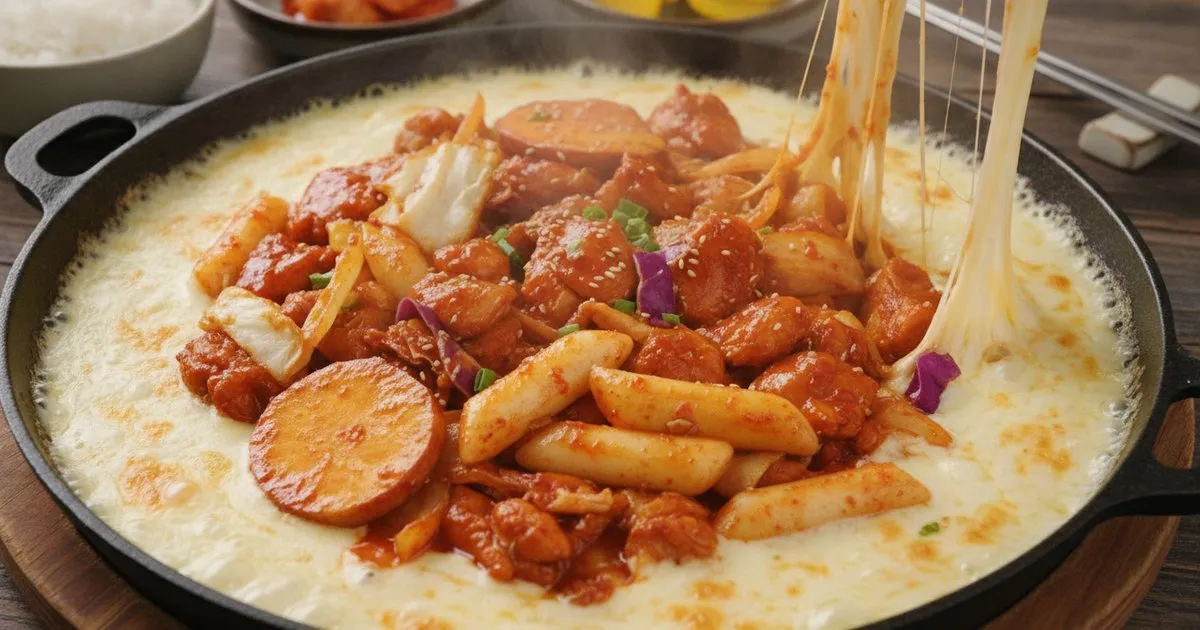
Cheese dakgalbi (치즈닭갈비) is the dish that turns dinner into an event. A wide pan of fiery, gochujang-glazed chicken and vegetables sizzles at the center of the table, ringed by a molten moat of stretchy mozzarella. You drag each spicy bite through the cheese, pull until the strands snap, and eat it hot off the pan. It’s loud, communal, indulgent, and genuinely one of the most fun Korean dishes to make at home — no special skills required, just a big pan and a hungry crowd.
This recipe covers the full experience: the spicy stir-fry, the cheese pull, and the legendary fried rice finish that you absolutely should not skip.
What Is Dakgalbi (닭갈비)?
Dak (닭) means chicken and galbi (갈비) means rib — but, much like tteok galbi, the name is a little misleading: there are no ribs here. Dakgalbi is boneless chicken (almost always thigh meat) marinated in a sweet-spicy gochujang sauce and stir-fried on a wide, flat pan with cabbage, sweet potato, onion, and chewy rice cakes. It’s a one-pan, build-as-you-go dish designed for sharing.
The cheese version is a more recent, wildly popular evolution. Somewhere along the way, restaurants started ringing the spicy chicken with melted mozzarella, and the contrast — searing chili heat tamed by cool, mild, stretchy cheese — was an instant smash. Today cheese dakgalbi is a default order for groups, especially among students and young diners, and the cheesy-spicy combination has become one of the defining flavors of modern Korean comfort food.
The Chuncheon Origin Story
Dakgalbi is the signature dish of Chuncheon (춘천), a city northeast of Seoul, where it’s so iconic that there’s an entire street — Dakgalbi Golmok — lined with restaurants serving it on giant round griddles. The dish reportedly took off in the 1960s as an affordable, filling meal: chicken was cheaper than beef or pork, and stretching it with cabbage, sweet potato, and rice cakes made a little meat feed a lot of people. It earned the nickname seomin galbi — “common folks’ galbi.”
A couple of details mark the Chuncheon style as authentic. First, a spoonful of curry powder in the marinade — an unusual but traditional touch that adds a warm, savory backbone you can’t quite place. Second, the dish is built around gochujang, the fermented chili paste that gives Korean cooking so much of its character; if you want to understand the single most important ingredient here, our gochujang guide breaks it down. The chewy rice cakes, meanwhile, are the same tteok found in tteokbokki, and they soak up the sauce beautifully.
The Ingredients, Explained
The Chicken
Use boneless, skinless chicken thighs, full stop. Thigh meat stays juicy and tender through a hard stir-fry, where chicken breast turns dry and stringy. Cut it into generous bite-size chunks so it holds up against the vegetables and rice cakes. About 700g feeds three people comfortably as a main.
The Sauce
The heart of dakgalbi is a sweet-spicy-savory paste built on gochujang and gochugaru, balanced with soy sauce, rice syrup or honey, brown sugar, and a big hit of garlic and ginger. The marinade does double duty: it flavors the chicken and then becomes the cooking sauce, so nothing is wasted. Marinate for at least 30 minutes, but overnight is noticeably better — the flavor penetrates deeper and the chicken comes out more tender.
On heat level: dakgalbi should be assertively spicy but not punishing. The gochugaru controls the heat — start with a tablespoon and adjust. The cheese, sweetness, and starchy vegetables all soften the blow, so it’s more approachable than the raw sauce might suggest. For a milder version, lean on the rice syrup; for fire, add more gochugaru.
The Vegetables and Rice Cakes
The classic lineup is green cabbage (the bulk and natural sweetness), sweet potato (sliced thin so it cooks through and adds creamy contrast), onion, and green onion. Don’t skip the tteok (rice cakes) — they turn chewy and absorb sauce, and they’re half the fun. Slice the sweet potato thin; thick slices stay raw while the chicken overcooks.
The Cheese
Use low-moisture mozzarella for the best stretch and melt; a mozzarella–cheddar blend adds a little color and tang. Avoid fresh (high-moisture) mozzarella, which weeps water and goes grainy. Two hundred grams makes a generous moat — this is not the dish to be shy with cheese.
Technique: The Two Things That Matter Most
Build the Pan, Don’t Crowd It
Cheese dakgalbi works best in a wide, shallow pan where everything gets contact with the hot surface. A crowded pot steams the chicken and dilutes the sauce. Spread the chicken and vegetables out, toss them periodically, and let the sauce reduce to a glossy glaze that clings to every piece. If your biggest skillet still feels tight, cook in two batches or reduce the recipe.
The Cheese Goes In Last, On Low Heat
Add the mozzarella only once the chicken is fully cooked and the sauce has thickened. Push the dakgalbi aside to clear space, drop the heat to low, pile in the cheese, and cover with a lid for two to three minutes. The trapped heat melts the cheese into a smooth, stretchy pool without scorching the sauce. Melt it over high heat and you’ll get oily, broken cheese instead of the clean stretch you’re after.
The Fried Rice Finish (Bokkeumbap)
Here’s the secret every Chuncheon regular knows: the meal isn’t over when the chicken is gone. Those caramelized, saucy, cheesy bits stuck to the bottom of the pan are pure gold. Tip in a couple of cups of cooked short-grain rice, some crumbled roasted seaweed, a drizzle of sesame oil, and green onion, then press and fry everything into the pan residue until the rice crisps and turns red-gold. This end-of-meal bokkeumbap (볶음밥) is, for a lot of people, the highlight of the entire meal — don’t let anyone tell you to skip it.
What to Serve with Cheese Dakgalbi
Dakgalbi is hearty on its own, but a few sides round it out:
- Danmuji (단무지, pickled yellow radish) — its crisp tang cuts the richness perfectly
- Kimchi and other simple banchan
- Cold noodles or a light soup to balance the heat
- Beer or cold barley tea to cool the palate between spicy, cheesy bites
For a spicier Korean spread, it sits naturally alongside other chili-forward favorites like rabokki or a plate of Korean fried chicken if you’re feeding a big group.
Tips for Getting It Right Every Time
- Use thighs, not breast. This is the difference between juicy and dry. Thigh meat is forgiving and stays tender.
- Marinate ahead. Even 30 minutes helps; overnight is best. The sauce is the marinade and the cooking liquid.
- Slice sweet potato thin. It needs to cook in the same window as the chicken, or it stays hard.
- Low heat for the cheese. Cover the pan and be patient — high heat breaks the mozzarella into oil.
- Always finish with fried rice. It costs five minutes and transforms the leftover sauce into the best bite of the night.
Common Mistakes to Avoid
Using chicken breast instead of thighs. Chicken breast loses moisture fast over the high, sustained heat dakgalbi requires, and by the time the sauce has reduced to a glaze, the meat is dry and chalky. Chicken thigh has more fat and connective tissue — it stays juicy through a hard stir-fry and actually improves with a little char on the edges. If you’ve already bought breast, cut the pieces larger than usual and pull them from the heat slightly earlier, but thigh is always the better call.
Crowding the pan so everything steams. When the chicken, cabbage, sweet potato, and tteok are piled too deep, moisture can’t escape and the pan temperature drops. Instead of caramelizing into a glossy, clinging sauce, everything braises in its own liquid and the dakgalbi comes out pale and watery. Use the widest, flattest pan you own, spread the ingredients in a single loose layer, and resist the urge to stir constantly — let contact time do the work.
Cutting the sweet potato too thick. Sweet potato takes longer to cook than chicken, so slices thicker than about 4–5mm will still be hard and starchy at the center when the chicken is done. Slice them as thin as you’d slice a coin — they’ll cook through in time, turn creamy, and absorb the gochujang sauce rather than fighting it.
Adding the mozzarella before the sauce has reduced. If you push the chicken aside and pile in the cheese while the pan still has a lot of liquid, that moisture will steam up under the lid and turn the cheese grainy and watery instead of stretchy. The sauce should be thick enough to coat a spoon and cling to the tteok before you add the cheese. Patience here is the difference between a clean, dramatic pull and a puddle.
Melting the cheese over high heat. High heat separates the fat from the milk solids in mozzarella, leaving an oily, broken mess with no elasticity. Drop the heat to low before you add the cheese, cover with a lid, and let gentle trapped steam do the melting over two to three minutes. The stretch you’re after only happens within a specific temperature window — not too cool (the cheese won’t melt evenly) and not too hot (the proteins seize and the fat pools).
Using stiff, cold tteok straight from the fridge. Refrigerated rice cakes firm up significantly and won’t soften properly in the pan in time. If yours are cold, soak them in warm water for ten minutes before adding them to the stir-fry. If they’re frozen, thaw completely first. Properly softened tteok should already be pliable before they hit the sauce — they’ll finish cooking chewy and sauce-soaked rather than gummy and dense.
Frequently Asked Questions
Can I make cheese dakgalbi without a special griddle?
Absolutely. A large cast-iron skillet, a wide nonstick pan, or any shallow, broad pan works perfectly — you don’t need the restaurant’s round griddle. The only requirement is enough surface area so the chicken sears and the sauce reduces rather than steams. Bringing the whole hot pan to the table replicates the restaurant experience nicely.
How spicy is it, and how do I make it milder?
As written it’s moderately spicy — flavorful with a clear kick, not overwhelming. To tone it down, cut the gochugaru in half and add an extra tablespoon of rice syrup or honey; the cheese and sweet potato also mellow the heat considerably. To crank it up, add more gochugaru or a chopped fresh chili. Gochujang brands vary in heat, so taste your sauce before committing.
What can I use instead of mozzarella?
Low-moisture mozzarella gives the best stretch, but a mozzarella–cheddar blend, Monterey Jack, or even a mild melting cheese like Oaxaca will work. Avoid fresh/high-moisture mozzarella (it releases water and turns grainy) and hard aged cheeses that don’t melt smoothly. The goal is a clean, mild, stretchy melt that contrasts the spicy chicken.
Do I need the rice cakes (tteok)?
They’re not strictly required, but they’re traditional and add wonderful chewy texture while soaking up the sauce. If using refrigerated or frozen rice cakes, soak them in warm water for 10 minutes first so they soften and don’t turn rubbery. If you can’t find tteok, the dish is still excellent without them — just add a little extra sweet potato or cabbage for bulk.
Can I prep it ahead for a party?
Yes — this is a great make-ahead dish. Marinate the chicken up to a day in advance and chop all the vegetables a few hours ahead. When guests arrive, you only need to stir-fry (about 15 minutes) and melt the cheese, then serve straight from the pan. The fried rice finish is the perfect interactive ending to a casual dinner party.
Where can I buy gochujang and Korean rice cakes?
In the US: H Mart, 99 Ranch, Zion Market, and most Asian grocers carry gochujang, gochugaru, and fresh or frozen tteok. Many regular supermarkets now stock gochujang in the international aisle. In the UK: Korean grocers in New Malden or online via Seoul Plaza and Oseyo. In Australia: Korean stores in Sydney’s Strathfield or Melbourne’s Box Hill. Gochujang keeps for months in the fridge, so it’s a worthwhile pantry staple.