
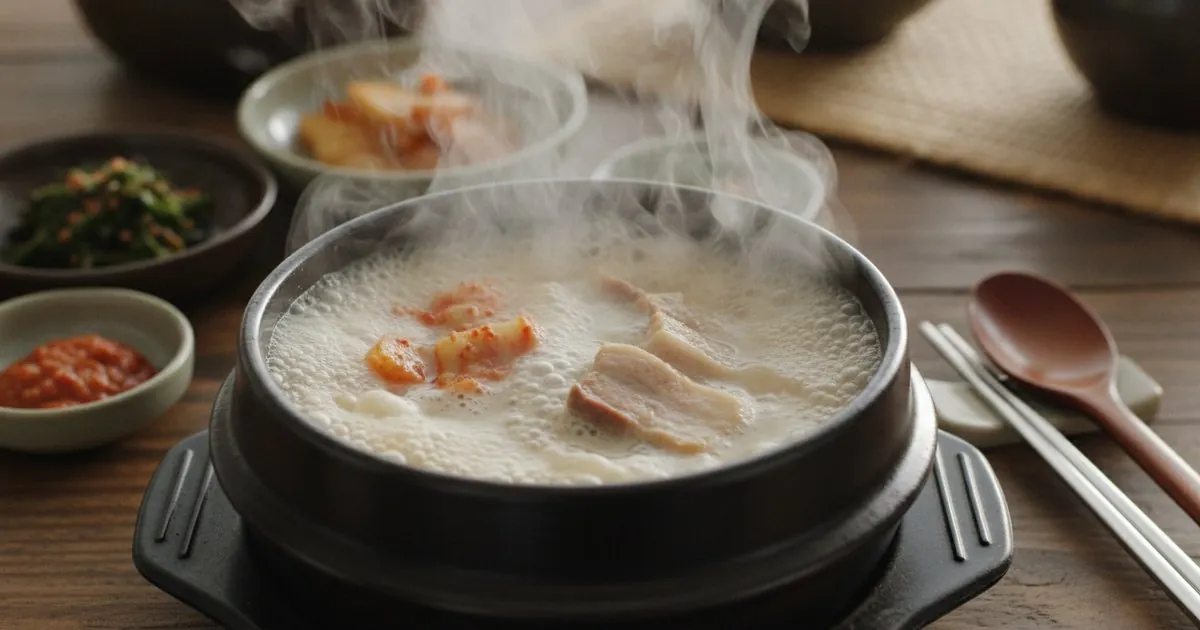
If you’ve explored Korean stews before — kimchi jjigae, sundubu, doenjang jjigae — then you already know how seriously Korea takes the art of the bubbling pot. But there’s one stew that flies almost entirely under the radar outside the peninsula, and it might just be the most distinctive of all: kongbiji jjigae (콩비지찌개), a thick, creamy, porridge-like stew made from ground soybeans, deeply fermented kimchi, and savory pork.
The texture alone sets it apart. Where most jjigae are brothy, kongbiji is rich and viscous — closer to a thick lentil soup or a very loose grits than anything you’d typically call a stew. The soybean base gives it a mild, clean nuttiness that absorbs and amplifies everything around it: the sharp tang of aged kimchi, the silky fat from pork, the deep brine of fermented shrimp. It is one of those dishes where the sum is genuinely more than its parts.
This guide covers everything you need to make it properly at home — including what most Western recipes get wrong and why aged kimchi is the one ingredient you absolutely cannot skip.
Plan ahead: Dried soybeans need at least 8 hours of soaking before you cook. The hands-on time is under an hour, but this is a next-day recipe.
What Is Kongbiji, Exactly?
The name breaks down neatly: kong (콩) means “bean” — specifically soybean — and biji (비지) refers to the pulpy, fiber-rich solids left behind after pressing soybeans to make soy milk or tofu. Traditionally, kongbiji was what remained after tofu-making: the strained-away pulp that would otherwise be discarded. Korean cooks, with characteristic resourcefulness, turned it into a stew that became a staple of everyday home cooking.
Today, most home cooks make kongbiji fresh by blending soaked whole soybeans with water — which is simpler, more flavorful, and more practical than sourcing tofu-production byproduct. You can also find pre-ground kongbiji sold frozen in Korean grocery stores (look in the freezer section near tofu products), which is a useful shortcut that many Korean households use without any apology.
Historically, kongbiji jjigae was considered humble food — economical, filling, and deeply nutritious. Soybeans are one of the most protein-dense plant foods available, and because you eat the entire bean (fiber and all), the stew is far more satiating than it might appear. That frugal, nothing-wasted heritage is very much part of its charm. This is a dish that earns its place at the table on flavor alone, not on expensive ingredients or elaborate technique.
The Kimchi Question: Why Freshness Is the Wrong Instinct
Before anything else, one rule is non-negotiable: you need aged, sour kimchi for this dish. Not fresh kimchi. Not “kimchi-style” pickled vegetables. Deeply fermented, tangy, almost funky napa kimchi that has been doing its work for weeks or months — what Korean cooks call 신김치 (shin-kimchi, or ripe kimchi).
Here’s why this matters so much. Fresh kimchi is crisp, bright, and mildly spiced. Aged kimchi has developed complex lactic acidity, a pronounced sharpness, and an umami depth from the fermentation that transforms entirely when it hits a hot pot. It’s precisely this sourness that cuts through the thick, creamy soybean base and balances the richness of the pork. Without it, the stew tastes heavy and one-dimensional — the soybean paste has nothing to work against.
When shopping, open the jar and smell it. Well-fermented kimchi smells sharp and tangy, almost like a sour dill pickle. Fresh kimchi smells sweet and lightly spiced. If your kimchi is in the fresh category, give it at least 2–3 weeks at room temperature before refrigerating, or buy a more aged batch.
If you want to make your own kimchi from scratch and work toward this recipe, our detailed guide on how to make kimchi walks through the full process. Just plan to wait before using it here.
Key Ingredients: What to Buy and Why
Dried Soybeans
Standard yellow soybeans (대두, daedoo) — available at H Mart, any Korean grocery, Whole Foods (Bob’s Red Mill brand), or online. Do not substitute canned soybeans: the texture will be wrong and you lose the fresh, milky quality that defines the stew.
After overnight soaking, the beans will plump to roughly double their dry volume. Blend with enough cold water to get the blender moving smoothly — about 1 cup (240ml) per cup (200g) of dried beans, which is roughly 1:1 by volume with the soaked beans or slightly less. The goal is a completely smooth white paste, not a chunky puree. Run the blender for a full 2–3 minutes; pause and scrape down the sides. If you pinch some between your fingers and feel any graininess, keep blending.
Pork: Fat Is Your Friend
Fatty pork cuts work best here. Pork shoulder (Boston butt), pork belly, and pork loin all work, in roughly that order of preference. Pork fat carries the fermented flavors of the kimchi and saeujeot throughout the whole pot — lean meat produces a noticeably thinner-tasting result. Slice to about ¼ inch (6mm) thickness so it cooks through in the initial sear.
For a more broth-forward version, you can simmer 12 oz (340g) of pork ribs separately with a quarter onion, two thin slices of ginger, and a tablespoon of soup soy sauce for 45 minutes, then use that stock as the cooking liquid and shred the rib meat into the finished stew. This is the longer Sunday version — richer and more complex.
Kimchi Brine
The liquid at the bottom of your kimchi jar is deeply concentrated tang, salt, and fermented flavor. Add ⅓ to ½ cup (80–120ml) to the pot. If your kimchi is very sour, start with less and taste as you go.
Saeujeot (새우젓)
Salted fermented shrimp is a cornerstone Korean condiment with a savory, brine-forward character that adds rounded umami without the fishiness of fish sauce. It’s available at any Korean grocery store, usually in small jars in the refrigerated section. Mince it finely before adding so it dissolves into the stew rather than appearing as chunks. If you truly can’t find it, substitute 1 teaspoon of fish sauce — but use a light hand, as fish sauce is both saltier and sharper.
Gochugaru (고춧가루)
Korean red chili flakes add fruity, mildly smoky heat and the characteristic reddish color. 1–2 teaspoons gives a gentle warmth; omit entirely for the traditional white version (흰 콩비지), which lets the soybean flavor take center stage. Do not substitute cayenne or generic chili flakes — the flavor profile is completely different.
For a broader introduction to Korean chili ingredients, including gochugaru and its sibling gochujang, our gochujang guide has you covered.
Step-by-Step Walkthrough
The full recipe card is above, but here’s what to actually pay attention to at each stage.
Blending: This is the foundation and the step most often rushed. Under-blended beans produce a gritty, unpleasant texture that no amount of cooking will fix. Blend for the full 2–3 minutes. Test by rubbing a small amount of paste between your fingers — completely smooth, no detectable particles.
Building the base: Start the pork in a dry or barely-oiled heavy pot over medium heat. Two to three minutes of cooking gives just enough color before the kimchi goes in. When you add the kimchi and brine, the pot will sizzle sharply and release a pungent, vinegary steam — that’s the lactic acid cooking off, and it’s exactly right. Let this cook down for 3–4 minutes until the liquid reduces slightly and the kimchi softens.
Adding the bean paste: When you pour in the ground soybean mixture, the stew will thicken dramatically almost immediately — creamy white with streaks of red from the kimchi and gochugaru. Stir right away and keep stirring for the first couple of minutes to prevent it from seizing on the bottom.
The simmer: This is where the flavors marry. Twenty to twenty-five minutes over medium-low heat, with a stir every 2–3 minutes. The right visual cue is a slow, deliberate plopping bubble pattern — like oatmeal just coming to a boil. If you see vigorous boiling, turn the heat down. If you hear a dry, crackling sound from the bottom, add water and stir immediately.
Final seasoning: Taste at the 20-minute mark before adjusting anything. You’re looking for: tanginess (kimchi), savory depth (saeujeot and soy sauce), mild heat (gochugaru), and the clean, rich body of the soybean base. If it tastes flat, it almost always needs more saeujeot or a pinch of salt, not more kimchi.
Variations Worth Knowing
Vegan kongbiji jjigae: Omit the pork entirely and use vegan kimchi (made without fish sauce or saeujeot in the kimchi itself). Replace saeujeot with a slightly larger amount of soup soy sauce or a teaspoon of white miso. The soybean base carries enough body and richness that the vegan version is genuinely satisfying — not a compromise.
Pork rib version: The slow-cook Sunday approach. Simmer 12 oz (340g) baby back or spare ribs with 4 cups (950ml) water, a quarter onion, two ginger slices, and 1 tbsp soup soy sauce for 45 minutes. Use the resulting broth as the cooking liquid for the stew and shred the rib meat back in. Deeper flavor, longer commitment.
Doenjang addition: A teaspoon of doenjang (Korean fermented soybean paste) stirred in at the end adds another layer of fermented complexity. This is not a traditional or standard addition — it’s a modern home cook variation — and doenjang can dominate quickly, so use it sparingly if at all. If you’re curious about how doenjang behaves in stews, our doenjang jjigae recipe is a good reference.
Common Mistakes to Avoid
1. Using Fresh or Young Kimchi
The most common source of disappointing kongbiji jjigae. Fresh kimchi lacks the acidity to balance the thick soybean paste — the result is heavy, bland, and flat. Your kimchi should smell genuinely sour when you open the jar, not bright and spiced. The brine should taste sharp, almost aggressively pickle-like. If it tastes mild, the kimchi isn’t ready for this dish.
2. Under-Blending the Soybeans
Gritty kongbiji paste stays gritty in the finished stew no matter how long you cook it. The smooth, velvet-like texture is the point — it’s what separates this from a chunky bean soup. If your blender isn’t high-powered enough to achieve full smoothness in 3 minutes, blend in smaller batches and scrape down the sides aggressively. When in doubt, blend for another 30 seconds.
3. Cooking at Too-High Heat
The soybean paste scorches quickly, especially against the bottom of a pot. The sign that your heat is too high: you’ll hear a faint dry crackling instead of a liquid simmer, and you’ll smell a faintly bitter, burnt note. Turn the heat down immediately and add a splash of water or stock. Stir the bottom of the pot to free anything starting to stick. Scorched soybean paste releases bitterness throughout the whole batch — it cannot be corrected after the fact.
4. Not Stirring Frequently Enough
Even at the correct, medium-low heat, the thick paste settles and clings to the bottom. Every 2–3 minutes, run a spatula along the bottom and sides of the pot. This is a stew that needs tending, not a set-and-forget situation. Think of it the way you’d treat polenta or stirred oatmeal.
5. Over-Salting Before the Stew Reduces
The kimchi, kimchi brine, saeujeot, and soup soy sauce all bring significant salt to the pot. Add each ingredient, then wait before adding more. As the stew simmers and reduces over 20–25 minutes, the salt concentration increases noticeably. What tastes balanced at the 10-minute mark may taste quite salty by the 25-minute mark. Season conservatively throughout and do your final tasting and adjustment in the last 2–3 minutes of cooking.
6. Using Frozen Pre-Ground Kongbiji Without Adjusting Liquid
Packaged frozen kongbiji (okara or soy pulp from tofu production) has had most of its moisture pressed out and is significantly drier than freshly blended soybeans. If using frozen kongbiji, add an extra ½ to 1 cup (120–240ml) of stock or water compared to the recipe above. Expect it to absorb liquid quickly and watch the bottom of the pot more closely, as the drier paste sticks faster than fresh-blended.
Frequently Asked Questions
Can I make kongbiji jjigae without soaking overnight? You can quick-soak dried soybeans by bringing them to a boil for 1 minute, then leaving them in the hot water off heat for 1 hour. This works in a pinch, though overnight soaking allows the beans to hydrate more fully and produces a slightly smoother grind. The real shortcut is frozen pre-ground kongbiji from a Korean grocery store — it eliminates soaking entirely and is a completely legitimate option used regularly in Korean home kitchens.
What does kongbiji jjigae taste like? Is it heavy? The texture is somewhere between a thick congee and a hearty Western bean stew — creamy and substantial, but not pasty. The soybean base itself tastes clean and mildly nutty rather than heavy, and the sour kimchi cuts through the richness in a way that keeps each bite feeling balanced. It’s filling in a satisfying way without being ponderous. First-timers are often surprised that something this rich-looking eats as refreshingly as it does.
Can I freeze leftovers? Yes. Kongbiji jjigae freezes well for up to 2 months and keeps in the refrigerator for 4 days. The paste firms up significantly when cold — you’ll need to add ¼ cup or more of water or stock per serving when reheating, stirring over medium-low heat until it loosens to the right consistency. Reheat gently; a high heat blast will cause it to scorch again.
Is kongbiji jjigae nutritious? Soybeans are one of the most nutrient-dense plant foods in common use — rich in protein, dietary fiber, calcium, iron, and manganese. Because you’re eating the whole bean (not just soy milk or tofu), you’re retaining the full fiber content that’s typically removed in tofu production. A serving made with lean pork shoulder is calorie-moderate. The primary variables affecting nutrition are how much fat is in the pork cut and how salty your kimchi and saeujeot seasoning is.
What should I serve alongside it? In Korean tradition, kongbiji jjigae is always paired with plain steamed short-grain rice — you stir the rice directly into the stew as you eat, using the stew almost like a porridge sauce. A few light banchan on the side round out the meal without competing with the stew’s bold flavors. For simple, complementary side dish ideas, our banchan guide is a good starting point. The dish is complete and filling enough that it doesn’t need elaborate accompaniments.