
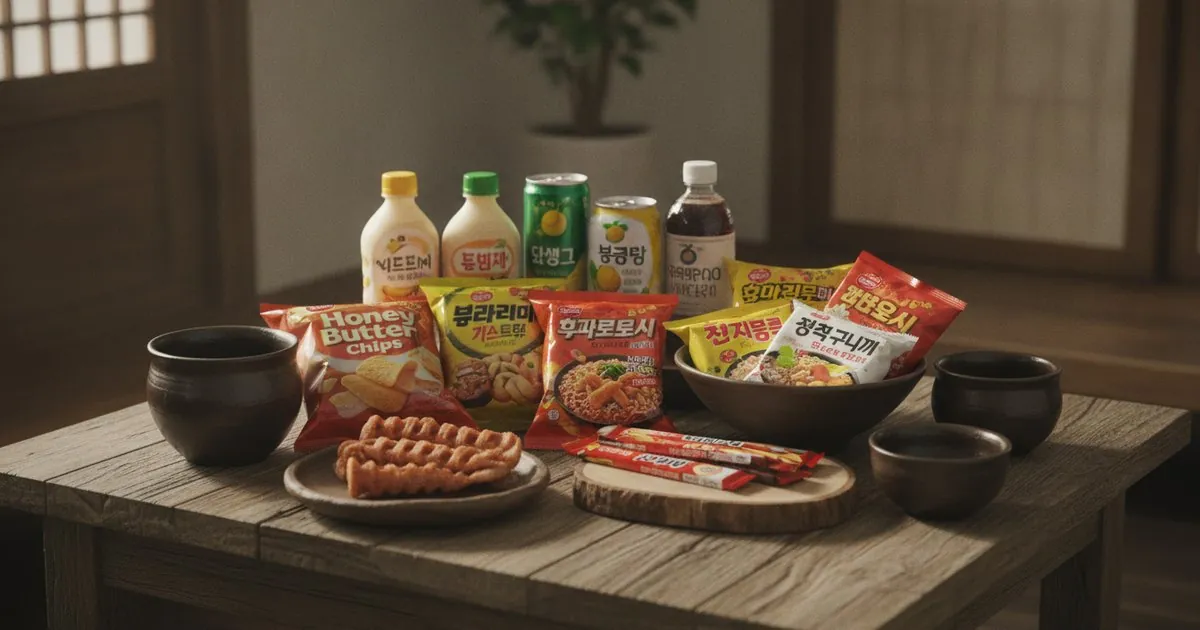
K-pop doesn’t just export music and choreography — it exports appetites. Something about watching incredibly stylish young people reach for a familiar-looking snack at the airport, or casually drop their comfort food picks during a fan live broadcast, creates a compelling urge to find those exact same foods. NewJeans, one of the most globally followed K-pop groups of recent years, has been no exception. Their food mentions — even the offhand, unscripted ones — have quietly sent fans to Korean grocery stores and cooking tutorials worldwide.
This article is our deep-dive into the verified food preferences of NewJeans members, translated into practical cooking guidance for Western home kitchens. We’ve cross-referenced multiple sources carefully and flagged the difference between what’s solidly confirmed versus what lives more in fan-profile territory. The goal isn’t celebrity gossip — it’s to use these snack preferences as a starting point for genuinely exploring Korean food culture, because the dishes these four members love happen to be excellent Korean foods worth knowing on their own merits.
A quick note on group status (August 2026): NewJeans currently has four active members — Minji, Hanni, Haerin, and Hyein. Former member Danielle departed following the extended HYBE/ADOR contract dispute. Food preference data in this article was gathered during the group’s active 2022–2024 period.
Why Korean Idol Food Mentions Matter More Than You Think
Korea has a concept embedded deeply in its media culture: the idea that watching others eat — really eat, not just pose with food — is both entertaining and influential. K-pop idols occupy this space in a way that’s genuinely different from, say, a celebrity endorsement. When Haerin mentions on her fan platform that she’s been eating yubuchobap since she was little, it doesn’t just create a charming soundbite. It sends curious people toward a dish they might never have encountered otherwise.
The foods NewJeans members have mentioned also represent a fairly honest cross-section of what young Koreans actually eat day-to-day. These aren’t PR-polished wellness bowls or elaborate set-piece meals. We’re talking about chewy rice cakes in spicy sauce, tofu pockets stuffed with seasoned rice, whale-shaped crackers grabbed between flights, and strawberries eaten as a straightforward dessert after a long rehearsal day. Real food. Everyday food. Food with familiarity and nostalgia attached to it.
That’s exactly the kind of food that translates most naturally to home cooking — and the kind we spend most of our time writing about here at kfoodlab.
Minji’s Pick: Tteokbokki, Korea’s Most Beloved Street Snack
Tteokbokki (떡볶이) — chewy cylindrical rice cakes simmered in a sauce anchored by gochujang (fermented red pepper paste), sweetened with sugar or corn syrup, and often cooked with fish cakes and hard-boiled eggs — is confirmed across multiple sources as Minji’s favorite dish. It’s also one of Korea’s most iconic street foods, sold from flat iron griddles at pojangmacha (street stalls) across the country, the sauce visibly bubbling and the smell of fermented pepper and caramelized sugar carrying half a block.
What’s interesting from a food perspective: Minji is reportedly someone who tends to avoid heavily spicy or intensely salty food in general. Yet she gravitates toward tteokbokki, which is famously both. This isn’t necessarily a contradiction — tteokbokki exists on a wide spectrum. The gungjung-tteokbokki (궁중떡볶이) variant, originally from the royal court, skips the gochujang entirely in favor of soy sauce, sesame oil, and vegetables, landing somewhere savory and nutty without any real heat. Many fans of the dish find their comfortable version somewhere between the nuclear-red pojangmacha style and these milder interpretations.
Our complete tteokbokki guide covers the classic spicy version step-by-step, including sauce ratios and timing. If you’re looking for something more approachable heat-wise, our cheese tteokbokki article walks through how dairy tempers the sauce’s fire while adding a layer of richness that’s become wildly popular internationally.
For Western kitchens: Cylindrical tteok (rice cakes) are available fresh or vacuum-packed at H Mart, Korean supermarkets, and increasingly at Whole Foods in the international aisle. Look specifically for the cylinder shape — the flat, sliced variety is for tteokguk (rice cake soup) and won’t hold up the same way in a sauce. Frozen tteok works fine; soak in cold water for 30–45 minutes before cooking. The texture goal is distinctly chewy with a slight resistance — not soft like mochi, not firm like uncooked pasta, but somewhere confidently in between. You should feel it when you bite down.
Hanni’s Airport Snack: Goraebap (고래밥) and the Apple Habit
Hanni (Pham Hanni), NewJeans’ Vietnamese-Australian member, was reportedly spotted snacking on goraebap — Orion’s iconic whale-shaped crackers — at the airport. We’re flagging this as “reportedly” since it’s a single-source sighting, but it’s also deeply plausible: goraebap is one of Korea’s most enduring snack brands (launched in 1984), and it’s exactly the kind of light, packable, non-greasy snack that makes airport travel bearable.
Goraebap (고래밥 — literally “whale rice”) are small puffed crackers molded into whales, octopuses, and other sea creatures, baked rather than fried, with a light savory-sweet glaze. They’re not intensely flavored — think a gentler, more delicate cousin of Goldfish crackers with a subtle corn-and-salt undertone. What makes them addictive is textural: they have a satisfying hollow crunch that gives cleanly without crumbling everywhere, and they don’t leave your fingers greasy. The whole bag disappears before you notice.
Where to find them: H Mart carries goraebap reliably in the snack aisle. They’re also available on Amazon (search “Orion Goraebap”) and at most Korean grocery stores, typically priced around $1.50–$2.50 USD per bag. They come in original, BBQ, and assorted flavor varieties — start with original.
On a more definitively confirmed note: Hanni’s actual daily food preference is apples. During a group breakfast interview, she said directly: “I just had water. I normally eat apples. I love apples.” Straightforward, unfussy, consistent — the kind of honest food preference that gets mentioned because it’s genuinely true, not because it sounds interesting.
Haerin’s Favorite Food: Yubuchobap (유부초밥)
This is the one we’re most excited to write about. Haerin (Kang Haerin) confirmed during a live broadcast on NewJeans’ Phoning fan platform that yubuchobap is her favorite food, and that she’s been eating it since she was a little kid. Multiple independent sources corroborate this — it’s one of the most solidly verified food preferences in the NewJeans catalog, and it’s a dish that deserves far more attention in Western food writing than it currently gets.
Yubuchobap (유부초밥) is the Korean version of Japanese inarizushi: pouches made from seasoned, braised deep-fried tofu (yubu) stuffed with vinegared rice. In Korea, the rice filling typically includes more mix-ins than the Japanese original — toasted sesame seeds, finely shredded carrots, diced pickled yellow radish (단무지, danmuji), and a drizzle of sesame oil. The tofu pockets are simmered in a sweet soy braise until they’re glossy, tender, and deeply savory-sweet throughout.
The eating experience is layered: the tofu pocket has a slightly chewy, almost tacky exterior that gives way to a pillowy interior, and the seasoned rice inside provides vinegar tartness that cuts cleanly through the sweetness of the tofu. Every bite balances sweet, savory, sour, and nutty flavors simultaneously — it’s sophisticated in the way that the best simple food always is.
Making yubuchobap at home — two routes:
Route 1 — Semi-homemade (strongly recommended for first-timers): Use canned pre-seasoned inari tofu pockets, available at H Mart, Japanese grocery stores (Mitsuwa, Marukai), or on Amazon under brands like Shirakiku or Wel-Pac. They’re already braised and ready to fill.
For the rice: cook 300g / 1½ cups uncooked short-grain (sushi-style) rice, then season while warm with 45ml / 3 tablespoons sushi vinegar (or a homemade mix of rice vinegar, sugar, and salt). Let it cool to room temperature. Fold in 1 tablespoon toasted sesame seeds, 30g / ¼ cup finely shredded carrot, and diced danmuji if you can find it. Fill each pocket about ¾ full — no more — and gently press the opening closed. The pocket should look plump but not straining at the seams.
Route 2 — From scratch: Buy dried or packaged yubu from a Korean grocery and braise them yourself in a mixture of soy sauce, mirin, sugar, and water (roughly 3:3:2:6 by tablespoon) until they’ve absorbed the braising liquid and turned deep amber-glossy. This takes 20–25 minutes of gentle simmering and significantly improves the flavor depth — the sweetness penetrates all the way through instead of sitting only on the surface.
The finished yubuchobap should have pockets that are tacky-glossy on the outside without being wet or dripping. Squeeze one gently — it should feel firm and full, not squishy.
Hyein’s Sweet Side: Strawberries and Korean Cream Cake
Hyein (Lee Hyein), the youngest member of NewJeans, is a confirmed strawberry devotee — multiple sources list strawberries as her favorite fruit, with strawberry cream cake topping her dessert list. It’s a wholesome preference that also connects to something genuinely interesting in Korean dessert culture.
Korean 생크림 케이크 (saengkeurim keiku — “fresh cream cake”) is a distinct style that trips up many Western visitors expecting American-style richness: the base is an airy chiffon or sponge, the frosting is lightly sweetened whipped cream (not buttercream), and the filling is fresh fruit — usually strawberries. The result is light in a way that Western cream cakes typically aren’t. The fat content in the cream runs around 35–38%, whipped to soft-to-medium peaks rather than stiff, which gives the whole cake a delicate quality that doesn’t weigh heavy after a few slices.
If you’ve ever tried Korean bingsu and noticed how precisely Koreans calibrate sweetness — enough to satisfy, never enough to cloy — saengkeurim cake follows exactly the same philosophy. It’s also the style of cake you’ll see in every Korean bakery window (Paris Baguette, Tous les Jours), especially during Korea’s peak strawberry season from December through April, when Maehyang and Seolhyang strawberry varieties are at their most intensely aromatic.
For Western bakers: The right base is a Japanese-style chiffon or genoise — less fat, more egg whites, airier crumb than American butter cake. The cream should be stabilized slightly (a teaspoon of gelatin bloomed in cold water, or a tablespoon of cream cheese blended in) if it needs to hold for more than a couple of hours. Slice strawberries thin for the interior layers; keep a few whole for the top. The visual hallmark of a good saengkeurim cake is clean, smooth cream with fruit that looks fresh and un-macerated — not glossy, not syruped.
Where to Source Korean Snack Ingredients in the West
- H Mart (US, Canada): Best overall source. Carries tteok (fresh and refrigerated), canned inari pockets, goraebap, danmuji, gochujang, sesame oil, and most Korean pantry staples under one roof.
- Whole Foods / Sprouts: Reliable for gochujang (Bibigo or O’Food brands, usually in the international aisle), short-grain rice, and rice vinegar. Less likely to carry tteok or inari pockets.
- Japanese grocery stores (Mitsuwa, Marukai, Nijiya): Excellent source for inari tofu pockets and sushi rice — perfect for yubuchobap.
- Amazon: Goraebap, canned inari pockets, and shelf-stable Korean pantry items ship well. Check recent reviews for expiry date freshness.
- Online Korean grocers (Weee!, Gochujar, hmart.com): Full range including fresh tteok and harder-to-find snack items shipped cold.
Common Mistakes to Avoid
The two most cookable dishes from this list are tteokbokki and yubuchobap. Here are the failure modes we see most consistently when people attempt them at home — the kind that aren’t obvious until you’ve made them once.
1. Using the Wrong Rice for Yubuchobap
Long-grain rice, jasmine rice, or basmati will not hold together inside a tofu pocket. You need short-grain Japanese or Korean sushi rice — the higher amylopectin starch content is what gives the rice its slight stickiness and cohesion. Even with the right rice, cook it slightly firmer than the package directions (reduce water by about 10%) so the grains hold a stable structure when you fold in the acidic vinegar dressing. Under-cooked grains feel gritty; over-cooked ones turn to paste when squeezed inside the pocket.
2. Seasoning Yubuchobap Rice While It’s Still Steaming Hot
Add your vinegar mixture to rice that’s visibly steaming and the acidity cooks off immediately — you’ll lose the tartness that makes the dish work. Wait until the rice has cooled to around 50–60°C / 120–140°F (warm to the touch, no longer producing steam), then fold the seasoning in using a rice paddle with flat, cutting motions. Never stir in circles — that breaks the grains and creates a gluey mass.
3. Overfilling the Inari Pockets
The pocket seam tears under pressure, and an overstuffed pocket can’t close cleanly. Fill each one to about ¾ capacity, press the opening flat, and fold it under the pocket so the seam faces down on the plate. If you open a can of inari pockets and they feel very wet, lay them on paper towels and pat dry before filling — excess braising liquid on the surface makes them slippery and prevents clean closure.
4. Using Cold Tteok Directly from the Refrigerator
Refrigerated tteok stiffens significantly and becomes almost chalky in texture. Cook them cold and the exterior will soften before the center does, leaving you with unpleasant textural contrast — or they’ll crack during cooking. Always bring tteok to room temperature for 20–30 minutes first, or soak in cold water for 15 minutes. A simple diagnostic: press one piece against the side of the pan with a spoon. If it resists like a rubber eraser, they need more time. A properly softened tteok should dent easily under gentle pressure.
5. Letting Tteokbokki Sauce Over-Reduce Before the Rice Cakes Are Done
Gochujang sauce thickens and caramelizes quickly. Starting with too little liquid or too-high heat means the sauce seizes into a sticky, scorched glaze before the tteok has cooked through. Begin with 600ml / 2½ cups of water or dashi per 500g / 1 lb of tteok, maintain a medium (not rolling) simmer, and add water 60ml / ¼ cup at a time if the sauce tightens before the rice cakes are tender. Correctly sauced tteokbokki coats the back of a spoon and flows slowly — it’s glossy and thick but pourable, not clumped.
6. Cutting Gochujang Too Aggressively to Reduce Heat
Gochujang is not just spice delivery — it’s the primary umami backbone of tteokbokki sauce. Halving it creates a sauce that tastes thin, flat, and oddly sweet-sour without savory depth. If you want milder tteokbokki, reduce the gochugaru (dried chili flakes, which deliver raw heat) rather than the gochujang paste, and compensate with a small extra splash of soy sauce and a pinch of sugar to keep the flavor full. Finishing with a slice of processed cheese or a splash of cream (the cheese tteokbokki method) is also an effective and delicious way to temper heat without gutting the sauce structure.
Frequently Asked Questions
Q: Are these food preferences officially confirmed or mostly fan speculation?
We’ve been deliberate about sourcing throughout the article. The strongest confirmations — Haerin’s yubuchobap (mentioned directly on her fan platform live), Hanni’s apple habit (direct interview quote), Minji’s tteokbokki (corroborated across multiple media and profile sources), and Hyein’s strawberry preference (multiple sources) — appear consistent across multiple independent references. Details like Hanni’s goraebap airport sighting are single-source and marked “reportedly” in the text. We haven’t embellished or invented detail around any preference.
Q: Where can I buy goraebap (Orion whale crackers) in the United States?
H Mart is your most reliable source — they stock goraebap in the snack aisle at most locations. Amazon also carries them (search “Orion Goraebap Original”). Any Korean supermarket or well-stocked Asian grocery will likely have them. They’re inexpensive, usually under $2.50 USD per bag, and shelf-stable. The original flavor is the one to try first before exploring BBQ or other variants.
Q: What’s the practical difference between Korean yubuchobap and Japanese inarizushi?
The core format is the same — braised tofu pockets filled with vinegared rice — but Korean versions typically include more textural mix-ins in the rice (sesame seeds, shredded carrot, diced pickled radish, sometimes imitation crab or ham), and the braising liquid for the tofu is usually a shade sweeter. Sesame oil also tends to be more prominent in the Korean rice seasoning. Japanese inarizushi leans more minimal and restrained. Both are excellent; the Korean version is arguably more textural and complex.
Q: Can I make tteokbokki significantly less spicy without losing the flavor?
Yes — see mistake #6 in the section above. The short version: maintain your gochujang quantity (which provides savory depth and body) and reduce gochugaru (which provides most of the raw heat). Finishing the sauce with a tablespoon or two of heavy cream or a slice of processed cheese melted in right at the end will temper the heat further while adding richness. This is essentially the approach behind cheese tteokbokki, which has become one of the most popular tteokbokki variants internationally for exactly this reason.
Q: Are there similar articles on kfoodlab about other K-pop idol food preferences?
Yes — if you enjoyed this one, our piece on what BTS members eat covers another set of genuine K-pop food connections, with additional Korean dishes to explore at home.
Sources consulted for this article include Koreaboo interview features (accessed August 2026), IVisitKorea’s Korean idol snack coverage, and Vogue HK’s NewJeans profile. Where claims appeared in only one source or came from fan profile aggregators without traceable primary interviews, we noted the uncertainty directly in the article text.