
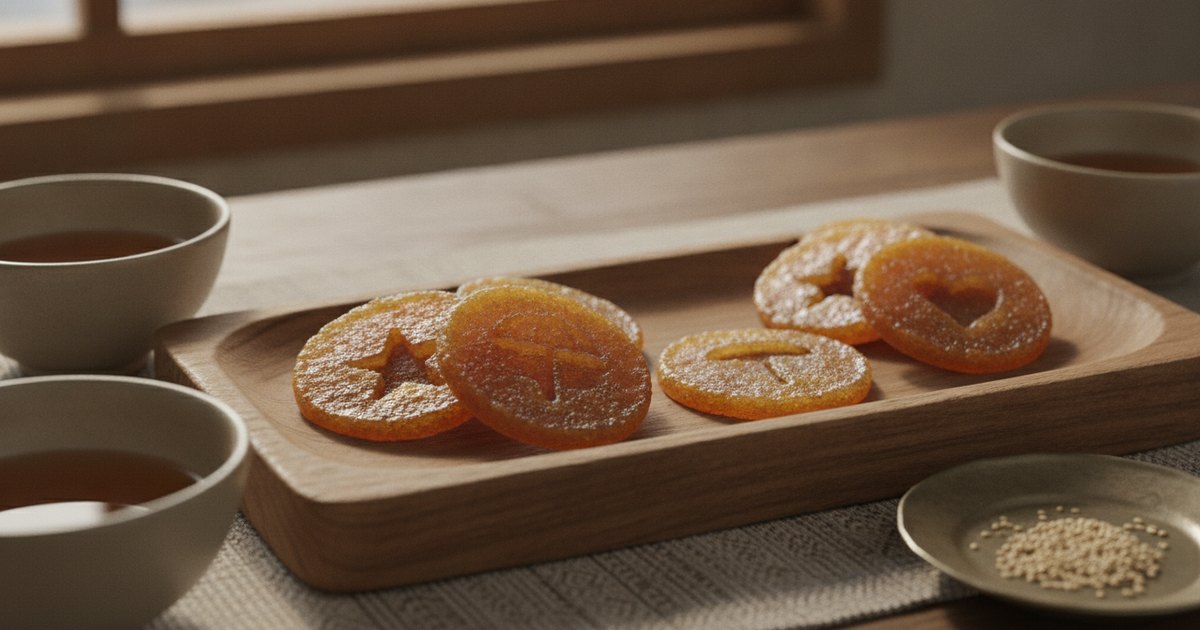
If a single television show could launch a global nostalgia craze for a candy made from exactly two ingredients, it's Squid Game. After Netflix's 2021 phenomenon reached hundreds of millions of households, home cooks everywhere scrambled to recreate that scene — contestants crouching over a pale, honeycomb-tinted disc, tongues and needles poised, trying to carve out a shape without shattering it.
But here's what the show didn't tell you: Korean kids were already playing this game long before any streaming service existed. Dalgona candy — known as 달고나 (dalgona) or 뽑기 (ppopgi) — has been a fixture of Korean street food culture since at least the 1960s and 1970s. Elderly vendors still set up foldable tables outside schools and markets across Korea today, portable coal burner in hand, making each disc to order for the equivalent of a few coins. The real-life stakes aren't quite as dramatic as in the show, but the challenge of picking out the shape without breaking it? Completely the same.
This guide will teach you everything you need to make authentic dalgona at home — the real Korean way, not a viral shortcut. We'll cover the science, the technique, the equipment, and the six most common mistakes that turn a perfectly simple batch into a sticky, bitter, or glass-hard disaster. Two pantry ingredients, one ladle, five minutes: that's all that stands between you and one of Korea's most beloved retro treats.
What Is Dalgona? A Sweet Piece of Korean Childhood
The word 달고나 (dalgona) is thought to derive from the Korean 달다 (달다), meaning "sweet," likely fused with regional slang. In everyday Korean, you'll hear it equally called 뽑기 (ppopgi), meaning "to pick out" — a direct reference to the game. The candy is made by a street vendor called a dalgona ajeossi (달고나 아저씨, "dalgona uncle"), who melts sugar in a ladle over a small flame, stirs in a pinch of baking soda, pours it onto a flat metal plate, flattens it, and stamps a shape into the center — often a star, heart, circle, triangle, or the iconic umbrella.
The game is both simple and ruthless: you must carve out the stamped shape using only your fingernails, a pin, or a needle without snapping through the surrounding disc. Succeed, and you win a free candy (or a small prize from the vendor). Fail, and you eat the evidence. The circle is widely considered the easiest shape; the umbrella with its narrow spike tips is the hardest. The challenge scales with the intricacy of the outline — every thin neck and tight curve is a potential crack point.
What makes dalgona special isn't culinary complexity — it's a precise balance of chemistry and timing. The candy is a caramelized sugar foam, and achieving that light, slightly airy texture (rather than a dense, glass-like shard) depends entirely on doing a few specific things correctly.
The Science Behind the Puff
Dalgona's distinctive pale, honeycombed texture comes from a single chemical event: when baking soda (sodium bicarbonate, NaHCO₃) hits hot molten sugar, it thermally decomposes and releases carbon dioxide (CO₂) bubbles throughout the liquid. Those bubbles get locked in place as the sugar rapidly cools and solidifies, giving you a candy that's airy and clean-snapping rather than dense and tooth-cracking.
This is why the baking soda quantity matters so much. Too little and the candy sets hard and translucent like a lollipop. Too much and it's so porous it crumbles, and it picks up an unpleasant alkaline bitterness. The effective range is genuinely tiny — around ⅛ tsp absolute maximum for a single-candy batch using 1½ tbsp of sugar.
One point every experienced maker agrees on: do not substitute baking powder. Baking powder contains sodium bicarbonate plus an acidic agent (usually cream of tartar or sodium aluminum sulfate), and its double-acting chemistry produces a different reaction at different temperatures. The result is wrong texture, wrong color, and off flavor. Baking soda — the plain white box — only.
What You'll Need: Equipment
The ladle method is the authentic Korean approach, and it's ideal for home cooks: you're working with just a tablespoon or so of sugar at a time, giving you close control over color, heat, and timing. You don't need any specialist Korean equipment.
The essentials:
- Small metal ladle — a standard soup ladle (2–3 tbsp capacity) works perfectly
- Chopstick or thin wooden dowel — for stirring; a fork or whisk will seed crystallization in the sugar
- Silicone baking mat or parchment paper on a flat, heat-safe countertop surface
- Flat-bottomed glass, metal measuring cup, or hotteok press — lightly oiled, for flattening
- Small cookie cutter in your chosen shape (circle, star, heart, triangle, or umbrella)
- Silicone spatula — for scraping the ladle and releasing the disc
- Neutral oil — canola, vegetable, or light olive oil; just a thin wipe, not a drizzle
Worth having:
- Lollipop sticks for the classic vendor presentation
- Bowl of hot water to soak the ladle between batches — hardened sugar dissolves easily in warm water; don't scrape it dry
If you want the most authentic pressing tool, a hotteok press — the same flat iron used to press hotteok, the sweet Korean street pancake filled with brown sugar and nuts — is available at H Mart for under $15 and makes a perfectly even disc every time. But the base of a heavy drinking glass or metal measuring cup works just as well.
Ingredients: The Beautiful Simplicity of Two
- 1½ tbsp (18 g) granulated white sugar — regular supermarket white sugar. Not brown, not raw, not superfine.
- ⅛ tsp (approximately 0.3–0.6 g) baking soda — standard sodium bicarbonate. Not baking powder.
- 1 tsp neutral oil — for the surface and press only; not mixed into the candy.
- 1 lollipop stick (optional) — pressed in just after pouring, before the candy sets.
That's the entire ingredient list. No corn syrup, no butter, no cream, no flavorings. Dalgona is one of the purest, most stripped-down forms of sugar confectionery you'll ever make — which is exactly why technique matters so much. There's nowhere to hide.
For larger batches: If you want to make 6–8 candies at once using a saucepan rather than a ladle, add corn syrup (roughly 60 g corn syrup per 100 g sugar) to prevent crystallization during the longer cook time. For the one-at-a-time ladle method, it's completely unnecessary.
Step-by-Step: How to Make Dalgona Candy
Before You Touch the Stove: Mise en Place Is Everything
This is the single most important piece of advice for first-time dalgona makers: set up everything before you apply heat. The window between "perfect pale amber" and "overdone brown" is about ten to fifteen seconds. Lay out your mat, oil your press, pre-measure your baking soda into a small dish, have the cookie cutter beside it. The steps themselves are fast; preparation makes them achievable.
Step 1 — Melt the Sugar (3–4 minutes)
Place 1½ tbsp of sugar in a clean, completely dry ladle over medium-low heat. Let it sit undisturbed for about 60 seconds — watch the very edges begin to liquefy first. Then start stirring continuously with a chopstick. The sugar will clump and look like it's going backward; that's normal. Keep the heat low and keep stirring.
You're aiming for sugar that is completely liquid, transparent, and pale amber — the color of weak iced tea or light honey. If you see smoke or smell anything acrid, immediately move the ladle off the heat and keep stirring. The ladle retains significant heat; you don't need a constant flame.
Sensory check: No grains visible when you drag the chopstick through it. It drips off the chopstick in a thin, smooth stream. The smell is clean caramel — sweet and faintly toasty, not burnt.
Step 2 — Add Baking Soda Off the Heat (Immediate)
Remove the ladle completely from the burner — don't just move it to a lower setting. Add the pre-measured pinch of baking soda. Stir vigorously for exactly 10–15 seconds until no white specks remain. The mixture will foam, bubble, expand, and lighten dramatically to a pale off-white froth. This is exactly what success looks like. Stop stirring the moment it looks homogeneous.
Sensory check: The volume roughly doubles. The color shifts from amber to pale golden-cream. Tiny bubbles visible throughout. The smell is still sweet — if you get a sharp alkaline note, you've used too much baking soda.
Step 3 — Pour and Press (Immediate)
Scrape every bit of the foamy mixture onto the center of your mat in one confident motion. Insert a lollipop stick now if using. Wait 15–20 seconds — tap the surface with your spatula to confirm it doesn't stick — then press firmly and hold for 3–5 seconds to create a flat disc roughly 3–4 mm (⅛ inch) thick.
Step 4 — Stamp and Cool
While the disc is still warm and pliable, press your oiled cookie cutter firmly into the center to leave a clear impression. Do not cut through. Leave completely undisturbed for 1–2 minutes. The disc will transition from translucent amber to a softer, more opaque tan as the structure sets. Slide a thin spatula underneath to release it cleanly.
Choosing Your Shape: The Ppopgi Challenge
The real game begins once the candy has cooled. Challenge friends to extract the stamped shape using only their fingernails or a pin — without cracking the outer disc. A time limit (say, 10 minutes) raises the stakes considerably.
Shape difficulty, easiest to hardest: circle → triangle → star → heart → umbrella. The umbrella's three narrow spike tips are famously unforgiving — any lateral pressure at the tips radiates a crack straight across the disc. The classic home cheat: gently lick the back of the candy to soften the sugar fractionally before working on the tight corners. Korean kids have been doing this for decades.
For a full Korean party spread, dalgona makes a fantastic interactive dessert alongside dishes like tteokbokki or a Korean BBQ night — the contrast between spicy, savory main courses and this delicate, simple sugar candy is exactly the kind of balance Korean food does so well.
Sourcing Ingredients in Western Kitchens
Everything you need is already in a standard Western pantry. Arm & Hammer baking soda is in every supermarket; plain white granulated sugar is universal. The only "specialty" item is a small metal ladle, and any standard soup ladle works. Cookie cutters in fun shapes — stars, hearts, circles, umbrella silhouettes — are available at kitchen supply stores, Michaels, or Amazon.
For a more authentic setup, Korean grocery stores like H Mart carry small, deep metal ladles that give better control than shallow Western ones. Their kitchen sections also stock hotteok presses and metal molds. But this is optional — a glass and a knife work just as well.
Common Mistakes to Avoid
With only two functional ingredients, dalgona is deceptively unforgiving. Here are the six failure modes that actually happen in real kitchens, and exactly how to diagnose and fix each one:
1. Heat Too High → Bitter, Dark Candy
What you'll see: The sugar races past pale amber into deep brown or burnt black in seconds. The resulting candy smells acrid and tastes unpleasantly bitter rather than sweet.
The fix: Cook on medium-low, not medium. Remember that the ladle itself holds heat — if the color is deepening too fast, lift it completely off the burner while still stirring. Once sugar is burnt, there is no recovery; discard and start fresh. The whole batch costs about two cents in sugar, so don't agonize over it.
2. Too Much Baking Soda → Crumbly, Alkaline-Tasting Disc
What you'll see: The disc is extremely porous, crumbles when pressed, and has a soapy or metallic aftertaste. It may also be very pale, almost white.
The fix: Measure carefully. A true ⅛ tsp is already quite generous for 18 g of sugar — some recipes call for as little as a few grains picked up on the tip of a moistened chopstick. If you don't have mini measuring spoons, err wildly toward less. The CO₂ reaction is surprisingly powerful even with minuscule amounts.
3. Stirring Too Long After Adding Baking Soda → Flat, Dense Candy
What you'll see: The disc looks thin and translucent after cooling — more like hard toffee than airy dalgona. It snaps cleanly but with no internal texture.
The fix: Once you add the baking soda, you're racing the CO₂. Stir briskly for 10–15 seconds only — just long enough to eliminate white specks. Over-stirring collapses the bubble structure before it can set. The moment you see a uniform pale froth with no white specks, stop and pour immediately.
4. Pressing Too Soon → Candy Sticks to the Press and Tears
What you'll see: You press the mound of candy and when you lift the glass, the candy stretches and tears, still liquid underneath.
The fix: Wait the full 15–20 seconds after pouring and always tap-test with your spatula first. Make absolutely sure the bottom of your pressing tool has a thin film of oil — a dry surface guarantees adhesion. If you're getting consistent sticking, wait a few more seconds before the next attempt.
5. Pressing Too Late → Candy Shatters Instead of Flattening
What you'll see: When you press, the cooled, hardened candy cracks and breaks into irregular shards rather than flattening into a disc.
The fix: The pressing window is about 30–45 seconds after pouring — it closes fast. Watch for the surface sheen: when it starts to turn matte and you can see the edges going opaque, you have roughly ten seconds. If you genuinely missed the window, you can sometimes rescue the batch by holding the ladle with the set candy very briefly over low heat to re-soften the bottom layer slightly — but act fast and work confidently.
6. Sugar Crystallizes During Melting → Grainy, White, Unworkable Mass
What you'll see: Rather than melting smoothly, the sugar suddenly seizes into a white, sandy, crystalline mass that won't re-liquefy cleanly.
The fix: Two culprits — moisture and stray crystals. Make sure your ladle is bone dry before you start (any water trace triggers crystallization). Stir only with a dry chopstick, and avoid scraping the sides of the ladle aggressively; let those edge crystals melt down naturally rather than dragging them into the melt. If crystallization starts, you can sometimes add a single drop of water and continue over gentle heat, but the success rate is low — starting fresh is faster.
Frequently Asked Questions
Can I use brown sugar or raw sugar instead of white? White granulated sugar is essential for traditional dalgona. Brown sugar contains molasses, which adds moisture and color that disrupt the caramelization and the CO₂ reaction — the result is too dark, too sticky, and won't achieve the right airy texture. Raw or demerara sugar has inconsistent grain sizes that melt unevenly and can introduce grittiness. Use plain white sugar only.
Why did my dalgona turn out hard as glass instead of slightly airy? Either the baking soda didn't fully incorporate (stir more vigorously for those 10–15 seconds), or you didn't use quite enough of it. Also check that your baking soda isn't expired — sodium bicarbonate loses its CO₂-releasing power over time. Test it: drop a pinch into warm water. If it bubbles actively within a few seconds, it's good. If nothing happens, buy a fresh box before you make dalgona.
Can I make dalgona without a ladle, just in a small saucepan? Yes — use a small light-colored saucepan so you can monitor the color change, and add about 60 g of corn syrup per 100 g of sugar to prevent crystallization during the longer melt time. The baking soda step is identical. A saucepan gives you more volume (easier to scale up for a party) but less control than a ladle for beginners. If it's your first time, start with the ladle.
How long does dalgona stay fresh? Dalgona is best eaten within a few hours of making. It's highly hygroscopic — it absorbs ambient moisture and turns sticky and soft, which makes the ppopgi game impossible and the texture unpleasant. If you need to make it ahead, store individual discs between layers of parchment in an airtight container with a silica gel packet, in a cool, dry spot away from any steam. Avoid the refrigerator — the humidity from condensation will destroy it quickly.
Where can I buy pre-made dalgona in the US without making it myself? Korean grocery stores like H Mart and Zion Market often carry packaged dalgona kits or pre-made stamped discs, particularly since Squid Game renewed global interest. You'll also find them at Korean-oriented convenience stores. That said, homemade dalgona — made fresh, still slightly warm from the ladle — has a softness and depth of caramel flavor that packaged versions simply can't replicate. The five minutes of hands-on work is genuinely worth it.
Dalgona is proof that the most memorable food isn't always the most complex. Two pantry staples, one ladle, five minutes of focused attention — and you have a piece of Korean street food history resting in your hand. The real challenge, as it always has been, isn't the recipe. It's the game. Pick your shape, choose your strategy, and carve carefully. Unlike the show, the only thing at stake is a second candy. ```