
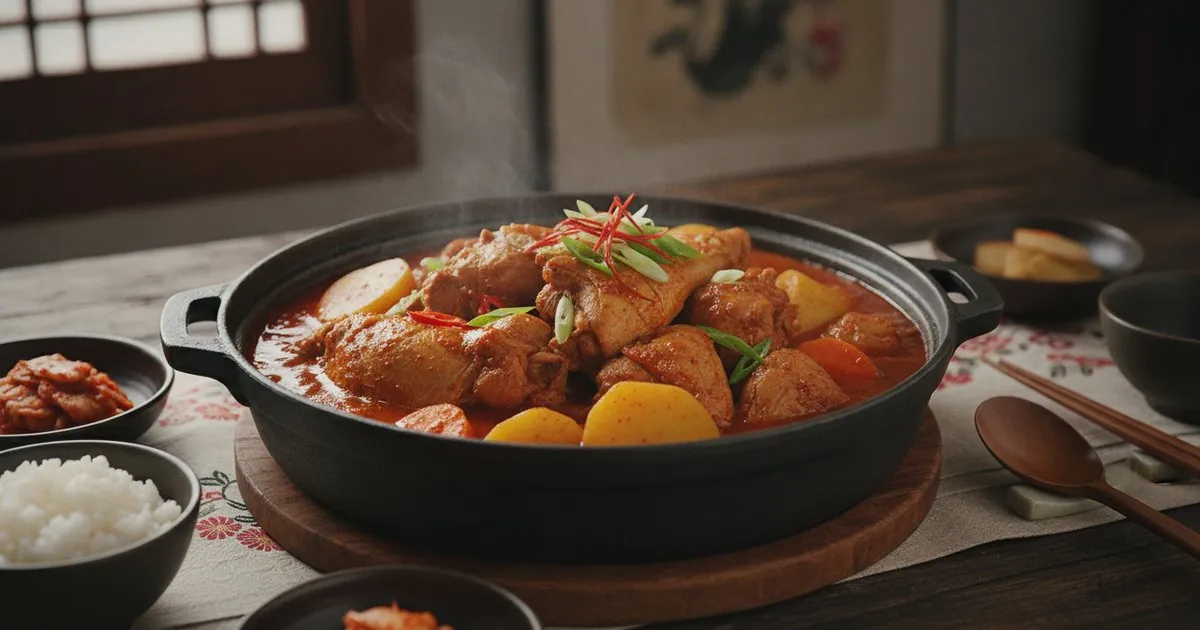
If there’s one dish that shows what Korean home cooking does best, dakbokkeumtang (닭볶음탕) makes a very strong case. Spicy, savory, and deeply satisfying, this braised chicken is built for sharing — bone-in pieces cooked until they’re pulling from the bone, potatoes that have soaked up every drop of chili-spiked braising liquid, and a sauce that reduces down to a thick, glossy glaze you will absolutely be scraping from the pot. All of it in one vessel, in roughly an hour, on a Tuesday.
This isn’t a dish that asks a lot of technical skill from you. What it asks instead is respect for a handful of key ingredients, attention during two or three critical moments in the cooking process, and willingness to let the gochujang and gochugaru do most of the heavy lifting. Get those things right, and the dish pretty much makes itself.
What Is Dakbokkeumtang?
The name decodes neatly: dak (닭) is chicken, bokkeum (볶음) refers to stir-frying or sautéing, and tang (탕) means a broth-based dish. The cooking method lands somewhere between a braise and a stew — the chicken cooks in a savory-spicy sauce with just enough liquid to create steam and keep everything moving, then the lid comes off at the end and the sauce reduces into something thick and intensely flavored.
You’ll also see this dish called dakdoritang (닭도리탕), which is what many Koreans still use colloquially. The Korean government standardized the name to dakbokkeumtang in the early 2000s. Both names describe exactly the same dish — don’t let the variation confuse you in recipes or restaurant menus.
The dish is a staple of Korean home cooking: affordable (bone-in chicken thighs are among the cheapest proteins at any supermarket), crowd-feeding, and boldly flavored enough that it needs nothing more than steamed rice and a couple of simple side dishes to feel like a complete, generous meal.
The Key Ingredients — and Where to Find Them
Chicken: Bone-In Is the Whole Game
Every credible dakbokkeumtang recipe specifies bone-in chicken pieces, and there’s a real reason for that, not just tradition. The bones contribute collagen to the braising liquid as they cook, and it’s that collagen — as it gradually dissolves — that transforms the thin, watery sauce of the first 20 minutes into the thick, glossy glaze you want at the end. Without bones in the pot, you’re chasing a texture that plain chicken breast simply cannot produce.
The standard combination is thighs and drumsticks, and it’s the right call: both are forgiving (they stay moist and flavorful even if they run a few minutes long), they’re widely available, and they’re inexpensive. Skin-on is traditional and adds richness, but you can remove most of the skin if you prefer to reduce the fat — just leave a piece or two in for flavor.
What you should not use is boneless, skinless chicken breast. It will be dry and stringy well before the vegetables are fully cooked. If white meat is important to you, bone-in chicken breasts can work — add them slightly later than the dark meat.
The Sauce: Three Ingredients Doing Most of the Work
The entire flavor architecture of dakbokkeumtang rests on three core elements:
Gochujang (고추장), the fermented Korean red chili paste, provides deep, complex heat along with a subtle sweetness and a savory, slightly funky fermented depth. There is genuinely no substitution that replicates it. If you’re new to working with it, our complete gochujang guide covers how to read heat-level labels, which brands to start with, and how to store it.
Gochugaru (고춧가루), Korean red chili flakes, contributes a different kind of heat — brighter, fruitier, less concentrated than gochujang — and is responsible for the dish’s vivid red color. It’s coarser than most Western chili flakes and has a distinctive sweetness alongside the heat. Do not substitute generic crushed red pepper here; the flavor profile is genuinely different. Our gochugaru guide walks through the mild vs. hot varieties and where to find them.
Regular soy sauce adds umami, salinity, and the savory backbone that keeps the dish grounded and not merely hot.
Rounding out the sauce: rice wine or mirin (adds brightness and a slight sweetness — every source we researched agrees on 2 tablespoons here), sugar or honey (balances the heat), and a finish of sesame oil (added off the heat to preserve its fragrance).
Where to find these: H Mart and other Korean or Asian grocery stores are the ideal source, but gochujang and gochugaru have become genuinely mainstream — Whole Foods carries the Chung Jung One brand, and both are available through Amazon. Once you have them, they keep well: gochujang lasts months in the fridge, and gochugaru stays fresh for ages in the freezer.
Vegetables: Sturdy, Chunky, Built for Braising
Dakbokkeumtang’s vegetables need to survive 30+ minutes of covered heat without disintegrating, which is why Yukon Gold potatoes are preferred over russets — their waxy texture holds its shape. Cut them large (4 cm / 1½ inches); they’ll absorb sauce and shrink slightly as they cook. Carrots go in as thick rounds or diagonal chunks, onion in large wedges. Everything should be substantial enough to still have presence when you serve the dish.
Green onions are the exception — they go in right at the very end, off the heat, and wilt just slightly to add freshness.
The Cooking Process, In Detail
Build the Sauce Before Anything Else
Combine the gochujang, gochugaru, soy sauce, rice wine, sugar, and black pepper in a bowl and whisk until smooth. The mixture should look like a rust-red paste and smell immediately compelling — spicy, complex, slightly sweet. Mixing the sauce separately ensures every ingredient is evenly distributed before it touches the chicken.
Should You Blanch the Chicken?
This step divides cooks, but it’s worth doing when you have the extra five minutes. Dropping the chicken into boiling water for 2–3 minutes before braising draws out blood and proteins that would otherwise create gray foam in your sauce and leave a faint gamey undertone. The result is a cleaner braising liquid and a less muddy sauce. If you skip it, no disaster — just skim whatever foam rises in the first few minutes of cooking.
The Braise: Covered, Then Uncovered
Coat the chicken in sauce, add water, garlic, and ginger, and bring it to a boil. The kitchen will fill almost immediately with the deep, toasty aroma of hot gochujang — that’s the smell of a promising dish in progress. Cover and reduce to medium heat for 10 minutes before adding the vegetables.
Once the potatoes, carrots, and onion go in, you’re cooking for another 20 minutes covered. Lift the lid every 5–7 minutes to stir and turn the pieces — this ensures even coating and checks that nothing is sticking. Potatoes are done when a chopstick slides through with no resistance.
Then comes the step that matters most: remove the lid, raise the heat, and reduce. For 8–10 minutes, you’re watching the sauce go from thin and soup-like to thick and glossy, stirring frequently. The color deepens. The sound shifts from a light simmer to a more active, sputtering bubble. You want the sauce to visibly cling to every piece of chicken — if it still pours off cleanly, it needs more time.
Variations Worth Trying
Tteok (rice cakes): Cylindrical tteok added in the last 5 minutes creates a version that overlaps with tteokbokki territory — chewy, sauce-soaked, and wonderful. Add a few extra tablespoons of water when the tteok go in, as they absorb liquid quickly.
Dangmyeon (glass noodles): Soaked in warm water for 15 minutes first, then stirred in for the final 5–10 minutes. They turn slippery and intensely flavored.
Dashima stock: Instead of plain water, simmer a 10×10 cm (4×4 inch) piece of dried kelp in 4 cups of water for 5 minutes. Use this as your braising liquid. The umami boost is subtle but real, and it rounds out the sauce in a way plain water doesn’t.
Heat adjustment: To make a milder version, reduce gochugaru to 1 tablespoon and gochujang to 1½ tablespoons. The dish loses some fire but keeps its deep savory complexity.
How to Serve It
Dakbokkeumtang is a center-of-the-table main dish, served with steamed short-grain rice — not optional, the rice is essential for managing the heat and soaking up sauce. Simple banchan pairings work best: kimchi, a light cucumber side, or blanched spinach provide contrast and cooling. If you’re looking to build out your Korean side dish repertoire, our banchan guide has you covered.
Leftovers keep well in the refrigerator for 2–3 days and reheat on the stovetop with a splash of water to loosen the sauce. The flavor often improves overnight.
Common Mistakes to Avoid
1. Using Boneless, Skinless Chicken Breast
The most damaging substitution you can make. Boneless breast has no collagen to contribute to the sauce, so it stays thin and watery instead of reducing into a glaze — and the meat itself will be dry and stringy well before the vegetables finish cooking. Bone-in thighs and drumsticks are the right tool. Not interchangeable.
2. Not Reducing the Sauce Long Enough
If you put the lid back on or pull the dish off heat too early, the sauce stays thin and slides right off the chicken. The sauce needs to reach a specific consistency: it should coat the back of a spoon, and when you drag your finger across that spoon, the line should hold cleanly. If it’s not there at 8 minutes, give it 3–4 more and stay attentive. The difference between a watery braise and a proper glazed dakbokkeumtang is entirely in this step.
3. Adding Potatoes at the Same Time as the Chicken
Potatoes need about 25 minutes of active cooking in this dish. The chicken needs closer to 35–40 minutes total. If you add potatoes at the start, they’ll be bloated, starting to fall apart, and will starch-cloud your sauce unevenly by the time everything else is done. Always give the chicken its first 10 minutes before the vegetables go in.
4. Not Accounting for Gochugaru Heat Variation
Gochugaru heat level varies meaningfully between brands and batches — what one package calls “medium” can be genuinely hot or genuinely mild. Before committing 2 tablespoons to your sauce, taste a small pinch directly. If it’s assertively hot, start with 1 tablespoon and adjust at the end. You can add more heat after tasting the finished sauce; you cannot remove it.
5. Walking Away During the Reduction Phase
Once the lid is off and the heat is high, the natural sugars in gochujang and the salt in soy sauce will scorch on the bottom of the pot if left unattended. Stir every 1–2 minutes and keep an eye on what’s happening at the bottom of the pot. If you see dark spots forming, lower the heat slightly and scrape them up immediately — a light caramelization adds depth, but actual burning turns the sauce bitter and ruins the batch.
6. Forgetting to Taste Before Serving
The sauce concentrates dramatically during the reduction, which means its flavor at the end of cooking is substantially more intense than it was raw. Always taste before plating. The most common finish-line adjustments: a few drops of soy sauce if the sauce tastes flat or underseasoned, a small pinch of sugar if the heat is too aggressive and unbalanced, or a splash of water if it has reduced too far and turned paste-like. The sauce should taste bold but harmonious — spicy, savory, and just slightly sweet.
Frequently Asked Questions
What’s the difference between dakbokkeumtang and dakdoritang? They’re the same dish. Dakdoritang is the colloquial name that many Koreans still use; dakbokkeumtang is the official standardized name adopted in the early 2000s. You’ll encounter both in recipes, cookbooks, and restaurant menus — they refer to the identical preparation.
Can I make this less spicy without sacrificing flavor? Yes. Reduce the gochujang to 1–1.5 tablespoons and the gochugaru to 1 tablespoon or even less. The dish will be noticeably milder but still deeply savory and complex — the fermented character of gochujang comes through even in smaller amounts. You can also stir a small knob of unsalted butter into the finished sauce; fat tones down perceived heat without altering the overall flavor profile.
What if I can’t find gochujang locally? Gochujang is stocked at many mainstream grocery stores now (Whole Foods, Trader Joe’s), and it’s readily available online. In a genuine pinch, you can approximate it with a mix of red miso paste, sriracha, and honey — roughly 1 Tbsp miso + 1 Tbsp sriracha + 1 tsp honey per 2 Tbsp gochujang called for. It won’t taste identical, but it gives you some fermented depth and heat. Our gochujang guide has a full breakdown of substitutions and mail-order sources.
Can I make this in a Dutch oven or Instant Pot? A Dutch oven is actually ideal — its heavy base distributes heat evenly, which significantly reduces the scorching risk during the reduction phase. Just make sure the pot is wide enough that chicken pieces aren’t stacked more than two layers deep. For an Instant Pot, pressure cook on high for 12 minutes, then quick-release and switch to the sauté function to reduce the sauce — the texture of the potatoes will be slightly softer, but the flavor holds up well.
My sauce burned at the bottom. Can I salvage the dish? If you catch it early — slight darkening, no acrid smell — lower the heat immediately, add 2–3 tablespoons of water, and scrape up the stuck bits. Lightly caramelized bits can actually add a pleasant depth. If it’s truly burnt (black layer, bitter smell), carefully pour the contents into a clean pot without scraping the charred layer, and do not stir the burnt residue into the sauce. Better to lose a little sauce at the bottom than to ruin the whole batch.