
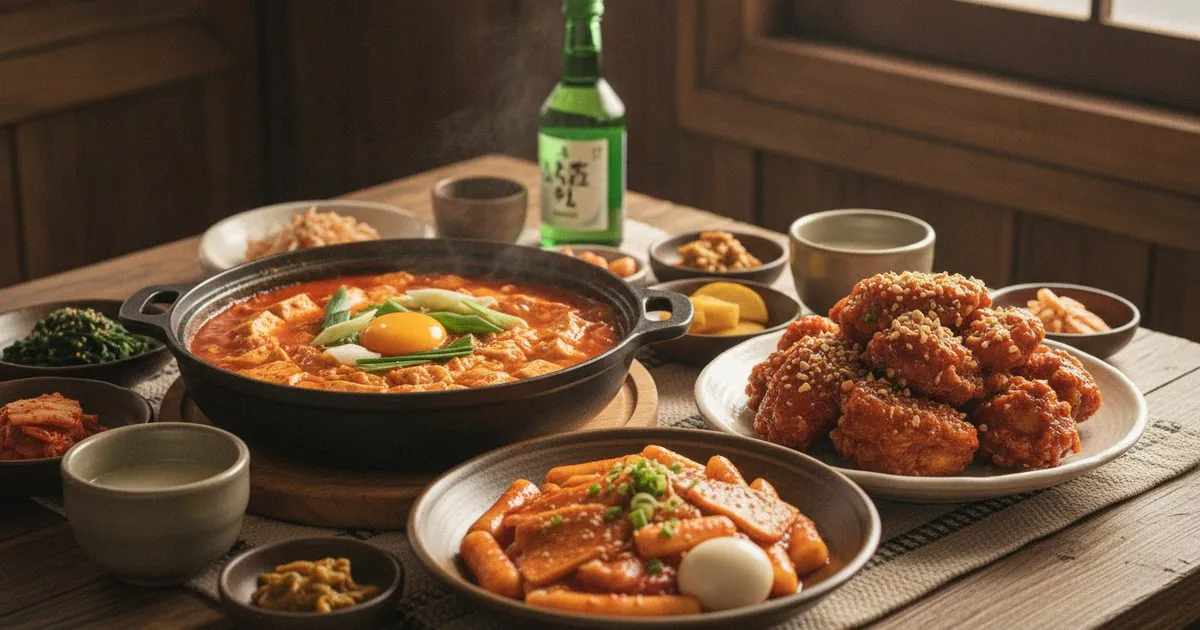
If you’ve watched Itaewon Class and found yourself googling “what is sundubu jjigae” at 11 PM, you are absolutely not alone. The 2020 JTBC drama — adapted from Jo Gwang-jin’s Daum webtoon of the same name and streaming globally on Netflix — averaged a 16.5% nationwide audience share by its finale, making it the 14th highest-rated show in Korean cable TV history. Google Trends named it the most-searched entertainment property in South Korea for all of 2020. Time put it on their list of the best Korean dramas on Netflix. Forbes named it one of the best Korean dramas of the year full stop.
And underneath all of that cultural momentum, there was a small bar-restaurant in Itaewon serving sundubu jjigae.
The show’s food isn’t incidental. The bar-restaurant DanBam (단밤) sits at the center of the entire narrative — it’s the vehicle for protagonist Park Sae-ro-yi’s redemption, and its menu carries genuine emotional weight across the series. This guide breaks down what DanBam’s kitchen was actually cooking, why each dish matters to the story, and how to recreate that experience in a Western home kitchen.
The Story Behind DanBam — And Why the Name Matters
Park Sae-ro-yi, played by Park Seo-joon, is an ex-convict who opens DanBam in Itaewon’s competitive nightlife district to rebuild his life after the Jangga Group conglomerate destroys his family. His team is scrappy, unconventional, and deeply loyal — and the food they serve is a daily act of defiance.
The name DanBam (단밤) is worth understanding before you even reach the kitchen. It fuses two syllables: 단 (dan), from dalda (달다), meaning “sweet,” and 밤 (bam), meaning “night.” Sweet Night. It’s the peaceful, grief-free existence Sae-ro-yi is fighting toward — and when BTS’s V (Kim Taehyung) composed the show’s OST, he titled it “Sweet Night” directly from that meaning. The track won Best OST at the 2020 APAN Star Awards. The name and the music are inseparable from the food.
Every dish DanBam serves is, in that context, a small piece of that dream made edible.
The DanBam Menu, Decoded
Korean food bloggers and entertainment media outlets documented DanBam’s on-screen menu in careful detail across the show’s run. Three dishes carry particular narrative and culinary weight — and all three are genuinely achievable at home.
Sundubu Jjigae — The Soul of the Show
Sundubu jjigae (순두부찌개) — soft tofu stew — appears in Episodes 5, 7, and the series finale (Episode 16), a structure that is not accidental. The dish was originally a recipe from Sae-ro-yi’s late father, and Sae-ro-yi himself describes it as “a dish that on a cold day spreads warmth throughout the body.” He refines it over the course of the show, and in the finale, the perfected version becomes the symbolic centerpiece of DanBam’s triumph over the Jangga Group. It is the dish that bookends the entire story.
What you’re actually making: Sundubu jjigae is built around sundubu — silken tofu that is uncurdled and unpressed, with a trembling, custard-like texture that breaks into soft clouds when it meets the spicy red broth. The stew base is bloomed gochugaru (Korean red pepper flakes) cooked in fat, aromatics like garlic and onion, and a light stock — traditionally made from dried anchovies and kelp. Additions vary by household: clams are classic, but shrimp, squid, pork, or a pure mushroom version all work. A raw egg cracked in at the end is non-negotiable in most versions; it sets gently in the residual heat of the hot stone pot.
Auditory cues matter here. A properly served sundubu jjigae should be actively bubbling when it reaches the table — the sound of a lively, rolling simmer from the dolsot (stone pot) is part of the experience. If it’s gone quiet, it’s cooling too fast.
Sourcing for Western kitchens: Sundubu is increasingly available at mainstream grocery stores, but H Mart is the most reliable source in the United States, where you’ll find it in sealed tubes labeled “순두부.” Whole Foods carries silken tofu in aseptic boxes — workable as a substitute, but the texture is slightly firmer and it won’t break apart quite as dreamily in the broth. The single most important pantry ingredient is gochugaru, Korean red pepper flakes — this stew is one of the best entry points for understanding the difference between gochugaru and gochujang. Get the real thing; there is no close substitute.
Making DanBam’s Sundubu Jjigae (serves 2):
Base and broth:
- 2 tbsp sesame oil
- 4 garlic cloves, minced
- 2–3 tbsp gochugaru (start at 2 tbsp if you’re heat-sensitive)
- 1 tsp doenjang / fermented soybean paste (optional but adds umami depth)
- 400ml / 1¾ cups anchovy-kelp stock (or 400ml / 1¾ cups low-sodium chicken broth + 1 tbsp fish sauce)
- 2 tsp soy sauce
- 1 tsp fish sauce
Main ingredients:
- 1 package (350g / 12 oz) sundubu (soft tofu in tube)
- 150g / 5 oz clams, scrubbed, or mixed seafood (shrimp + squid)
- 80g / 3 oz shiitake or enoki mushrooms, roughly sliced
- ½ medium onion, thinly sliced
- 1 large egg
- 2 spring onion stalks, thinly sliced
Method: Heat sesame oil in a stone pot or heavy-bottomed saucepan over medium heat. Add garlic and stir until fragrant — about 30 seconds, golden but not brown. Add gochugaru and stir constantly for 30–45 seconds; the color deepens from orange-red to a richer brick red and you’ll notice a toasty, slightly smoky aroma where there was grass before. Add onion, seafood, and mushrooms. Pour in stock and bring to a boil. Gently slide in the tofu and break into large rough chunks with a spoon — you want pillow-soft pieces, not a fine mince. Season with soy sauce and fish sauce, taste, adjust. Crack in the egg, cover for 2 minutes for a barely-set yolk. Garnish with spring onion. Serve immediately in the hottest vessel you have.
Sukju Samgyup Bokkeum — The Ultimate Drinking Food
Episode 7 features sukju samgyup bokkeum (숙주 삼겹살 볶음): stir-fried shaved pork belly with mung bean sprouts. This is quintessential Korean anju (안주) — food engineered to be eaten alongside alcohol, arriving between rounds of soju and cold beer at a table full of people who are half-watching a football match.
Decoding the name: Sukju (숙주) = mung bean sprouts. Samgyeopsal (삼겹살) = pork belly. Bokkeum (볶음) = stir-fried. The key detail is the cut: DanBam uses daepae samgyeopsal (대패 삼겹살), paper-thin frozen pork belly shaved on a deli slicer. This thinness is not decorative — strips at 1–2mm thick cook in seconds and develop caramelized, slightly crispy edges that thicker belly simply cannot achieve in a wok at home. Thicker pieces steam in their own fat before they can sear.
Finding it in the West: H Mart and Korean supermarkets stock daepae samgyeopsal in the freezer section, usually labeled “shaved pork belly.” If you can’t find it, ask a butcher to slice pork belly at 1–2mm (roughly 1/16 inch) on their deli machine. Thin-sliced bacon is a flavor-adjacent substitute (smokier, saltier — reduce your soy sauce accordingly). For a broader look at pork belly’s role in Korean cuisine, our Korean BBQ at home guide covers everything you need to know before you shop.
Making Sukju Samgyup Bokkeum (serves 2–3 as anju):
- 200g / 7 oz daepae samgyeopsal (shaved pork belly)
- 200g / 7 oz mung bean sprouts, rinsed
- 4 garlic cloves, minced
- 1½ tbsp soy sauce
- 1 tbsp gochugaru
- 1 tsp gochujang (optional — adds paste-forward heat and body)
- 1 tsp sesame oil
- 1 tsp sugar
- ½ tsp black pepper
- 2 spring onion stalks, cut into 4cm / 1½-inch pieces
Method: Heat a wok or large cast-iron skillet until it’s visibly smoking — hold your palm 5cm / 2 inches above the surface and you should feel serious, uncomfortable heat. Add pork belly in a single layer (no oil needed). Let it sear undisturbed for 45–60 seconds until the underside shows caramelized brown edges. Toss and push to the side. Drop garlic into the cleared center, sizzle for 20 seconds, then combine. Add gochugaru and gochujang, toss to coat. Add mung bean sprouts and spring onion. Stir-fry over high heat for 1–2 minutes. Season with soy sauce, sugar, sesame oil, and black pepper. Plate immediately and serve with ice-cold soju or lager.
Jjamppong — Hyun-yi’s Breakthrough Dish
Jjamppong (짬뽕) appears in Episodes 5 and 7 as the dish that DanBam’s chef Hyun-yi — K-drama’s most celebrated transgender character — perfects after multiple failed attempts. Its success earns recognition from a skeptical floor manager and marks a pivotal character development moment.
Jjamppong is a Chinese-Korean spicy seafood noodle soup: a vivid, deeply savory broth loaded with mixed seafood, chewy wheat noodles, and cabbage, rendered brilliant orange-red by gochugaru stir-fried in oil. The broth’s signature is a fat emulsion — the rendered oil from stir-frying aromatics and seafood together at high heat carries the gochugaru’s color and flavor in a way that just adding chili to water never will. A properly made jjamppong broth is glossy, deeply pigmented, and has a visible sheen of flavored oil across the surface. If yours looks pale or watery, the wok wasn’t hot enough and the aromatics weren’t given enough time to bloom.
Building the Full DanBam Experience
Ingredient Sourcing at a Glance
| Ingredient | Best Source | Reliable Substitute |
|---|---|---|
| Sundubu (soft tofu tube) | H Mart, Korean grocer | Silken tofu block (Whole Foods, Trader Joe’s) |
| Gochugaru | H Mart, Amazon | No close substitute — get the real thing |
| Daepae samgyeopsal | H Mart freezer section | Butcher-sliced pork belly at 2mm |
| Mung bean sprouts | Asian supermarkets | Call ahead — availability varies |
| Doenjang | H Mart, online | White miso at ½ the quantity |
| Anchovy-kelp stock | H Mart (dried anchovies + dashima) | Chicken broth + 1 tsp fish sauce |
| Jjamppong noodles | Korean grocer | Thick udon noodles |
Setting the Atmosphere
DanBam is a pojangmacha-style bar: intimate tables, low lighting, shared plates arriving in waves between pours of soju. To recreate it at home, serve sundubu jjigae in the hottest vessel you own — a dolsot (stone pot) retains heat so the stew stays bubbling at the table. Arrange the stir-fries in the center for sharing. Serve the full spread with ice-cold soju, Korean beer (Hite, Kloud, or Cass are all widely available at Korean grocers), and a bowl of steamed short-grain rice per person.
Common Mistakes to Avoid
1. Using Firm Tofu Instead of Sundubu
This is the most common and most impactful mistake. Regular firm tofu holds its shape and has a springy, dense texture that is entirely wrong for this stew. Sundubu should barely hold together when you add it to the hot broth — it should break into trembling, cloud-like pieces that absorb the gochugaru broth. Visual check: if your tofu holds perfect cubes after 5 minutes of simmering, you’ve used the wrong type. Solution: find sundubu specifically labeled “순두부” or “soft tofu in tube” at a Korean grocer.
2. Skipping the Gochugaru-Blooming Step
Adding gochugaru directly to liquid without first frying it in fat gives you a one-dimensional, faintly raw, bitter heat. The 30–45 seconds of frying gochugaru in sesame oil is called blooming — fat carries the fat-soluble flavor compounds in the chili and transforms the flavor. Your nose is the best diagnostic tool: raw gochugaru smells grassy; properly bloomed gochugaru smells toasty, rounded, and faintly smoky. Watch the color shift from bright orange to a deeper brick red. If you don’t notice a clear color change, the pan wasn’t hot enough or you didn’t cook it long enough.
3. Overcooking the Egg
The egg in sundubu jjigae should be cracked in during the last 2–3 minutes and cooked covered. An overcooked egg — rubbery white, chalky, green-tinged yolk — means it went in too early or the lid stayed off too long. Aim for a white that is just set and a yolk that runs slightly when cut with a spoon. If you crack the egg and immediately serve without covering, you’ll get raw egg white floating in the soup, which is equally unpleasant. Cover, time it, and trust the residual heat.
4. Crowding the Wok for Samgyup Bokkeum
If your pork belly turns pale grey and soft instead of developing caramelized edges, the pan is either not hot enough or too full. Crowding drops the pan temperature immediately and the meat steams in its own liquid rather than searing. Signs you’ve gone wrong: no browning, a pool of grey liquid in the pan, flabby texture. Fix: cook in two batches, or pre-heat your wok for a full 2–3 minutes before adding anything. Residential electric ranges struggle here — a cast-iron skillet holds heat better than a thin wok on a low-BTU burner.
5. Overcooking the Mung Bean Sprouts
Mung bean sprouts have a very narrow window of doneness. Undercooked, they’re too sharp and squeaky; overcooked, they collapse into a watery, flavorless tangle. In sukju samgyup bokkeum, add them last and cook for no more than 1–2 minutes over high heat. The test: press a sprout between two fingers — it should give but not fall apart, with a faint resistance at the center. If they’re releasing visible liquid into the pan, they’ve gone too far.
6. Adding Liquid Too Early to Jjamppong
Jjamppong’s signature orange-red broth comes from stir-frying aromatics and seafood in oil over high heat before any liquid enters the pan. Adding stock too soon traps the gochugaru flavor at a shallow level and results in a pale, thin, watery soup rather than a vivid, emulsified broth. Before you pour in any liquid, your wok contents should look deeply colored, slightly sticky, and should be releasing fragrant, lightly smoky steam. That’s the baseline. Only add stock once you’re there.
Frequently Asked Questions
What does DanBam (단밤) mean in Korean?
DanBam combines dan (단), from dalda (달다), meaning “sweet,” and bam (밤), meaning “night.” The full meaning is “Sweet Night” — the peaceful, grief-free life that Sae-ro-yi is working toward throughout the series. BTS’s V (Kim Taehyung) titled the drama’s OST “Sweet Night” directly from this meaning, and the track won Best OST at the 2020 APAN Star Awards.
Is sundubu jjigae the same as “soon tofu soup”?
Yes — “soon tofu” is simply an alternate Romanization of sundubu. You’ll see it written as “soon tofu soup” or “soft tofu stew” on Korean-American restaurant menus, including chains like BCD Tofu House. The dish is identical across all those names.
What is anju (안주), and how is it different from regular Korean food?
Anju refers specifically to food eaten alongside alcohol — the Korean equivalent of Spanish tapas or Japanese izakaya food. It’s designed to complement drinking: salty, spicy, or rich, meant to be shared at a table between rounds of soju or makgeolli. Sukju samgyup bokkeum is a textbook anju dish — quick to prepare, intensely flavored, and excellent with cold beer. For a broader look at Korean sharing food culture, the banchan guide covers many of the small side dishes that appear alongside anju at Korean bars and restaurants.
Can I make sundubu jjigae vegetarian?
Yes. Replace the anchovy-kelp stock with kombu (dried kelp) stock or mushroom broth. Swap fish sauce for soy sauce at a 1:1 ratio, and increase doenjang slightly for extra umami depth. Use meaty mushrooms — shiitake, oyster, or king oyster — as the primary addition alongside the tofu. The result is different from the seafood version (anchovy stock adds a particular depth that’s hard to replicate exactly), but a well-seasoned mushroom broth with properly bloomed gochugaru gets you surprisingly close.
Where does sundubu jjigae fit in Korean food history?
Soft tofu stew is deeply rooted in Korean home cooking, but its rise to popularity in the United States is well-documented. Beverly Soon Tofu in Los Angeles — opened in 1986 by Monica Lee — is widely credited with introducing soon tofu soup to American diners, decades before K-dramas made it a household name. The BCD Tofu House chain subsequently spread it further. By the time Itaewon Class aired in 2020, Western Korean food fans already had a relationship with the dish — which may be part of why it resonated so strongly as the drama’s central food symbol.
All on-screen dish descriptions in this article are based on verified episode-by-episode coverage from Korean food and entertainment publications. Itaewon Class (이태원 클라쓰) is streaming on Netflix globally.