
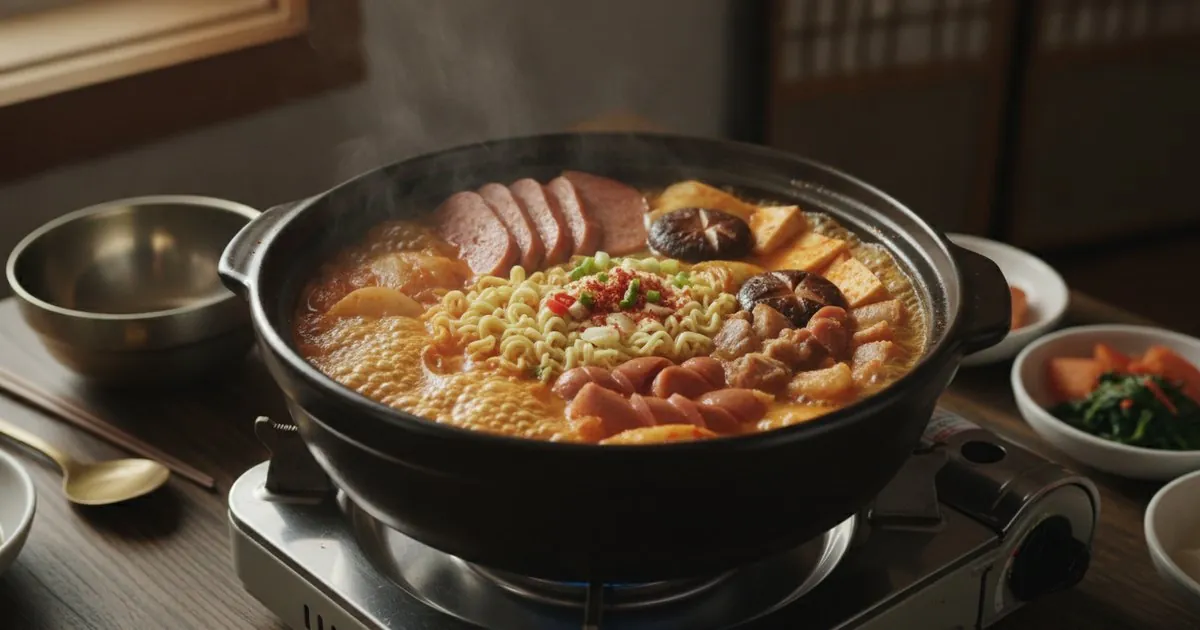
There’s a dish that appears on the menu of practically every Korean comfort food restaurant — a stew that manages to be simultaneously humble and deeply satisfying, that carries more history in a single pot than most dishes carry in an entire cookbook. Budae jjigae (부대찌개), literally “military base stew,” combines SPAM, hot dogs, kimchi, instant ramen noodles, and American cheese into something that shouldn’t work on paper but absolutely, gloriously does in practice.
If you’re new to Korean food, budae jjigae is the dish that tends to stop people in their tracks. It’s the answer to the question “wait, Korean food uses SPAM?” — yes, and not reluctantly. Enthusiastically. This stew is proof that the most enduring dishes often come not from abundance but from resourcefulness.
This guide covers everything: the remarkable and complicated history behind the dish, a detailed breakdown of every ingredient and why it matters, practical sourcing advice for Western kitchens, a complete recipe, and the troubleshooting knowledge that separates a great pot of budae jjigae from a merely acceptable one.
The Remarkable (and Complicated) Story Behind Budae Jjigae
The name is the origin story: budae (부대) means military unit or base, jjigae (찌개) means stew. This dish was born in the shadow of U.S. Army bases that remained in South Korea after the Korean War armistice of 1953 — a period when the country was devastated, food was scarce, and millions of people had very little to eat.
Processed meats — SPAM, canned Vienna sausages, hot dogs — were supplied to American soldiers through the military commissary system. Quantities that found their way into surrounding communities became valuable commodities, and Korean cooks began combining them with local staples: kimchi, tofu, gochujang, whatever vegetables were available. The result was nourishing, filling, and deeply flavorful despite its improvised origins.
The region of Uijeongbu (의정부), about 19 km north of Seoul, is widely credited as the birthplace of the dish. Restaurants near base perimeters began formalizing what had been improvised cooking into something you could order off a menu by the 1960s. Whether any single person invented budae jjigae — as some local food stories suggest — is genuinely difficult to establish. The dish almost certainly evolved simultaneously in multiple communities near different U.S. installations, including those near Dongducheon and Pyeongtaek. The most honest answer is that it was invented by collective necessity: the same resourceful response to the same problem, playing out in many kitchens at once.
What changed the dish’s cultural standing was time — and South Korea’s own transformation. As the country’s economy grew dramatically from the 1970s onward and American processed foods became legally imported and widely available, budae jjigae followed the same arc that the country itself did: from survival-era improvisation to nostalgic comfort food to a dish celebrated on trendy restaurant menus and in international food media. Today, Uijeongbu has an entire street — 부대찌개 거리 (Budae Jjigae Street) — lined with restaurants specializing in it. It’s a legitimate culinary destination.
Anthropologist Grace M. Cho has written about the complex emotional weight the dish carries for older Koreans who lived through the war years — feelings of humiliation, resentment, and gratitude intertwined in a single bowl. Younger Koreans and the global food community tend to reframe it as something else: evidence that Korean cuisine has always absorbed, transformed, and improved on whatever arrives on its shores. It’s worth noting that gochujang itself — the fermented red pepper paste that defines so much of Korean cooking — only became possible after Portuguese traders introduced chili peppers to the Korean peninsula in the 16th century. Anthony Bourdain, who featured the dish on Parts Unknown, put it cleanly: “a classic example of necessity being the mother of deliciousness.”
What Makes Budae Jjigae Actually Delicious: Breaking Down Every Ingredient
At first glance, the ingredient list might read like a confused pantry audit. Every element is there for a reason, and the magic lies entirely in how they interact.
The Broth Foundation
Anchovy-kelp (myeolchi-dashima) stock is the traditional base: deeply savory, slightly briny, with a clean oceanic backbone that doesn’t compete with the stew’s bold seasonings. Chicken broth is a solid substitute. Avoid beef broth here — its heavier flavor muddles the brightness the dish needs.
The Processed Meats
SPAM and hot dogs bring saltiness, fat, and a specific soft-dense texture that soaks up the spicy broth as it cooks. SPAM Classic is the standard. If SPAM genuinely isn’t for you, a smoked sausage (kielbasa works reasonably well) can stand in, but something real is lost in translation — the particular unctuous quality of SPAM is part of the dish’s identity, not incidental to it.
The Kimchi
This is where most of the stew’s complexity originates. Well-fermented kimchi — refrigerator-aged for at least two to four weeks, ideally longer — is essential. As it cooks, it releases its fermented juices into the broth and mellows slightly, contributing sour depth and funk that no other ingredient can replicate. If you want to go deeper on fermentation stages, our complete guide to how to make kimchi covers the whole process.
The Seasoning Paste
Gochujang (fermented red pepper paste) and gochugaru (red pepper flakes) work together: the paste brings sweetness, umami depth, and medium heat; the flakes add more direct spice and a fruity edge. Understanding these two ingredients is fundamental to Korean cooking — our gochujang guide breaks down brand differences, heat levels, and what to do when you can’t find it.
The Surprises: Baked Beans and American Cheese
Baked beans aren’t in the oldest versions of this dish, but they’ve become common enough that many Korean home cooks consider them standard. They contribute gentle sweetness and starchy body. American cheese, laid over the stew right at the end, melts into the broth and adds faint creaminess that tempers the heat. The emulsifying salts in processed cheese prevent it from breaking into greasy pools — this is a case where the processing is genuinely the point.
The Ramen Noodles
Instant ramen noodles — the noodles only; the seasoning packet goes straight in the bin — add carbohydrate body and absorb the intensely flavored broth as they cook. Shin Ramyun noodles are the Korean classic choice.
Sourcing Guide for Western Kitchens
At regular grocery stores: SPAM (increasingly mainstream — check the canned meat aisle), hot dogs, Bush’s baked beans, American cheese slices, firm tofu.
At a Korean or Asian grocery (H Mart, 99 Ranch, Zion Market): Gochujang, gochugaru, anchovy-kelp broth packs or dried anchovy packets, Korean ramen noodles (Shin Ramyun, Ottogi), enoki mushrooms, well-fermented kimchi.
Online: Everything Korean pantry-related is available through Hmart.com or Amazon. For gochujang, CJ Haechandle is mild and accessible; Chungjungone is slightly more complex. For gochugaru, specifically look for Korean red pepper flakes — Mexican or Chinese chili flakes have different heat profiles and don’t produce the same color.
Substitutions that actually work:
- No anchovy-kelp broth? Use low-sodium chicken broth plus a small sheet of dried kelp (kombu, available in most Asian grocery stores and many health food stores). Remove the kelp before serving.
- No enoki mushrooms? Shiitake or oyster mushrooms substitute well.
- No gochugaru? Reduce the gochujang by half a tablespoon and add a small pinch of cayenne. Not identical, but functional.
The Tableside Experience: Why Presentation Matters
Unlike most stews, which you finish in the kitchen and ladle into individual bowls, budae jjigae is traditionally cooked at the table — on a portable gas burner or induction plate, in front of everyone eating. The ingredients are arranged in distinct visual sections before cooking begins: SPAM here, kimchi there, tofu on one side, mushrooms on another. It looks almost architectural.
This isn’t just aesthetics. It lets everyone watch the transformation from raw components to a bubbling, deeply colored stew. If you have a portable induction burner, set it up in the center of the table. A wide, shallow pot is essential — 28 to 30 cm (11 to 12 inches) across. Even if you cook the stew in the kitchen and carry it to the table, serve it in the pot rather than transferring it to bowls. The communal, bubbling quality of the dish is central to how it tastes and feels.
Common Mistakes to Avoid
1. Using Fresh Kimchi Instead of Fermented Kimchi
This is the single most common mistake, and it fundamentally changes the dish. Fresh kimchi (less than a week old) is crunchy and mildly sour, and when cooked into a stew, it produces a flat, slightly sweet broth with none of the fermented depth that distinguishes excellent budae jjigae. The broth will look right but taste like something’s missing — because something is. Use kimchi that has been fermenting in the refrigerator for at least two to four weeks. It should smell assertively sour when you open the container. If yours is too fresh, leave it covered at room temperature for a day or two to accelerate fermentation before cooking.
2. Overcooking the Ramen Noodles
Ramen noodles continue absorbing broth and softening after you pull the pot off the heat. If they look done in the pot, they will be unpleasantly mushy by the time they reach the table. Remove the pot from heat — or drop it to the lowest possible simmer — when the noodles are barely cooked through, still with slight resistance at the center. They’ll finish in the 60 to 90 seconds it takes to add the cheese, drizzle the sesame oil, and carry the pot to the table.
3. Under-Seasoning the Broth
SPAM and hot dogs bring significant sodium, and gochujang has its own saltiness — so it’s tempting to hold back and “let the meats do the work.” The problem is that stock dilutes those concentrated salts unevenly. The result is broth that tastes watery and flat, even while individual bites of SPAM are salty. After the paste has dissolved and the stew has simmered for three to four minutes, taste the broth directly. It should taste boldly seasoned — slightly too salty to comfortably drink on its own, which is exactly right, because the ramen noodles and a bowl of steamed rice will absorb and balance it at the table. If it tastes thin, add soy sauce in half-tablespoon increments until it’s where it needs to be.
4. Skipping the Anchovy-Kelp Broth and Using Plain Water
Several recipes suggest water as a base on the logic that the meats provide enough flavor. The SPAM and hot dogs do contribute something — but the result is noticeably thinner and less interesting than a stew built on proper anchovy-kelp stock. The stock adds a baseline umami that water simply can’t replicate. If Korean anchovy broth packets aren’t accessible, even a half teaspoon of dasida (Korean soup stock powder, widely available in Asian grocery stores) stirred into chicken broth makes a meaningful difference.
5. Adding the Cheese Too Early
American cheese added at the start of cooking breaks down unevenly and leaves slightly greasy orange patches on the surface. The cheese belongs right at the end — laid on top of the finished, bubbling stew after the noodles are cooked, with about 30 to 60 seconds to melt before you serve. You want it soft and just beginning to ooze into the broth, not fully dissolved. The visual of cheese just starting to melt is also half the appeal.
6. Using a Deep, Narrow Pot
Budae jjigae needs surface area, not depth. The wide, shallow arrangement of ingredients is how the dish cooks evenly, how the noodles cook properly, and how the visual presentation works at the table. In a deep stockpot, ingredients stack and steam rather than simmer in the broth, SPAM doesn’t get that slightly rendered edge, and the whole tableside composition is lost. Use the widest, shallowest pot you own.
Frequently Asked Questions
How spicy is budae jjigae? It has a genuine kick from both gochujang and gochugaru — roughly comparable to a moderately spicy chili. The SPAM fat, baked beans, and melted cheese all temper the heat significantly. To dial it down, halve the gochugaru. To increase the heat, add an extra teaspoon of gochugaru or another half tablespoon of gochujang once the broth is boiling and you can taste-adjust properly.
Can I make budae jjigae vegetarian or vegan? You can get close. Use a dashima (kelp) broth instead of anchovy stock. Replace SPAM with smoked tempeh or extra firm tofu (pan-seared first for a bit of color), and the hot dogs with a smoked vegan sausage — Field Roast’s smoked apple sage variety works reasonably well. Skip the American cheese or use a vegan melting alternative. The result is genuinely good, but it is a different dish. The rendered fat from processed meat contributes body and flavor that plant-based options only partially replace.
Can I make this ahead of time? You can prep all the components up to a day in advance — slice the SPAM and hot dogs, chop the kimchi and onion, mix the seasoning paste, and store everything separately. But the stew itself is best cooked and served immediately. If you have leftovers, store them without the noodles (they become soggy overnight) and add a fresh ramen block when reheating. The broth base actually deepens in flavor overnight, making leftover broth arguably better the next day.
Why does my broth look orange rather than deep red? Deep reddish-orange is correct and ideal. A brighter, flatter orange usually means you’re light on gochugaru — add another teaspoon or two and simmer for a few more minutes. A very dark, brick-red color typically indicates very mature kimchi (which is a positive thing for flavor depth). Broth color is one of the best diagnostic clues for whether the seasoning balance is where it should be.
What should I serve alongside budae jjigae? Steamed short-grain white rice is non-negotiable — you’ll want it to balance the salty, spicy broth. A simple side of steamed egg (gyeran jjim) is common at Korean budae jjigae restaurants. Small banchan (pickled vegetables, seasoned spinach) round out the table without competing with the stew’s bold flavors.
If you love bold, spicy Korean stews and hot pots, our tteokbokki recipe is another essential to have in your repertoire. And if you want to build a full Korean spread at home, our Korean BBQ at home guide covers everything from marinades to banchan pairings.