
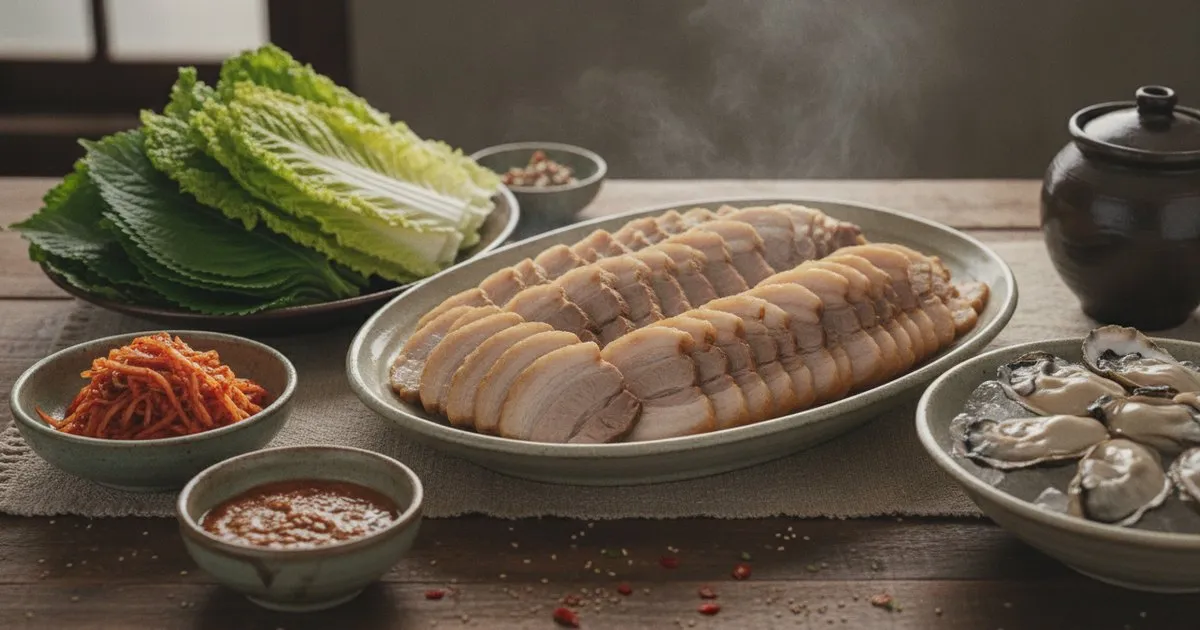
Bossam (보쌈) is Korean comfort food at its most generous — a steaming slab of pork belly poached until it turns silky and tender, sliced thin, and piled onto a platter surrounded by an arsenal of wraps, salads, and pungent condiments. Everyone gathers around, builds their own bite, and eats with their hands. It’s celebratory, social, and deeply satisfying in a way that few dishes manage. And while it looks like restaurant food, bossam is genuinely achievable at home — there’s no frying, no grilling, and no special equipment beyond a big pot.
This recipe walks through classic bossam from start to finish, and then covers gul-bossam (굴보쌈) — the legendary winter version with fresh raw oysters that, for many Koreans, is the single best way to eat this dish.
What Is Bossam (보쌈)?
The name bossam comes from the Korean verb ssada (싸다), “to wrap.” That’s the whole concept: thin slices of boiled pork belly that you wrap, bite by bite, in a leaf along with a smear of fermented bean dip and a tangle of spicy radish. Unlike the grilled, charred intensity of Korean BBQ at home, bossam is gentle and clean — the pork is poached, not seared, so the flavor comes from the aromatics in the cooking liquid and from the condiments you wrap it with rather than from caramelization.
Bossam belongs to the broader family of Korean ssam (쌈, “wrapped”) eating, where the table becomes a build-your-own station. It’s a fixture at celebrations, a famous partner to cheap rice wine and soju, and — in one beloved tradition — the dish made on kimjang day, the communal late-autumn event when families make a winter’s worth of kimchi all at once. Freshly salted cabbage and just-made kimchi alongside hot boiled pork is one of the great seasonal pleasures of Korean food.
A Dish Born from Kimchi-Making
Bossam’s deepest cultural roots run straight through kimchi. On kimjang day, households would salt and stuff dozens of heads of napa cabbage together, an exhausting all-day affair. The reward at the end was bossam: pork boiled in a big pot, sliced, and wrapped in the very cabbage leaves and fresh seasoned filling that were being packed into kimchi pots. The salt-wilted cabbage, the crisp spicy radish, the briny seafood seasonings in the kimchi filling — all of it found its way onto a slice of warm pork.
That origin explains why authentic bossam is never just pork. The supporting cast — musaengchae (spicy radish salad), salted shrimp (saeujeot), fresh garlic, green chili, and especially oysters in winter — isn’t optional garnish. It’s the dish. If you’ve ever made your own kimchi from scratch, you already have a head start on the flavors that make bossam sing.
The Ingredients, Explained
The Pork
Bossam lives and dies by skin-on pork belly (삼겹살, samgyeopsal cut, but here in one whole slab rather than strips). The layers of fat and lean, plus the gelatinous skin, are what give poached bossam its luxurious, melt-in-the-mouth quality. Ask your butcher for a single rectangular slab about 1 kg with the skin on. A boneless pork shoulder (Boston butt) also works beautifully and is a little more forgiving if you overshoot the cooking time, though belly is the traditional and most prized cut.
Sourcing: Skin-on pork belly slabs are standard at H Mart, 99 Ranch, and any Korean or Chinese grocery. If your supermarket only sells skinless belly, that’s fine — you’ll lose a little silkiness but the dish still works.
The Poaching Liquid
This is where the magic happens, because poached pork can smell aggressively porky if you just drop it in plain water. The Korean solution is a fragrant, deodorizing broth built on doenjang (된장), fermented soybean paste, which masks odor and seasons the meat from the outside in. Aromatics — onion, a whole halved head of garlic, plenty of ginger, scallion, peppercorns, and bay — do the rest.
The two tricks worth knowing: a quick 3-minute blanch before the real simmer removes the first wave of scum and smell, and a spoonful of instant coffee or doenjang-darkened broth gives the finished pork an appealing deep brown color while further neutralizing odor. Don’t worry — the pork doesn’t taste like coffee.
If you’re stocking a Korean pantry, doenjang is one of the essentials; our gochujang guide covers its spicy cousin, and the two pastes together form the backbone of the ssamjang dip below. For more on the soy-based seasonings in this dish, see our guide to Korean soy sauce types.
Musaengchae: The Spicy Radish Salad
Musaengchae (무생채) is julienned Korean radish dressed in gochugaru, fish sauce, vinegar, sugar, and garlic. Crunchy, tart, and spicy, it cuts straight through the richness of the pork. Always toss the radish with the chili flakes first so the color sets evenly before the wet seasonings go in. Korean radish (mu) is fat, pale green-and-white, and crisp; daikon is a perfectly good substitute.
Ssamjang: The Essential Dip
No ssam is complete without ssamjang (쌈장), the thick wrapping sauce made by blending doenjang and gochujang with sesame oil, garlic, and a touch of honey. A small dab on each wrap is all you need — it’s intense.
The Star Variation: Gul-Bossam (굴보쌈)
Here is the version Koreans dream about all year. Gul (굴) means oyster, and gul-bossam adds fresh, raw, ice-cold oysters to the bossam table. The combination is sublime: hot, fatty, mild pork against cool, briny, mineral-sweet oyster, all bundled together in a leaf with spicy radish. It’s a textbook example of Korean flavor balance — temperature, richness, and brininess all playing off each other in a single bite.
Gul-bossam is fiercely seasonal. Korean oysters are at their plump, sweet best in the cold months (roughly November through February), which is exactly when kimjang happens — so gul-bossam is winter’s dish, full stop. A few essentials for doing it right:
- Buy the freshest oysters you can find, ideally shucked fresh from a fishmonger. They should smell of clean seawater, never fishy.
- Rinse gently in lightly salted water (not fresh water, which makes them swell and turn bland) and drain well.
- Serve them raw and cold in a bowl beside the warm pork. Never cook them — the entire appeal is the contrast.
- Many Korean households serve gul-bossam with a side of fresh, unfermented kimchi filling (geotjeori) so the wrap gets the full kimjang-day experience.
If you can get good oysters, do not skip this. Gul-bossam is one of the genuine high points of the Korean winter table.
Technique: The Two Things That Matter Most
Don’t Boil — Simmer
After the initial blanch, the pork should cook at a gentle simmer, never a rolling boil. A hard boil toughens the lean layers and can make the belly stringy. You want lazy bubbles, a lid on, and patience. Sixty to seventy minutes for a 1 kg slab is the sweet spot; test with a skewer through the thickest part.
Slice Warm, Serve Warm
Bossam is meant to be eaten warm, when the fat is soft and silky. Let the cooked slab rest in its warm broth for ten minutes so it stays juicy, then slice it across the grain just before serving. Pork belly that’s been refrigerated and served cold turns firm and waxy — the opposite of what you want. If you must cook ahead, keep the slab whole in its broth and gently rewarm before slicing.
What to Serve with Bossam
Bossam is a full spread by nature. Round out the table with:
- Napa cabbage or red leaf lettuce and perilla leaves (깻잎) for wrapping
- Saeujeot (새우젓, salted fermented shrimp) — the traditional salty dip for the pork, even more classic than ssamjang for many
- Fresh garlic slices and green chili for the brave
- Kimchi, of course — ideally fresh geotjeori
- Steamed white rice and a bowl of doenjang jjigae to make it a complete meal
A round of soju or cold beer is the traditional pairing, but bossam is just as happy as a family dinner centerpiece.
Tips for Getting It Right Every Time
- Always blanch first. Three minutes of hard boiling followed by a rinse is the single biggest upgrade to clean-tasting bossam.
- Use enough aromatics. A whole head of garlic and a generous hand of ginger aren’t excessive — they’re what keep the pork smelling fragrant rather than porky.
- Salt the radish salad just before serving. Musaengchae is at its crunchy best fresh; if it sits too long it weeps and goes limp.
- Mind the oyster season. Save gul-bossam for cold months when oysters are plump and sweet. Out of season, the standard bossam is still excellent.
- Slice across the grain. Thin, cross-grain slices are tender and easy to wrap; thick or with-the-grain slices chew tough.
Common Mistakes to Avoid
Boiling at a hard, rolling boil instead of a gentle simmer. This is the single most common reason bossam pork comes out stringy and dry rather than silky. A vigorous boil tightens the muscle fibers and squeezes fat out before it has time to render slowly into the meat. Once you’ve done the initial blanch and returned the pork to the pot, reduce to a steady, lazy simmer — the surface should barely bubble. The whole slab needs 1 to 1.5 hours of patient, low heat to become genuinely tender.
Skipping the blanching step. Dropping cold pork belly straight into your aromatics and simmering the whole time produces a noticeably funky-smelling pot. That 3-minute hard blanch in plain water isn’t optional — it purges the first wave of blood, fat solids, and odor compounds so your doenjang-and-ginger broth can do its job on a clean slate. Dump the blanching water completely, rinse the pot, and start fresh.
Slicing the pork while it’s piping hot. Hot pork belly has almost no structural integrity — it tears, shreds, and crumbles rather than cutting into clean, wrap-able slices. Let the slab rest out of the broth for at least 5–10 minutes before you cut. If you’re serving in stages, the pork holds well sitting in a covered dish; re-warm individual slices in a splash of broth if needed.
Cutting slices too thick. Bossam slices need to be thin enough to fold without cracking — roughly 5–6 mm (about ¼ inch). Thicker cuts make the wrap bulky, hard to close, and the pork-to-condiment ratio tips too far toward meat. Use a sharp knife and cut across the grain. If your slab has a skin layer, a thick slice means you’re biting through a rubbery skin-to-fat-to-lean column; thin slices distribute that texture evenly.
Under-seasoning or rushing the musaengchae. Tossing the radish with all the wet ingredients at once means the gochugaru color stays patchy and the texture softens unevenly. The fix is the toss-first-rest method: coat the julienned radish in gochugaru and let it sit for 2–3 minutes so the chili flakes bloom and stain evenly, then add fish sauce, vinegar, garlic, and sugar. Taste before serving — musaengchae should be noticeably tart and spicy, because it exists specifically to cut the pork’s richness.
Using warm or pre-shucked oysters for gul-bossam. The whole point of oysters in this dish is the temperature and textural contrast against hot pork. Pre-shucked oysters that have been sitting out lose their cool brine and turn flabby. For gul-bossam, keep oysters refrigerated until the moment you plate, and if using pre-shucked, rinse them once in lightly salted cold water and drain immediately before serving.
Frequently Asked Questions
Can I make bossam ahead of time?
Partially. The musaengchae and ssamjang can be made several hours ahead and refrigerated. The pork, however, is best sliced and served warm. If you need to cook it in advance, leave the slab whole and submerged in its broth, refrigerate, then gently reheat the whole piece in the broth before slicing — this keeps the fat silky. Avoid slicing then refrigerating, which firms the belly into an unpleasant waxy texture.
What’s the difference between bossam and suyuk?
They’re closely related. Suyuk (수육) simply means boiled sliced meat (pork or beef). Bossam specifically refers to suyuk-style boiled pork belly served as a wrapped (ssam) dish with cabbage, radish salad, and condiments. Essentially, all bossam uses suyuk, but bossam is the full wrapped presentation rather than just the sliced meat.
Do I have to use pork belly?
No. Pork belly is traditional and the most luxurious choice, but boneless pork shoulder (Boston butt) makes excellent bossam and is more forgiving — it stays moist even if slightly overcooked. Pick a piece with some fat marbling; a totally lean cut will come out dry.
Are the oysters in gul-bossam safe to eat raw?
Only use oysters sold specifically as fresh, raw-grade (shucked or live) from a reputable fishmonger, and keep them ice-cold until serving. Rinse them gently in lightly salted water just before eating. People who are pregnant, immunocompromised, or otherwise advised to avoid raw shellfish should skip the raw oysters and enjoy standard bossam instead — it’s delicious on its own.
What can I substitute for doenjang in the poaching liquid?
Doenjang is the traditional deodorizer and adds real depth, but if you can’t find it, a couple of tablespoons of miso paste plus an extra slab of ginger will get you most of the way there. The coffee trick for color and odor still applies. Doenjang is widely available at Korean and Asian groceries and keeps for ages in the fridge, so it’s worth tracking down.
Where can I buy Korean radish and perilla leaves?
In the US: H Mart, 99 Ranch, Zion Market, and most Korean or Asian grocers stock both Korean radish (mu) and fresh perilla leaves (kkaennip). Daikon radish is a fine substitute for mu, and while there’s no perfect swap for perilla, red leaf lettuce works for wrapping. In the UK: Korean grocers in New Malden or online via Seoul Plaza. In Australia: Korean stores in Sydney’s Strathfield or Melbourne’s Box Hill carry both reliably.