
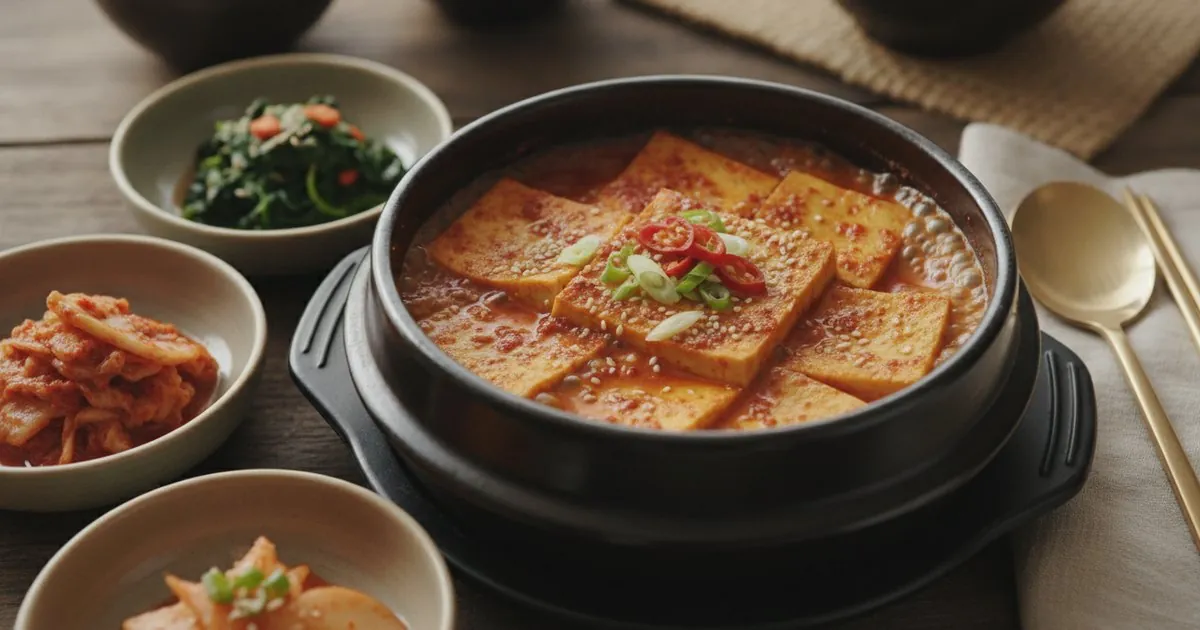
Dubu jorim might not be the first Korean dish you think of when planning a Korean meal — that spotlight usually goes to tteokbokki or japchae — but ask anyone who grew up eating Korean food and they’ll confirm: this braised tofu is almost always on the table. It’s the banchan that disappears quietly, piece by piece, before anyone notices they’ve been reaching for it continuously.
What makes dubu jorim so compelling is the interplay of textures and the sheer intensity of its sauce. Each tofu slice is briefly pan-fried until the outside develops a golden, lightly chewy crust — and then bathed in a deeply savory, chili-spiked sauce that reduces into a glossy, sticky glaze coating every surface. The result is savory, faintly spicy, faintly sweet, and unmistakably Korean.
Even better: it takes about 25 minutes from start to finish, uses a short list of ingredients that are increasingly easy to source in the West, and adapts naturally to a vegan diet with one small swap.
What Is Dubu Jorim?
The name breaks down simply in Korean. 두부 (dubu) means tofu — it’s been a staple of Korean cooking for centuries, valued for its protein content, affordability, and the way it absorbs surrounding flavors. 조림 (jorim) refers to a specific Korean cooking technique in which food is simmered in a seasoned sauce over steady heat until the liquid reduces substantially. The goal of jorim is not a brothlike braise but a concentrated, clingy coating — less soup, more glaze.
The jorim technique appears throughout Korean cuisine in dishes ranging from ganjang gejang (soy-marinated crab) to godeungeo jorim (braised mackerel) to gamja jorim (sweet-savory braised potatoes). Dubu jorim is among the most accessible versions because tofu is quick-cooking, absorbs the sauce readily, and requires no lengthy marinating or prep.
In Korean home cooking, dubu jorim occupies a permanent spot in the everyday banchan (반찬) spread — the collection of small side dishes that surrounds a bowl of rice and, typically, a soup or stew. It’s workhorse food: inexpensive, quick to make, and good for three to four days in the fridge. If you’re new to the concept of banchan and want to understand how these side dishes work together to build a Korean meal, our complete banchan guide is the place to start.
Ingredients and Where to Find Them
The ingredient list is short, but each element earns its place. Here’s what you need and how to source it in a Western kitchen.
The Tofu
Firm tofu is universal across all versions of this recipe — specifically the Korean variety labeled 부침용 (buchim-yong), which translates roughly to “pan-frying tofu.” Korean firm tofu has a slightly softer, more custard-like interior than Western extra-firm, but Western extra-firm tofu works excellently and is actually preferred by some cooks for its ability to hold shape during pan-frying.
- At H Mart or a Korean grocery store: Look for Pulmuone firm tofu in the refrigerated section. It’s usually sold in water-packed blocks.
- At Whole Foods or mainstream supermarkets: Nasoya, House Foods, or Trader Joe’s extra-firm tofu all work well. Press it for a full 15 minutes to compensate for the higher water content.
- Do not use: Silken tofu (falls apart in the pan), soft tofu (won’t crisp), or pre-marinated flavored tofu (the flavors compete).
The Sauce
Mix these together in a bowl before you start cooking:
- Soy sauce (3 tbsp / 45 ml): Standard Korean or Japanese soy sauce works fine. For a lower-sodium version, use 2 tablespoons low-sodium soy sauce and compensate with a pinch more sugar.
- Water or broth (¼ cup / 60 ml): Plain water is the simplest option. For a deeper, more complex sauce, use anchovy-dashima broth (simmer a handful of dried anchovies and a 3-inch piece of dried kelp in water for 10 minutes, then strain). For a fully vegan dish, use water or kombu broth.
- Gochugaru (1 tbsp / 6–8 g): Korean red chili flakes are not interchangeable with Italian crushed red pepper or cayenne — they have a distinctive fruity sweetness, moderate heat, and the deep brick-red color that gives dubu jorim its visual identity. Find gochugaru at H Mart, most Asian grocery stores, and increasingly at Whole Foods. Our dedicated gochugaru guide covers everything about this essential Korean pantry staple.
- Sugar (1 tsp / 4 g): Balances the salt and chili. If you have mulyeot (물엿, Korean corn syrup) or oligodang, substitute ½–1 teaspoon for an even glossier final glaze.
- Toasted sesame oil (1 tbsp / 15 ml): A finishing oil only — do not use it for cooking. Its delicate flavor is added off heat at the very end.
- Garlic (2 cloves, finely minced, approximately 2 tsp): Fresh garlic is noticeably better here than pre-minced jarred garlic. The raw garlic flavor mellows and sweetens during the braise.
- Green onions / scallions (2 stalks, thinly sliced): Split the quantity — half goes into the sauce for flavor, half is reserved as a fresh garnish.
- Toasted sesame seeds (1 tsp / 3 g): Scattered on at the end for a subtle nutty crunch.
Optional Additions
Half a medium onion, thinly sliced, is worth including — it softens into the sauce and adds sweetness. A small green or red chili pepper, sliced on the bias, brings fresh chili heat and a pop of color. Both are common in most non-minimal versions of the recipe.
The Pan-Fry Step: Why It Changes Everything
Many first-timers skip pan-frying and add tofu directly to the sauce, which results in soft, waterlogged pieces with no structural integrity and a diluted sauce. The pan-fry step solves both problems.
A quick fry in hot oil creates a golden crust on each slice. That crust does two things: it prevents the tofu from absorbing too much sauce too quickly (which leads to mushiness), and it gives each piece a faintly chewy exterior that holds up to the braising liquid and contrasts beautifully with the still-silky interior.
The sensory cues matter here. When you add tofu to the oil, the sound should be immediate and fairly assertive — a steady, crackling sizzle, not a tentative hiss. If the pan sounds quiet, it’s not hot enough, and the tofu will steam instead of brown. The correct color after frying is deep, even gold — not pale yellow. If your tofu is sticking to the pan, you moved it too early; let the crust form before you try to flip.
Step-by-Step: How to Make Dubu Jorim
Follow these steps in order, paying attention to the visual and audio cues at each stage.
Press the tofu (10–15 minutes). Wrap the drained block in a clean kitchen towel or several layers of paper towels, place on a plate, and weight down with something heavy and flat. A cast-iron skillet or a pot filled with water both work. When you unwrap, the towel should be noticeably damp and the tofu should feel firmer and drier to the touch.
Cut into slices. Aim for rectangles roughly 1 cm (⅜ inch) thick — thin enough to cook through quickly, thick enough to hold their shape through frying and braising. Uniformity is the key: uneven slices mean some are perfectly done while others are still raw-tasting in the center.
Mix the sauce. Whisk soy sauce, water or broth, gochugaru, sugar, garlic, and half the scallions in a small bowl until the sugar dissolves. It should be a vivid, deep red.
Pan-fry. Preheat a wide skillet over medium-high heat, add the oil, and wait for it to shimmer before adding the tofu. Lay slices in a single layer — do not crowd — and do not touch them for the first 3 to 4 minutes. Lift one edge with a thin spatula to check: deep gold means ready to flip. Cook the second side for 2–3 minutes. Transfer to a plate.
Sauté aromatics (if using). Onion and chili pepper go into the same pan over medium heat for 1–2 minutes until the onion softens.
Braise and glaze. Return the tofu to the pan, pour the sauce over everything, and bring to an active simmer. Spoon sauce over the tops of the tofu pieces continuously. Over 4–6 minutes of medium heat, you’ll watch the sauce transform: it thins as it heats, then begins to visibly thicken and darken. When it shifts from pooling around the tofu to clinging to it — and the color of each piece deepens to a rich reddish-brown — the dish is ready.
Finish off heat. Drizzle sesame oil over everything, scatter remaining scallions and sesame seeds on top, and taste. The flavor should be bold and layered: salty up front, heat from the gochugaru building in the middle, sweetness rounding it out, and the nutty sesame oil lingering at the end. If it tastes flat, add a pinch of salt or a drop more soy sauce.
Variations Worth Trying
Spicy version (매운 두부조림): Increase gochugaru to 2 tablespoons and add 1 teaspoon of gochujang to the sauce. The gochujang contributes fermented, slightly smoky depth alongside the raw chili heat, and it thickens the sauce more aggressively. Read our gochujang guide for a deep dive into this ingredient.
Mild / non-spicy version: Reduce gochugaru to ½ teaspoon or omit entirely. The sauce becomes soy-forward and savory without any significant heat — an excellent option for families with young children or guests sensitive to spice.
Fully vegan: Use water or kombu broth in place of anchovy stock. The rest of the dish is already plant-based. The flavor is slightly cleaner and less complex than the anchovy version but still very satisfying.
Stew-style: Increase water to 1 cup (240 ml) and add cubed zucchini or sliced mushrooms to the pan alongside the tofu. Cook until the vegetables are tender and the sauce has reduced to a light, spooning consistency. Serve over rice and ladle the braising liquid on top.
How to Serve Dubu Jorim
Dubu jorim is fundamentally a banchan — a side dish. A complete simple Korean meal might be: a bowl of short-grain white rice, a bowl of doenjang jjigae (soybean paste stew) or clear soup, and two or three banchan. Dubu jorim fits that role perfectly. It also pairs well alongside gimbap for a portable lunch.
Leftovers crumbled over a bowl of bibimbap, tucked into a rice wrap, or stirred into instant ramen at the last minute are all excellent uses for day-two dubu jorim — the slightly intensified flavor actually improves with overnight refrigeration.
Common Mistakes to Avoid
1. Skipping or shortcutting the pressing step — the waterlogged result. This is the single most common failure point. Tofu that goes into the pan without adequate pressing releases liquid into the hot oil, causing aggressive spattering, preventing any crust from forming, and later diluting the sauce to a thin, underseasoned broth. You’ll know you’ve underprocessed when the tofu hisses and sputters dramatically (beyond normal sizzling) the moment it hits the oil. Press for a minimum of 10 minutes; 15 is better. The towels should be meaningfully damp when you unwrap.
2. Frying on heat that’s too low — pale, sticky, torn tofu. A common overcorrection after the spattering issue above. Low heat plus any residual moisture means the tofu steams instead of sears, and it will stick stubbornly to the pan and tear when you try to flip it. The pan must be properly preheated over medium-high heat, the oil must shimmer before the tofu goes in, and you must resist the urge to move the slices for at least 3 minutes. The crust needs time to set and release naturally from the surface.
3. Overcrowding the pan — steamed instead of seared. When tofu slices touch each other, the heat trapped between them converts to steam. The edges will never brown, and the pieces may bond together. If your pan can’t fit all the slices in a single layer with small gaps between each, work in two batches. A 12-inch (30 cm) skillet handles a standard 400–500 g block comfortably in one go.
4. Walking away during the sauce reduction — burnt, bitter coating. The sauce reduces fast, especially in a wide pan over medium heat. Two to three minutes of inattention during the glazing stage can turn a perfect sticky coating into a scorched, intensely salty crust that tastes bitter and acrid. During the last two minutes of cooking, stay at the stove, keep spooning sauce over the tofu, and have a small cup of water on hand. The moment the sauce looks like it’s pulling away from the pan edges and darkening too quickly, add a tablespoon of water and lower the heat slightly.
5. Adding sesame oil too early — lost fragrance, bitter edge. Toasted sesame oil is a finishing oil, not a cooking oil. Its aromatic compounds are volatile and break down quickly over high heat, shifting from pleasantly nutty to faintly bitter. Add it only after the pan comes off the heat. You’ll immediately notice the fragrance bloom — that’s exactly what you want as the final layer of the dish.
6. Substituting gochugaru with the wrong chili product — wrong heat, wrong color, wrong flavor. Regular Italian crushed red pepper flakes are sharper, hotter per volume, and lack gochugaru’s characteristic fruity sweetness. Cayenne is much hotter still and will overwhelm the dish. The right gochugaru turns the sauce a deep, warm brick-red; incorrect substitutes produce an orange or dull-red sauce that tastes harsh rather than complex. If you don’t have gochugaru and can’t source it quickly, mild smoked paprika (2 tablespoons for color) plus a tiny pinch of cayenne (for heat) is a workable emergency substitute — but seek out the real thing for your next grocery run.
Frequently Asked Questions
Can I make dubu jorim ahead of time? Yes — and it actually benefits from resting. The sauce continues to penetrate the tofu as it cools, and the flavors meld overnight. Make it up to 3 days ahead and refrigerate in an airtight container. Reheat gently in a covered pan with 1–2 tablespoons of water to rehydrate the sauce; it should return to its glossy consistency within a minute or two over low heat.
Can I freeze dubu jorim? Freezing is not recommended. Tofu changes texture significantly when frozen — the water inside forms ice crystals that rupture the cell structure, leaving it spongy and porous after thawing. The sauce will also separate. This is a dish that’s quick enough to make fresh, and refrigerator leftovers hold up well for up to 4 days.
Is dubu jorim gluten-free? Not as written, because standard soy sauce contains wheat. Substitute tamari (check the label for certified gluten-free) or coconut aminos in equal quantities for a gluten-free version. All other ingredients in the base recipe are naturally gluten-free.
What’s the difference between Korean firm tofu (부침용) and Western extra-firm? Korean 부침용 tofu has a slightly creamier, softer interior than Western extra-firm — it’s less pressed during production. Both pan-fry and braise well; the textural difference after cooking is subtle. Western extra-firm is drier straight from the package, so it may need slightly less pressing time. If you’re shopping at H Mart, grab the Korean variety. If you’re at a mainstream grocery store, Western extra-firm is the right choice.
How spicy is dubu jorim at 1 tablespoon of gochugaru? At that quantity it registers as mild-to-moderate — noticeably warm on the palate but not fiery. Gochugaru is inherently milder per volume than most other chili preparations, which is part of why it’s used in such seemingly generous quantities in Korean cooking. Adults who are sensitive to heat but not chili-averse usually find 1 tablespoon approachable. For children or very low heat tolerance, reduce to ½ teaspoon. For serious heat seekers, go up to 2 tablespoons and add 1 teaspoon of gochujang alongside.