
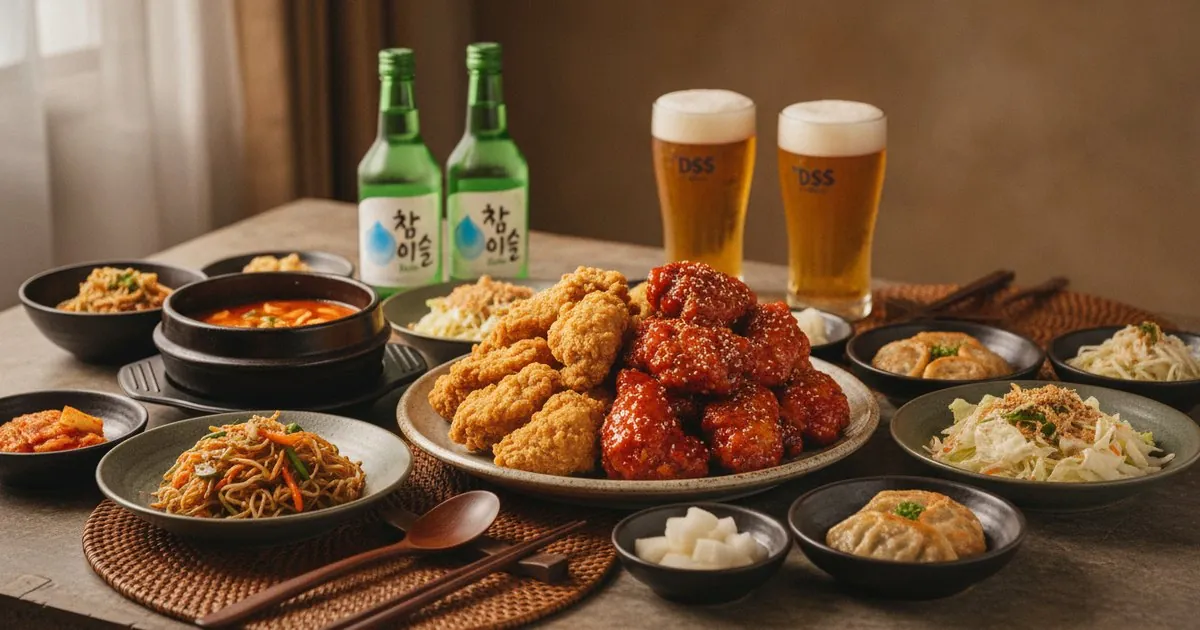
If you’ve ever sat down at a Korean restaurant, ordered a round of soju, and watched small plates appear on the table almost immediately — sometimes without even being asked for — that wasn’t an accident or a happy accident of hospitality. It’s a deeply embedded cultural expectation. In Korean drinking culture, alcohol and food are inseparable companions, and that food has a name: anju (안주).
Understanding anju isn’t just about knowing what to snack on while drinking. It’s about grasping a philosophy that shapes how Koreans socialize, celebrate, grieve, and unwind. This guide covers everything: the etymology, the history, the essential dishes, the drink pairings, and how to build an authentic anju spread in your own kitchen — no Korean grandma required, and no plane ticket to Seoul necessary.
What Is Anju? The Word, the Concept, the Culture
The word anju (안주) is written in Hanja as 按酒 and at its most literal it means “food consumed with alcohol.” But that translation barely scratches the surface. The Korea Herald offers a more precise cultural framing: “When a dish is called ‘anju,’ it is the liquor that is the protagonist — not the other way around.”
This distinction matters enormously. Korean has a separate word — banju (반주) — for situations where you drink a modest amount of alcohol alongside a proper meal. With banju, the food leads and the drink follows. With anju, the dynamic flips completely: the alcohol is the reason for gathering, and the food exists to support the experience of drinking. Same plates on the table, entirely different cultural framing.
There’s also a dedicated concept called the juansang (주안상) — a traditional Korean table setting designed specifically to present alcohol (sool, 술) alongside its anju. There’s no genuine Western equivalent for a table arrangement built entirely around the drinking occasion.
Most tellingly: in Korean social culture, ordering alcohol without anju is considered awkward, even slightly rude. One Korea Herald interviewee put it plainly: “You need soup with soju. You can’t have soju without something with soup.” Anju isn’t optional. It’s part of the social contract.
A Brief History: From Joseon Taverns to Seoul Street Stalls
Anju’s roots stretch back centuries. During the Joseon period (1392–1897), the primary venue for drinking was the jumak (주막) — a traditional inn-tavern serving merchants and travelers making long journeys on Korea’s trade roads. The standard offering was simple: rice, hot soup, and makgeolli (막걸리), the milky, slightly fizzy rice wine that remains one of Korea’s oldest drinks.
The earliest documented anju-adjacent dish appears in the Nogeoldae, a Chinese-language learning manual from the late Goryeo dynasty (918–1392). It describes seongjutang (醒酒湯) — literally “soup to get sober” — made with thinly sliced meat, noodles, scallions, and cheoncho powder simmered in broth. This is essentially the ancestor of haejanguk (해장국), the hangover soup Koreans still reach for the morning after a long night. The painter Shin Yun-bok captured this tradition in his 1758 work Jumakdo (“Painting of the Tavern”), which depicts haejanguk being served at a roadside inn. The restaurant Cheongjinok (청진옥), near Gwanghwamun in Seoul, traces its history to 1937 — growing from the street stalls that fed wood-market workers who drank hard and needed to recover harder.
Korean drinking culture expanded considerably in the 19th century when beer and Western-style foods arrived via Japan, broadening what could qualify as anju. But the most culturally defining development came after the Korean War in the 1950s with the rise of the pojangmacha (포장마차) — the iconic canvas-covered street stall.
Pojangmacha emerged to serve refugees and displaced workers, offering cheap, hot food and a measure of warmth during extraordinarily difficult times. Over the following decades they evolved: wood frames gave way to metal; carbide lamps were replaced by LEDs; the menus grew from simple soups into sprawling spreads of grilled skewers, stir-fried rice cakes, braised trotters, and fried pancakes. By 2012, Seoul had approximately 3,100 pojangmacha establishments, with Jongno district remaining the city’s most celebrated drinking-food corridor.
The Essential Anju Dishes You Need to Know
Anju spans an enormous range — from a bag of chips ripped open at a convenience store to a full tableside feast of sizzling pork belly. Here are the dishes that define the tradition.
Grilled Meats: The Heavyweight Champions
Samgyeopsal (삼겹살, grilled pork belly) is the undisputed king of soju anju. The combination of fatty, crisped pork with the clean burn of soju is so fundamental to Korean drinking culture that the two are practically synonymous. The goal is pork belly cooked on a tabletop grill until the fat renders, the exterior crisps to a deep golden brown, and the interior stays moist and juicy — you should hear a vigorous, steady sizzle and see the fat turning nearly translucent before you flip. Wrap in perilla or lettuce with a smear of ssamjang, and chase with soju. Our Korean BBQ at home guide covers the full tabletop setup, from grill selection to the right cuts and dipping sauces.
Jokbal (족발, braised pig’s trotters) is the pojangmacha legend — pork trotters slowly braised in a soy-based broth with aromatics until the collagen softens into a wobbly, almost sticky richness. The skin turns a deep mahogany and the meat pulls cleanly from the bone when properly cooked. It pairs beautifully with soju or beer, and the high collagen content is often cited (only half-jokingly) as a beauty food. You’ll even find single-serve jokbal pouches at Korean convenience stores.
The Pancake Family: Rain, Makgeolli, and Pure Comfort
Few anju pairings are as culturally embedded as pajeon (파전, scallion pancakes) or haemul pajeon (해물파전, seafood-scallion pancakes) with makgeolli. The popular story goes that the sound of rain on a rooftop mimics the sizzle of pajeon hitting a hot pan — and so rainy days call for makgeolli and pancakes. Whether or not you buy the acoustic theory, the pairing is genuinely excellent: the tangy, slightly funky fizz of makgeolli cuts through the oily richness of a well-fried pancake.
Bindaetteok (빈대떡) — mung bean pancakes loaded with pork, bean sprouts, and kimchi — is considered one of the oldest forms of Korean anju. It’s also naturally gluten-free, making it one of the most accessible anju dishes for Western home cooks navigating dietary restrictions.
Kimchi jeon (김치전, kimchi pancake) is the version to make when your kimchi is deeply fermented and almost too sour to eat straight. That funk transforms into complex, savory depth when it hits a hot oiled pan. The finished pancake should be genuinely crisp — not greasy — with a texture that crackles audibly when you cut through it.
Dubu-Kimchi: The Classic Tavern Plate
Dubu-kimchi (두부김치) is a quintessential Korean tavern dish: steamed tofu served alongside stir-fried kimchi and pork belly. The contrast is the whole point — cool, silken tofu against hot, fiery, caramelized kimchi. The tofu should hold its shape when sliced but yield gently under pressure; the kimchi should cook down until its juices concentrate and the edges just start to char. It’s one of the most approachable anju dishes for home cooks and comes together in under 20 minutes.
Bossam: The Party Centerpiece
Bossam (보쌈) — pork belly boiled in a spiced broth, then sliced and wrapped in napa cabbage leaves with fermented radish, raw garlic, and fermented shrimp paste — is substantial enough to anchor a full drinking spread. It pairs beautifully with both makgeolli and soju, and the mild, clean flavor of boiled pork plays brilliantly against aggressively fermented accompaniments. Our dedicated bossam guide goes deep on the boiling broth, the radish salad, and the proper wrap ratio.
Chimaek: Chicken + Beer, Korea’s Modern Classic
No anju guide is complete without chimaek (치맥) — the beloved portmanteau of chikin (chicken) and maekju (beer). Korean fried chicken, with its shatteringly crisp double-fried coating and either sweet-spicy glazes or punchy sauces, became a cultural phenomenon precisely because it is perfect drinking food: easy to grab with one hand, boldly flavored, and structurally designed to stay crispy across a long session at the table. Our guide to Korean fried chicken breaks down the double-frying technique that makes the crust so distinctively light and crunchy.
Matching Drinks to Dishes: A Quick Pairing Guide
| Drink | Best Anju Pairing |
|---|---|
| Soju (소주) | Samgyeopsal, jokbal, dubu-kimchi, any grilled meat |
| Makgeolli (막걸리) | Pajeon, bindaetteok, bossam, buchujeon (chive pancakes) |
| Beer / Maekju (맥주) | Korean fried chicken (chimaek), fried snacks, jokbal |
| Somaek (소맥) | Almost anything — the soju-and-beer bomb is the all-rounder |
Building an Anju Spread at Home
The spirit of a proper anju table is abundance without formality. Aim for variety: something fried, something fermented, something grilled or braised. A manageable home spread might include:
- Kimchi (store-bought or homemade — our kimchi-making guide has you covered) as a constant background presence
- Dubu-kimchi as the quick, no-fuss anchor
- Pajeon or kimchi jeon — fast to fry and universally loved
- Samgyeopsal if you have a tabletop grill, or bossam if you don’t
- Dried squid (ojingeo, 오징어), peanuts, or crackers for effortless snacking between plates
Where to Find Ingredients in a Western Kitchen
Most anju ingredients are either widely available or have straightforward substitutes:
- Korean pork belly: H Mart and 99 Ranch carry fresh samgyeopsal sliced to the right 3–4mm (⅛ inch) thickness. Most Whole Foods and specialty butchers stock skin-on pork belly — budget about 400–500g (14–18 oz) per two people for a spread.
- Makgeolli: Look for refrigerated bottles at H Mart or Korean liquor stores; Kooksoondang and Ildong Brewery are reliable brands. Consume within a week of opening — it’s actively fermenting and gets increasingly sour.
- Gochujang and doenjang (for ssamjang): Available at most Asian grocery stores. Our gochujang guide explains how to shop for, store, and cook with Korean fermented pastes.
- Perilla leaves (kkaennip, 깻잎): H Mart carries these reliably. In a pinch, large shiso leaves from Japanese markets are nearly identical in flavor and structure.
- Mung beans for bindaetteok: Korean grocery stores carry hulled split mung beans (nokdu, 녹두). Soak 200g (1 cup) overnight, drain, and blend with just enough water to make a thick, pourable batter.
Common Mistakes to Avoid
1. Making Pajeon Batter Too Thick
The most common pajeon failure. A thick batter traps steam inside, producing a gummy, doughy interior rather than a crisp pancake. The batter should be slightly thinner than American pancake batter — it should pour easily and coat the back of a spoon in a thin, even film. On a well-oiled cast iron skillet set over high heat, a correctly thin pajeon will sizzle loudly from edge to center within 30 seconds of hitting the surface. Silence means your pan isn’t hot enough, your batter is too thick, or both.
2. Using Fresh Kimchi for Kimchi Jeon
Kimchi jeon made with fresh or under-fermented kimchi tastes flat, mildly sour, and raw. This dish depends on deeply fermented kimchi — ideally kimchi that has been fermenting in the fridge for at least three to four weeks and smells aggressively sour, almost funky. Those fermentation acids caramelize during frying and become the backbone of the flavor. If your kimchi is on the younger side, add 1–2 teaspoons (5–10 ml) of rice vinegar to the batter to approximate that sourness.
3. Undercooking the Fat on Samgyeopsal
If pork belly slices are cut too thick (over 5mm / ¼ inch) or cooked on too low a heat, the fat won’t render properly — you’ll end up with chewy, jiggly strips rather than caramelized, crisped pork. Slices should be 3–4mm (⅛ inch) thick. The grill should be visibly shimmering before you lay the meat down; a drop of water should evaporate within one second. Don’t move the pork for the first 90 seconds — you’re building the crust, and moving it early prevents browning. One flip per side is the target.
4. Over-Pressing Tofu for Dubu-Kimchi
Some recipes instruct you to press or salt the tofu before steaming. For dubu-kimchi, this is usually counterproductive — over-pressed medium-firm or silken tofu crumbles when steamed and can’t hold the neat slabs the dish calls for. Instead, drain the tofu from its packaging, pat gently dry with paper towels, and steam directly over high heat for 3–4 minutes. The result should hold clean, presentable slices but yield gently when pressed with a chopstick.
5. Serving Everything at Once
At a pojangmacha or Korean bar, dishes arrive as they’re ready — a staggered progression, not a single synchronized dump. Putting everything out simultaneously means your pajeon goes cold and limp while you’re still working through the jokbal. Stagger the timing: put braised and cold dishes out first, then fry and grill to order. When fried foods do come out, rest them on a wire rack — never stacked on paper towels — so steam escapes from the bottom and the crust stays crisp instead of softening in its own moisture.
6. Skipping the Dipping Sauce
Anju dishes are calibrated to be eaten with specific condiments, not as standalone plates. Pajeon without chogochujang (초고추장 — vinegared gochujang with a touch of sugar and sesame) is technically edible in the same way plain toast is edible: fine, but missing the whole structure of the experience. Jokbal without fermented shrimp paste or ssamjang is similarly incomplete. Make the sauces before you start cooking, not as an afterthought when everything is already on the table and cooling down.
FAQ
What is anju in Korean culture? Anju (안주) is the category of food served alongside alcohol in Korean drinking culture. Unlike Western bar snacks, which are optional extras, anju is considered a non-negotiable component of the drinking occasion. The food is chosen to complement the specific drink being consumed, and ordering alcohol without any food is considered socially awkward by Korean custom.
What is the most popular anju dish? Samgyeopsal (삼겹살 — grilled pork belly) is the most culturally iconic anju, especially for soju. For beer, Korean fried chicken — the famous “chimaek” pairing — rivals it in popularity. Pajeon (scallion pancakes) with makgeolli holds the title for milky rice wine pairing and is especially associated with rainy days.
What’s the difference between anju and regular Korean food? Many of the same dishes appear in both contexts — the difference is framing, not ingredients. Anju is defined by the fact that alcohol is the main event and food plays a supporting role. The same pork belly served as part of a rice-and-side-dish dinner at a family table would not be anju; the same pork belly ordered at a bar while drinking soju very much is.
Can I make anju dishes without specialized Korean ingredients? Many anju dishes are highly accessible. Pajeon uses basic pantry staples — flour, eggs, scallions, water — with a straightforward dipping sauce. Dubu-kimchi requires only tofu and kimchi, both available at most mainstream supermarkets. Samgyeopsal needs only pork belly, which quality butchers carry widely. The more specialized items — gochujang, doenjang, perilla leaves — are worth sourcing from H Mart or an online Korean grocery for the full experience.
What Korean alcohol pairs best with anju? It depends on the dish. Soju pairs best with grilled and fatty meats. Makgeolli is the classic match for fried pancakes and lighter bites. Beer (maekju) goes with Korean fried chicken and fried snacks. The all-purpose solution is somaek (소맥) — soju dropped into beer — which pairs with practically everything on the anju spectrum and is the most-ordered drink at any Korean pojangmacha worth its tarpaulin.