
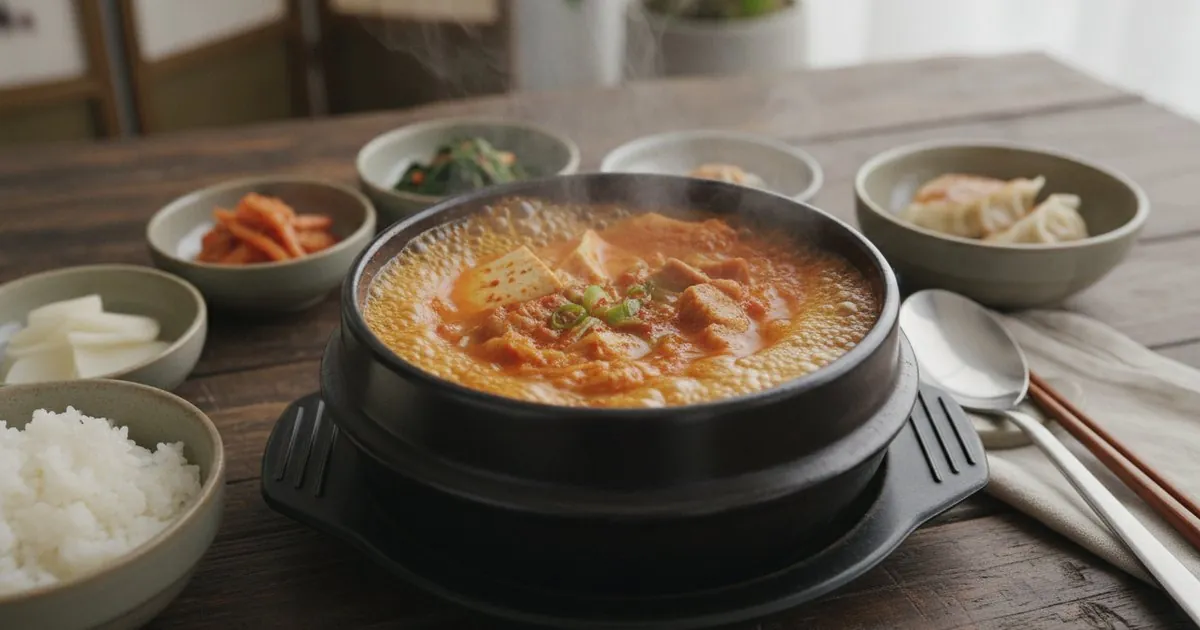
On a cold weeknight in Seoul, the first thing most Koreans reach for is a pot of kimchi jjigae. The deep crimson broth bubbles away on the burner, the pork belly collapses under the lightest chopstick nudge, and the tofu — oh, the tofu — has soaked up every bit of that sour-spicy-savory magic. It is the kind of meal that wraps around you from the inside out.
Kimchi jjigae (김치찌개, pronounced gim-chi jjee-gae) is arguably Korea’s most beloved everyday stew. You’ll find it on every home cook’s weekly rotation, on the menu of every Korean restaurant from Seoul to Los Angeles, and near the top of virtually every “most comforting Korean dishes” list ever written. Unlike some Korean recipes that demand a specialty run and an afternoon of prep, kimchi jjigae is genuinely weeknight-friendly — about 40 minutes start to finish — and once you get the technique right, you will find yourself making it constantly.
This guide draws on techniques and wisdom from multiple trusted Korean home cooks and synthesizes them into a reliable, Western-kitchen-friendly recipe. Whether you’re cooking solo on a Tuesday night or introducing curious friends to Korean food, everything you need is right here.
What Is Kimchi Jjigae?
Kimchi jjigae is a traditional Korean stew (jjigae, 찌개) built around fermented napa cabbage kimchi. It belongs to a broad family of Korean soups and stews that are eaten alongside rice rather than as a first course — they’re central players in the Korean meal (식사, siksa), not a preamble.
Unlike doenjang jjigae (fermented soybean paste stew) or sundubu jjigae — the silky soft tofu stew — kimchi jjigae leads with the distinctive sour-spicy punch of aged kimchi. The stew almost always includes some form of protein (most commonly pork, though tuna, beef, and Spam all have their devoted followings) and a block of tofu that soaks up the flavors like a sponge.
Historically, kimchi jjigae was a brilliantly practical invention: a way to use kimchi that had fermented past the point of being pleasant to eat raw. That over-sour kimchi, awkward on its own, transforms into something extraordinary when cooked low and slow with rendered fat and a splash of broth. Waste not, want not — Korean-style.
The Secret Weapon: Well-Fermented Kimchi
Here is the single most important thing I want you to take away from this entire article: use old, sour kimchi. Not fresh kimchi. Not a jar you opened last week. Kimchi that has been fermenting for at least three to four weeks in the refrigerator — or better yet, a batch that has been quietly souring in the back of your fridge for a couple of months.
Fresh kimchi (the kind made yesterday, or bought straight off the store shelf) is crisp, spicy, and mildly tangy — wonderful eaten raw with rice. But it hasn’t developed the deep, complex lactic acidity that kimchi jjigae absolutely depends on. Cook fresh kimchi in a stew and the result is flat and one-dimensional, like a soup missing its soul.
Well-fermented kimchi, on the other hand, releases its pungent, layered flavors into the broth as it cooks, creating a base that’s simultaneously sour, savory, earthy, and alive with heat. There is no shortcut that replicates it.
Finding well-fermented kimchi: If you’re buying from a store, look for refrigerated kimchi (not shelf-stable) and choose a jar that’s been sitting in the fridge for a while — that older stock near the back of the H Mart cooler is exactly what you want. Brands like Jongga and Chongga are widely available and reliably good. If you make your own — and if you haven’t tried it yet, our step-by-step homemade kimchi guide makes it far more approachable than you’d expect — use a batch that’s at least a month old.
If fresh kimchi is genuinely your only option, compensate by adding a generous pour of kimchi brine and a little extra gochugaru. It won’t be quite the same, but it will still be a fine bowl of stew.
Ingredients: What You Need (and Where to Find It)
Kimchi and Brine
Use 400g (14 oz / about 3½ cups packed) of well-fermented kimchi, roughly chopped into bite-sized pieces. And don’t you dare throw out that brine — you need 60–120ml (¼–½ cup) of it for the pot. Kimchi brine is concentrated, complex flavor in liquid form. It’s what separates a great kimchi jjigae broth from a merely okay one.
Protein: Pork Belly and Beyond
Pork belly (225g / 8 oz / ½ lb) is the classic choice, and for excellent reason: its fat renders into the stew and carries the kimchi’s flavor through every component. Cut it into roughly 1-inch (2.5cm) pieces. Boneless pork shoulder is a fine substitute if belly isn’t available. For variations, see the section below — canned tuna and Spam both make legitimate, delicious versions.
Tofu
200g (7 oz) of tofu adds protein and a silky textural contrast. Firm or medium-firm tofu holds its shape better during simmering, but soft tofu is equally traditional — it breaks apart more readily and creates a creamier texture in the broth. Both are authentic; choose based on your texture preference. Most mainstream grocery stores carry Pulmuone or House Foods tofu, both of which work well.
Korean Pantry Staples
- Gochugaru (Korean chili flakes): This is the backbone of the stew’s color and gentle heat. It is not interchangeable with regular crushed red pepper flakes — gochugaru has a mild, fruity warmth with zero smokiness. Find it at any Korean or Asian grocery store, or order online. Our complete guide to gochujang and Korean chilis has a full breakdown of the Korean chili pantry.
- Gochujang (optional): Adding 1–2 teaspoons of this fermented chili paste deepens the body and adds a subtle fermented sweetness. Many classic recipes skip it entirely; both approaches are completely authentic. Think of it as a flavor enhancer, not a requirement.
- Soy sauce: Korean soup soy sauce (guk ganjang, 국간장) is the traditional seasoning here — it’s lighter in color but saltier and more pungent than regular soy sauce, formulated specifically for soups. Regular soy sauce is a perfectly acceptable substitute; just use a touch less and taste as you go. For a deep dive into the difference, our Korean soy sauce types guide covers it thoroughly.
- Garlic, onion, green onion: The aromatic backbone. Non-negotiable.
How to Make Kimchi Jjigae: Step-by-Step
Making kimchi jjigae is deceptively simple. The hardest part is honestly waiting for it to simmer. Here’s the full process.
Step 1: Prep the Pork (5 minutes)
Cut pork belly into roughly 1-inch pieces. Toss them in a bowl with 1 tablespoon of rice wine (or sake or mirin) and a pinch of black pepper. This quick, optional soak is a standard Korean trick to neutralize any pork odor before cooking. Let it sit for 5 minutes while you prep everything else.
Step 2: Render and Brown the Pork (4 minutes)
Heat 1 tablespoon of neutral cooking oil in a medium pot over medium heat. Add the seasoned pork belly and cook for 3–4 minutes, stirring occasionally, until lightly browned and the fat has started to render out into the pan. You’re not aiming for deep caramelization — just a light sear to build a bit of flavor and get the fat working.
Step 3: The Most Important Step — Stir-Fry the Kimchi (5 minutes)
Add the chopped kimchi and sliced onion to the pot. This is where many home cooks make their biggest mistake: they immediately add liquid. Don’t. Stir-fry the kimchi in the rendered pork fat for a full 3–5 minutes. The kimchi should sizzle against the hot fat, soften, deepen in color toward a darker brick-red, and start to caramelize very slightly at the edges. This step concentrates the kimchi’s flavor and integrates it with the fat in a way that no amount of simmering in liquid can replicate.
Once the kimchi is nicely sizzled, add the minced garlic and gochugaru. Stir constantly for about 1 minute until fragrant. If you’re using gochujang, add it now and stir everything together.
Step 4: Build the Broth and Simmer (20 minutes)
Pour in the kimchi brine, followed by the water or anchovy-kelp broth (see the note below). Add the soy sauce and stir well. Bring everything to a rolling boil over medium-high heat, then reduce to a steady medium-low simmer.
Cook uncovered for 15–20 minutes. The stew will reduce slightly, deepen in color, and the broth will take on that signature complex, sour-spicy character. Taste it at the 10-minute mark. Need more salt? A touch more soy sauce. Too spicy? That ship has sailed — a note for next time. Too sour from very fermented kimchi? A pinch of sugar (¼ to 1 teaspoon) rounds the edges beautifully without masking the kimchi flavor.
Step 5: Add the Tofu (5 minutes)
Gently lower the cubed tofu into the simmering stew. Avoid stirring vigorously — you want the tofu to stay in decent chunks rather than crumble into the broth. Simmer for another 4–5 minutes until the tofu is heated through and has absorbed some of that gorgeous broth.
Step 6: Finish and Serve
Scatter the green onion pieces over the top and bring the pot straight to the table. Kimchi jjigae is meant to be served piping hot — ideally in the pot it was cooked in. Korean households often use a ttukbaegi (earthenware pot) for this exact reason: it holds heat at the table, keeping the stew bubbling through the meal. In a Western kitchen, a small enameled cast-iron pot is a wonderful stand-in. Otherwise, a regular saucepan is perfectly fine — just move fast from stove to table.
A Note on Broth
Many home versions simply use water — and with well-fermented kimchi and brine in the pot, the resulting broth is genuinely flavorful on its own. But if you want an additional layer of savory depth, try an anchovy-kelp broth (myeolchi yuksu): simmer 4–5 dried anchovies and a small piece of dried kelp (dashima or kombu) in 2 cups of water for 10 minutes, then strain. This is a foundational Korean broth and it adds a clean, umami backbone that elevates the whole dish. Chicken or vegetable stock also works in a pinch — not traditional, but not a crime.
Kimchi Jjigae Variations
One of this stew’s great strengths is its flexibility. Here are the most popular riffs.
Chamchi Kimchi Jjigae (Canned Tuna — 참치 김치찌개)
Swap the pork for a well-drained can of good-quality tuna. This is probably the most popular weeknight version of kimchi jjigae in Korea — dorm rooms, office break rooms, and late-night kitchens all over the country rely on it. It’s lighter than the pork version but still intensely satisfying. Add the tuna at the same stage you’d add pork, and proceed identically.
Spam Kimchi Jjigae
Yes, Spam. It has a genuinely beloved place in Korean cuisine (a legacy of the Korean War era) and its salty, porky richness is a natural partner for kimchi. Cube half a can, brown it quickly in the pot, and proceed as normal. Reduce the added soy sauce significantly — Spam brings plenty of its own salt.
Beef Kimchi Jjigae (소고기 김치찌개)
Thinly sliced beef brisket or bulgogi-cut beef in place of pork produces a cleaner, leaner version of the stew. Brown the beef quickly over high heat, then proceed as with the pork version. The flavor is more delicate and less fatty, which some people strongly prefer.
Vegetarian and Vegan Kimchi Jjigae
First, verify that your kimchi is vegan — traditional kimchi typically contains fish sauce and/or salted shrimp. Vegan kimchi is increasingly easy to find. Use extra firm tofu as the main protein, add a handful of shiitake mushrooms for umami depth, and cook in vegetable broth. A small spoonful of doenjang (Korean fermented soybean paste) stirred in at the end can approximate the funky depth that fish sauce otherwise provides.
Pro Tips for the Best Kimchi Jjigae
Don’t rush the stir-fry step. Seriously. Cooking the kimchi in the rendered pork fat before any liquid enters the pot is the single biggest differentiator between a flat, one-note stew and a deeply layered one. Five minutes of patient stir-frying is worth more than 20 extra minutes of simmering.
Use a pot that holds heat. A ttukbaegi (Korean earthenware pot, available at H Mart for under $20) is the traditional vessel and it’s worth owning one. A small enameled cast-iron pot is a great substitute. The dish is meant to arrive at the table still actively bubbling.
It gets better the next day. Like most braises, kimchi jjigae is arguably better reheated. Store leftovers in an airtight container in the fridge for up to 4 days. Reheat gently on the stovetop. One note: tofu gets a slightly grainy texture after refrigeration. If you’re meal-prepping, store the tofu separately and add fresh cubes when reheating.
Build a meal around it. Kimchi jjigae is always eaten with steamed short-grain rice — the combination of rice soaked in that tangy, spicy broth is one of the great simple pleasures of Korean food. A simple cucumber salad, some spinach namul, or a fried egg alongside makes for a complete meal. If you’re already deep into building a Korean cooking repertoire, you might be serving this alongside dishes from your Korean BBQ at home spread.
Common Mistakes to Avoid
Using kimchi that’s too fresh. This bears repeating because it’s the single most common reason a batch of kimchi jjigae falls flat. Fresh kimchi lacks the deep lactic acidity that transforms into a complex, layered broth during cooking — the result tastes thin and one-dimensional. If your kimchi hasn’t been fermenting for at least three weeks, the stew simply won’t reach its potential. Use the oldest kimchi you have, and supplement with extra brine.
Skipping the initial sauté of the pork and kimchi. Kimchi jjigae isn’t a “dump everything in and boil” stew. Browning the pork belly pieces first renders their fat, and stir-frying the kimchi briefly in that rendered fat before adding any liquid caramelizes the kimchi’s sugars and drives off some of its raw moisture. Skip this step and the fat sits on top of the broth as a greasy slick rather than integrating into it. Give the pork and kimchi two to three minutes together over medium-high heat before you add water or stock — that’s when the stew’s foundational flavor is built.
Throwing out the kimchi brine. The liquid left in the kimchi container is concentrated, fermented flavor — salt, gochugaru, fish sauce, and all the aromatic compounds developed during fermentation. Adding 60–120ml directly to the pot deepens the broth more than almost anything else can. Pouring it down the drain is one of the more costly mistakes a home cook can make with this dish.
Adding the tofu too early. Firm or medium-firm tofu can turn rubbery if it simmers for 20-plus minutes; soft tofu will disintegrate entirely, leaving you with curds floating in your broth rather than clean, silky cubes. Add tofu in the final five to seven minutes of cooking — just long enough for it to heat through and absorb the broth’s flavor without losing its texture.
Seasoning with soy sauce or gochujang before tasting. Kimchi, kimchi brine, and gochugaru all carry significant salt. As the stew reduces even slightly during simmering, that saltiness concentrates further. Adding soy sauce and gochujang at the start without tasting first is a reliable route to an oversalted pot with no way back. Add seasonings in the last few minutes, taste incrementally, and remember you can always add more but you can’t subtract.
Boiling hard instead of simmering. A hard rolling boil hammers the pork belly into toughness and batters apart the tofu before it can gently absorb the broth. Once the stew comes up to a boil, drop the heat to a steady, active simmer — bubbles breaking the surface regularly, not violently. The pork belly will become tender and the tofu will hold its shape.
Frequently Asked Questions
Can I use fresh kimchi instead of aged kimchi?
You can, but the stew will taste noticeably less complex. Fresh kimchi hasn’t developed the deep lactic fermentation that gives kimchi jjigae its characteristic layered broth. If fresh is your only option, add a generous pour of kimchi brine and an extra tablespoon of gochugaru to compensate. Accept that it will be a lighter, less nuanced version — still tasty, just different.
Why is stir-frying the kimchi so important?
Cooking the kimchi in rendered fat before adding any liquid accomplishes two things: it concentrates the kimchi’s flavor (reducing its water content and intensifying the fermented character), and it integrates the kimchi’s flavors with the fat in a way that creates a richer, more cohesive broth. Skipping this step and going straight to simmering in liquid produces a thinner, sharper-tasting stew.
What if my kimchi jjigae tastes too sour?
Stir in ¼ to 1 teaspoon of sugar. This is a standard Korean kitchen fix for overly sour kimchi dishes — it softens the acidity without masking the kimchi character. Some cooks also add a small handful of glass noodles (dangmyeon), which absorb excess acidity as they cook.
Can I substitute regular chili flakes for gochugaru?
Not ideally. Gochugaru has a mild, fruity, slightly sweet heat that’s quite different from Italian-style crushed red pepper (which is smokier and sharper) or cayenne (which is much hotter). Using regular chili flakes will produce a different flavor profile. If gochugaru is genuinely unavailable, use a smaller amount of mild paprika mixed with a pinch of cayenne as an imperfect but functional substitute. Better yet, order gochugaru online — it keeps for months in an airtight container.
Is kimchi jjigae very spicy?
It’s moderately spicy by default, and highly adjustable. Starting with 1 tablespoon of gochugaru gives you a warming, approachable heat. The sourness of the well-fermented kimchi tempers the spice somewhat, so the overall experience is more tangy-spicy than aggressively hot. Add more gochugaru at the end of step four if you’d like more fire. If you’re new to Korean heat levels, start conservative — you can always add more.
Hungry for more Korean stew and comfort food? Try our creamy, silky sundubu jjigae (soft tofu stew) next — it uses a similar flavor base but delivers a completely different texture experience. And if you end up with leftover kimchi jjigae broth (you probably won’t, but just in case), it makes an incredible base for kimchi fried rice the next morning.